
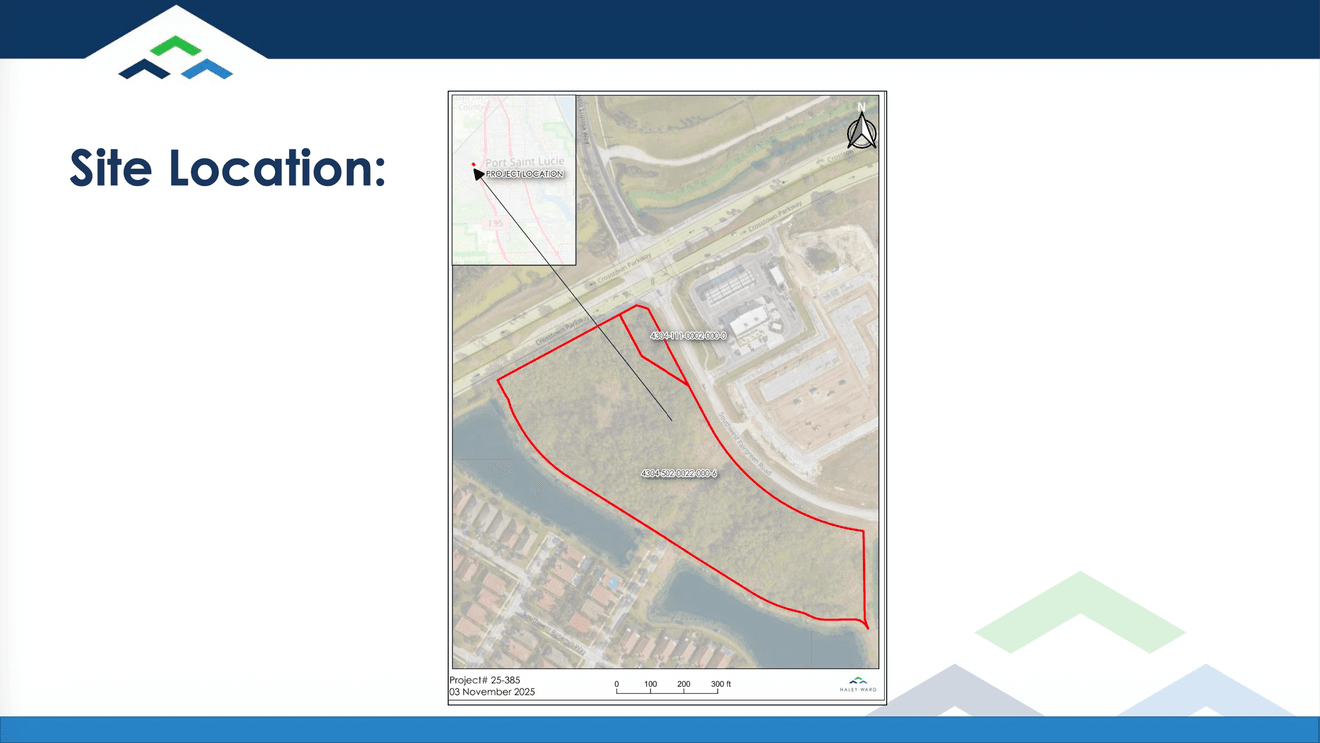
PORT ST. LUCIE, Fla. (CBS12) — Neighbors near Tradition lost a fight this week to keep a chunk of land residential, as Port St. Lucie‘s City Council voted unanimously to let a developer swap nearly 10 acres of planned townhomes for retail and office space.
The vote clears out land near Crosstown Parkway and Fairgreen Road that was once slated for 106 homes, putting commercial development just steps from an existing neighborhood.
While no specific tenants have been announced, the applicant’s own planning documents sketch out a couple of likely scenarios: a retail strip plaza, or a mix of a fast-food restaurant with a drive-thru, small shops, and a convenience store.
The developer has also agreed to build a wall and landscaped buffer along the edges closest to homes, and to make improvements at the Crosstown and Fairgreen intersection, including new turn lanes, by the end of 2027
Residents who live closest to the site said they felt shut out of the process.
“I remain concerned about the lack of transparency, excessive bureaucracy and missing information provided to residents and decision makers before any hearing,” said one resident, who told the council he lives about 750 feet from the property.
Another neighbor said the land has been zoned residential for more than 20 years and that families bought their homes counting on that staying true.
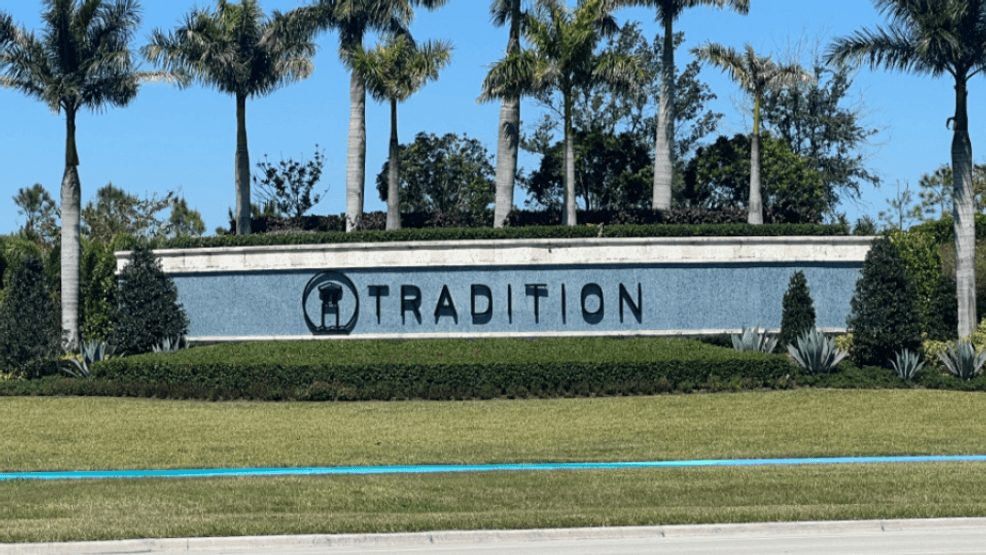
Neighbors near Tradition lost a fight this week to keep a chunk of land residential, as Port St. Lucie’s City Council voted unanimously to let a developer swap nearly 10 acres of planned townhomes for retail and office space (PSL)
See also: Alligator Alcatraz infrastructure removed following closure of Everglades facility
“Homeowners bought without understanding,” she said, warning that once the switch to commercial happens, “it cannot be undone.” She ended her comments with a pointed message to the council: “Today it’s my block. Tomorrow it’s yours.”
Not everyone who spoke asked for an outright no. One resident said she suspected the change was coming no matter what, and instead asked the developer to consider fountains near the property’s lakes to help mask noise, and to be careful of protected wildlife nesting by the water.
Council members defended the decision, saying the request had already gone through multiple public hearings and that they’d pushed the developer to agree to one major concession: no gas stations allowed on the new commercial parcel, a promise now locked into the zoning paperwork no matter who buys the land later. Members argued the city has too much housing and too little retail, and that commercial space closer to existing neighborhoods actually cuts down on driving.
The ordinance passed unanimously. Several council members said they understood residents’ frustration but felt their hands were tied by state rules that limit what a rezoning vote can even consider, leaving decisions about what gets built and how it looks for a later stage in the process.