
Years after the Parkland shooting revealed flaws in how Broward schools administer and report student discipline, a new audit finds problems still persist.
The internal audit found that in many cases the school district failed to document in the district’s student information system what punishment, if any, was given to students who bully, fight, vape, disrupt class or commit other offenses prohibited by the district’s student code of conduct.
District auditors reviewed 22,121 district discipline referrals from Jan. 6 to March 13, 2026, to ensure they were complete. They took a closer look at 124 referrals to see how they were handled.
The audit identified “control and compliance weaknesses across multiple stages of the discipline process, including referral processing, incident documentation, execution of disciplinary actions,” and reporting of incidents to the state, according to the report.
District administrators identified the problem as inadequate record-keeping largely caused by the use of a new software program, not poor discipline procedures.
They are taking steps to improve training and monitoring as the district prepares to open for the new school year next month, vowing that the efforts will “promote greater consistency, accountability, and understanding of discipline procedures across schools,” according a management response in the audit.
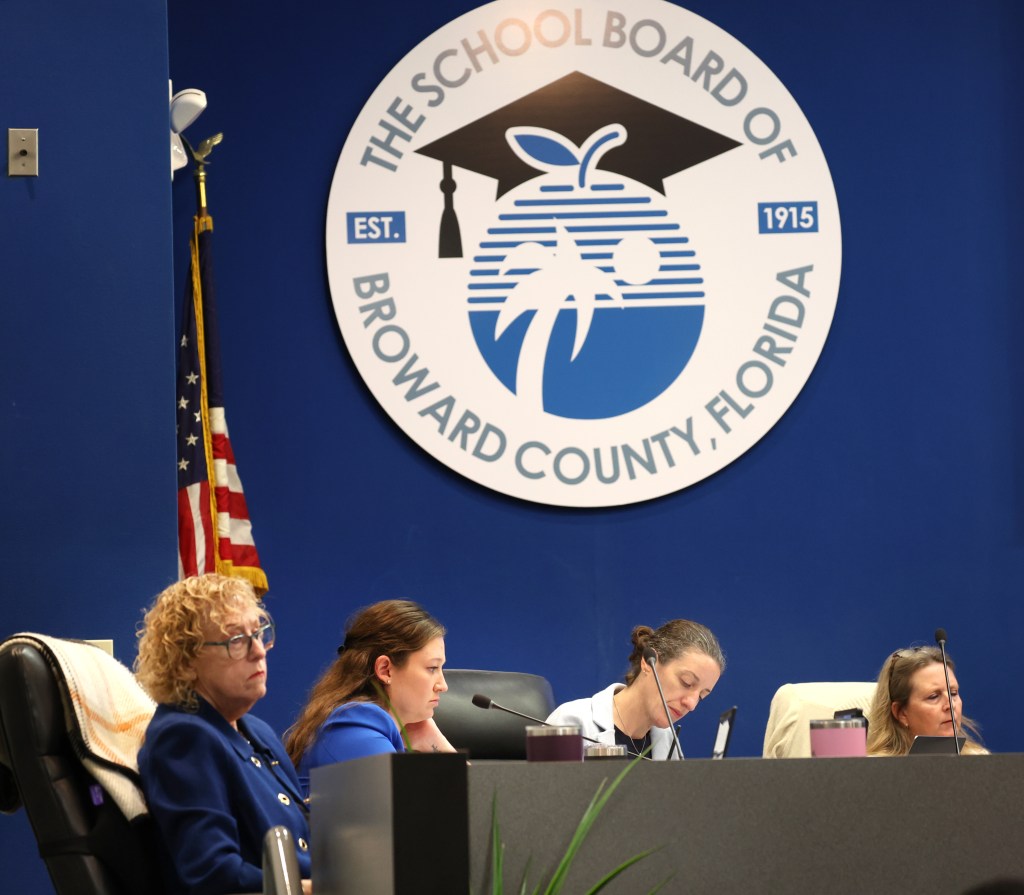
The audit was reviewed by the district’s Audit Committee on Thursday and is expected to go to the School Board in August.
Among the findings:
— Nearly 2,000 referrals, or 9%, of cases reported never actually got processed in the district’s system, so it’s unclear what, if any, discipline was administered. Of those, 116 reports contained indicators of violations that must be reported to the state, such as battery, fighting, drug paraphernalia, sexual misconduct, or major campus disruption.
— The audit found 23 cases, or 19% of all reviewed in detail, where attendance records suggest students didn’t serve part or all of a suspension they received. Most of the 94 students who were assigned to a school-based alternative to an external suspension program, or 62%, were not listed in district records as having attended the program.
— There was no documentation that parents received required notifications in 68 of 124 referrals (55%).
— Schools did notify the district’s regional office and district security operations center, as required by policy, in 89% of the 108 applicable cases.
— Mental health referrals were not documented in district software for 74% of the cases reviewed. Substance abuse counseling documentation was missing in half the applicable cases.
“As a parent and district community member, the specific metrics regarding the gaps in mental health and substance abuse support were especially concerning to me and just within the broader context of the health and safety of our children and communities,” Mariah Rabideau, a member of the district’s Audit Committee, said during Thursday’s meeting.
Auditors made a number of recommendations for the district, including developing and formally documenting clear procedures for handling discipline, improving training and monitoring and working with the information technology department to develop options to flag unprocessed discipline referrals.
The district has put a strong focus on trying to improve its discipline procedures following the school shooting at Marjory Stoneman Douglas High in Parkland on Feb. 14, 2018, which killed 17 students and staff.
An investigation by the state-created Marjory Stoneman Douglas High School Public Safety Commission found that gunman Nikolas Cruz, a former student, had been assigned to a three-day alternative to suspension program called Promise in 2013, but the district could find no evidence that he ever showed up.
“The records are inconsistent and inconclusive as to where Cruz was during his assignment to PROMISE on the three days in 2013,” says a commission report from July 2018.
A 2018 investigation from the South Florida Sun Sentinel also found that Broward and districts throughout the state were failing to report numerous incidents required to be included in data submitted to the state Department of Education.
The new audit found examples where the district may have erred in the opposite direction, over-reporting a few instances.
Under state rules, an incident, such as a fight, counts as one incident that should be reported to the state, even if multiple students are disciplined. In six cases, district administrators reported a single fight at an incident for each student involved.
Many of the audit’s findings relate to documentation issues “and the ability to consistently demonstrate compliance, rather than evidence that required disciplinary actions were not occurring,” Saemone Hollingsworth, the district’s chief student services officer, wrote in an audit response.
Don Gilbert, a member of the Audit Committee, said he found it concerning that some students were assigned to alternative to suspension programs without any record that they attended. He said whether students actually showed up and didn’t get credit or got assigned to a program and never showed up, it’s a problem.
“A student may say, ‘Hey, I finished my five-day suspension and then I go back,” Gilbert told the committee. “But when I get back to the school, it’s like, ‘Well, you never showed up.’ There are negative consequences, either way you look at it.”
The audit didn’t list any consequences that happened to actual students as a result of poor tracking but said some of the weaknesses “may negatively impact student outcomes and the district’s ability to provide timely interventions.”
Lisa Maxwell, executive director of the Broward Principals and Assistants Association, told the South Florida Sun Sentinel that the error rate isn’t bad considering the obstacles administrators have faced.
“There were 22,000 referrals, and they’re going to pick a hundred and something?” she asked. “There’s no evidence that there was any disaster as a result of any of this missing paperwork.”
She said a major problem was the district’s decision to switch to a new student data software called Focus to replace what many found to be a simpler system.
Maxwell said principals were not involved in the adoption or rollout, and much key student information from the old system didn’t transfer over to Focus.
During a discussion during Thursday’s Audit Committee, district Audit Manager Elena Pritykina acknowledged the transition to Focus created some challenges. Before, the district used its own proprietary system known as the Discipline Management System, or DMS. The old system was considered more automated, relying on administrators clicking boxes but not filling out detailed information.
“The discipline process in Focus is not automated to the same extent as the legacy DMS system was,” Pritykina told the committee.
For example, she said the old system would automatically send alerts to social workers and district case managers for student services and counseling, and recommendations for disciplinary actions were automatically generated.
“This increased reliance on manual procedures, which contributed to inconsistent practices and limited oversight,” Pritykina said.
Some Audit Committee members questioned why the district had switched to a new software that made it more cumbersome to track incidents.
“We know our principals and teachers want to help students succeed. They want to document these things properly. But the audit is showing that they’re being overwhelmed by this transition to Focus,” Rabideau told the committee.
Jodi Washington, a district administrator who oversees school culture and resort, said the previous software had limitations.
The old system allowed administrators to click a button to say a parent was notified. Under the new system, they are instructed to use a notes field to say how they contacted the parent and what the response was. Under the new system, they are also expected to take steps to ensure the discipline being given matches what’s in the student code of conduct.
Under the old system, “you could just click buttons and move on, and it appeared as if everything was done, and it really took the thinking out of discipline,” Washington said. “But you can’t take the thinking out of discipline. You have to really look to find out what happened in this situation.”
Washington said the district is “doubling down on training” for administrators starting in the next week for principals. There will also be monthly trainings for assistant principals who are assigned to handle discipline, as well as chatlines to help with issues as they come up, she said.