
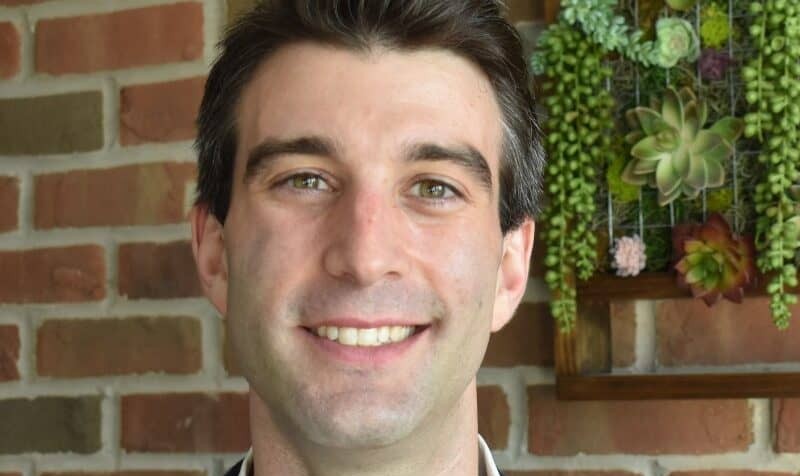
As rising seas, stronger storms and skyrocketing insurance costs reshape where people choose to live, one St. Petersburg developer says the answer isn’t retreating from vulnerable waterfront neighborhoods – it’s building them differently and making new development pay for the added risk.
During a recent panel discussion at the Palladium Theater on climate change and housing, Mack Feldman, vice president of asset management for Feldman Equities, briefly floated an idea that sparked a larger conversation: Pair new development opportunities in portions of the city’s Coastal High Hazard Area with impact fees dedicated to flood resilience infrastructure.
In a follow-up interview with the Catalyst, Feldman expanded on the proposal, arguing that the city should embrace carefully planned redevelopment in some coastal neighborhoods rather than slowly abandoning them.
“There’s an idea called ‘retreat,’” Feldman said. “It’s a euphemism for cutting off waterfront neighborhoods from government investment in infrastructure. It’s a policy of slow-motion abandonment of areas like Shore Acres and Riviera Bay.”
For most neighborhoods, he said, that’s neither realistic nor desirable.
Instead, Feldman envisions allowing more housing, specifically townhomes and neighborhood-scale apartments, in carefully selected waterfront areas while requiring developers to help fund the infrastructure those projects would require.
“We need to harness inevitable new development along the waterfront in a way that best helps mitigate the risk of a changing climate,” he said.
The proposal builds on impact fees: St. Petersburg already charges developers impact fees to help offset costs associated with growth, such as transportation improvements. Feldman argues the city should consider similar fees dedicated specifically to climate resilience.
Revenue generated through those fees could fund projects such as hardened evacuation routes, new hurricane shelters and roadway elevations.
“The people that want to live in flood zones should pay for the associated risk to the city of them doing so,” Feldman said. “Otherwise, everyone else in the city is effectively subsidizing flood-prone neighborhoods.”
Perhaps surprisingly, Feldman said those requirements should apply equally to projects developed by his own company.
“If we developed in the Coastal High Hazard Area, the answer is absolutely yes,” he said.
The proposal would represent a shift in how the city approaches redevelopment in vulnerable coastal neighborhoods.
Rather than replacing aging homes one-for-one, Feldman believes limited increases in density could produce housing that’s both more resilient and, in some cases, more affordable than what’s currently replacing older homes.
Today’s waterfront neighborhoods, he said, are filled with 1950s slab-on-grade homes that flood repeatedly and sit below modern flood elevation standards.
Replacing those structures with elevated townhomes and small apartment buildings built to current code would not only reduce flood damage but could also offer alternatives to the increasingly common pattern of oversized luxury homes replacing older houses.
“Townhomes and neighborhood-scale apartments are inherently more affordable than the massive homes that are now replacing the historical stock throughout places like Shore Acres,” Feldman said. “Longtime residents will have a better chance to stay in a neighborhood where they’ve built their lives.”
Feldman stressed that he is not advocating for widespread upzoning across the city’s coastline.
Instead, he said, officials should evaluate which areas remain viable over the next 50 to 75 years based on climate projections and evacuation capacity.
“We need to take a hard look at the next 50 to 75 years of projections and figure out where this makes sense, and where it’s impractical, especially from an evacuation standpoint,” he said.
Any proposal would also have to wait until restrictions imposed under Senate Bill 180 expire in 2027.
St. Petersburg already regulates development within its Coastal High Hazard Area, which covers more than 40% of the city. The designation establishes when higher-density residential projects may be considered based on factors such as building design, evacuation times and available hurricane shelter capacity.
But Feldman said the current regulations stop short of creating a dedicated funding source tied to each new project.
“CHHA is the gate through which any upzoning proposal in these areas would have to pass,” he said. “In exchange for building more homes, it requires appropriate mitigation, including payments of money or the actual construction of shelters or transportation improvements.”
He envisions expanding that framework with project-specific resilience fees tied to the additional burden new development places on public infrastructure.
State law, he noted, already requires impact fees to be proportional to the costs generated by new development and spent directly addressing those impacts.
“These fees would be required to be spent on new resiliency-related capital projects that benefit the new buildings,” Feldman said. “Think new shelters, hardened evacuation routes and roadway elevation.”
The proposal would not totally solve the city’s infrastructure funding challenge on its own. St. Petersburg estimates it needs roughly $2 billion in resilience improvements over the coming decades.
“We should distinguish between the reality of the problems we have today and the incremental risk associated with building more homes in flood zones,” Feldman said. “These fees should address the incremental risk associated with new buildings only.”
The bulk of the city’s resilience investments, he acknowledged, would still have to be borne by taxpayers. Still, Feldman believes the alternative (allowing flood-prone neighborhoods to slowly decline while displaced residents move inland) is ultimately more costly.
“A practical impact of retreat without adding more homes is displacement,” he said. “If everyone now on the waterfront moves inland, displacement in historically more affordable neighborhoods will be exacerbated.”