
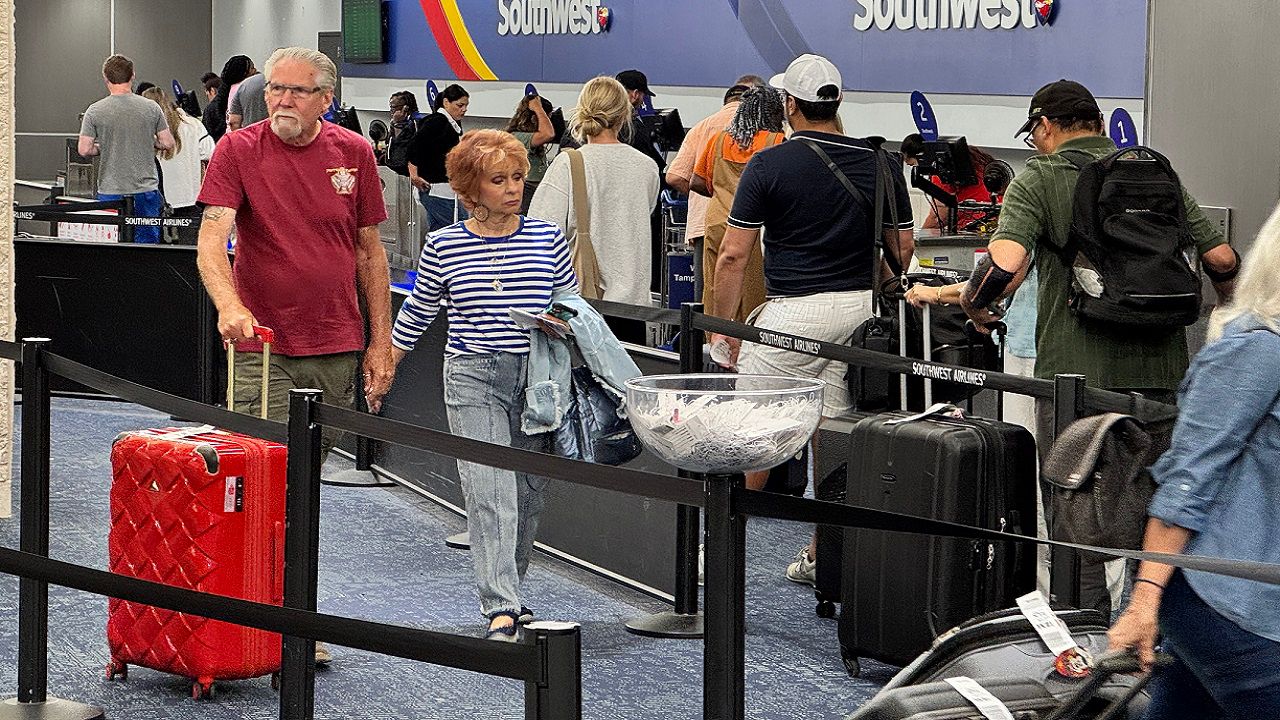
TAMPA, Fla. – Tampa International Airport is planning changes to its security operations.
The airport is among the first in the country to join Transportation Security Administration’s new Gold+ program. Beginning next May, security will be taken over by a private contractor with TSA oversight.
The new program is part of the TSA’s public-private partnership program.
Airport officials said the decision will safeguard passengers from future government shutdowns that snarled national air traffic earlier this year.
Though impacts were minimal in Tampa, officials said the move is about more than shutdowns.
In a released statement, airport officials said moving to the TSA Gold+ program “allows greater flexibility in exploring new screening checkpoint infrastructure and technology to enhance the customer experience.”
For participating airports, private contractors would take over security, manage screeners and checkpoint security equipment.
TSA would provide oversight.
The almost 800 TSA workers in Tampa were notified of the change Monday.
They will be the first in line for jobs with a new private contractor, but right now, there is a lot of uncertainty for them because a private contractor has not been chosen.
Another big challenge with this new program is the amount of time Tampa International has to make the transition.
Airport officials said they hope to launch the program by May, but the federal government has no private security contractors for TPA to pick from.
According to CNN, The Gold+ program expands upon an existing program that has been used by a handful of airports featuring privatized screening by also allowing them to manage the screening technology.
There are 20 airports in the United States that have private companies operating the security checkpoints supervised by the TSA under the Screening Partnership Program.
San Francisco International, Kansas City International, Sarasota-Bradenton, Orlando-Sanford and 17 smaller airports participate.
The Gold+ program builds on the TSA’s long-running Screening Partnership Program (SPP), which has been in place for 25 years. Under the SPP, the TSA continues to oversee airport security while private companies employ security screeners.
The broader effort to expand the use of private airport security has received support from the Trump administration during the president’s second term.
While no new federal legislation has been approved, there appears to be bipartisan interest in exploring additional public-private partnerships for airport security operations.