
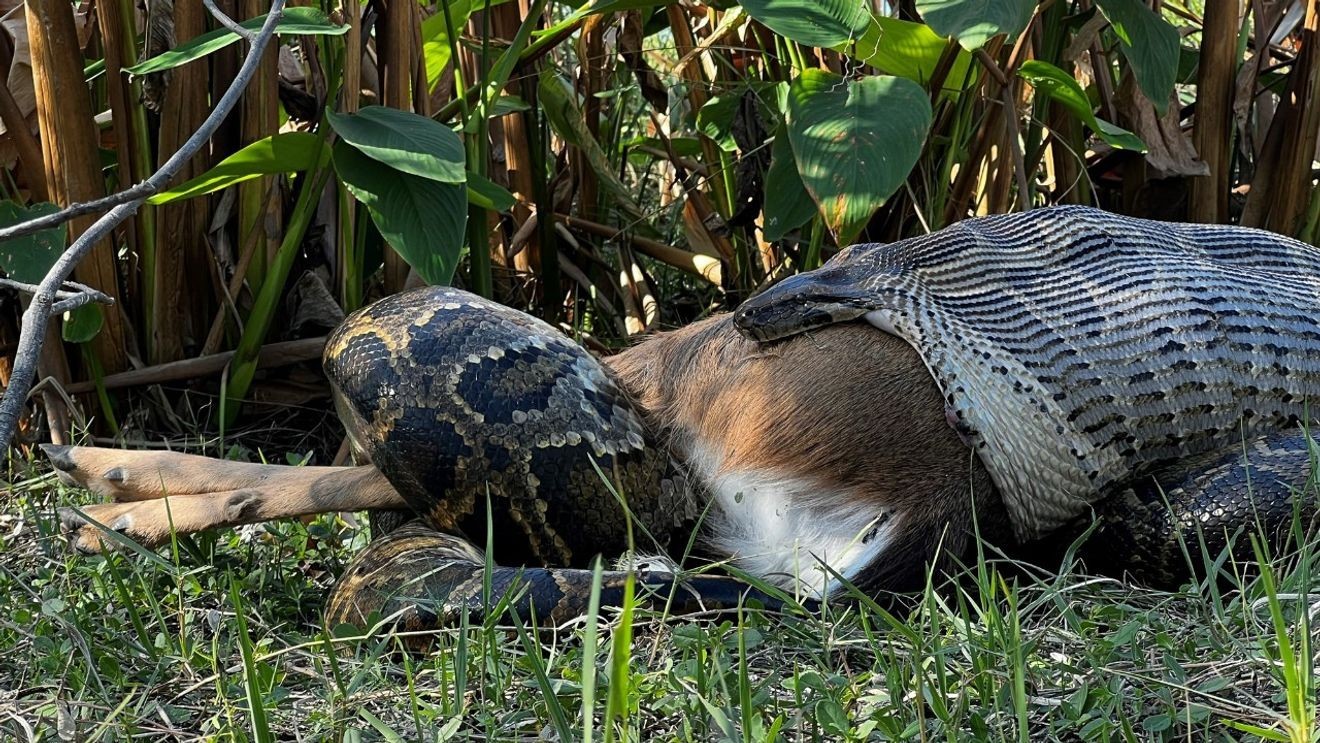
WEST PALM BEACH, Fla. (CBS12) — A giant Burmese python in Florida could potentially swallow a deer weighing more than 120 pounds, according to a study that found the invasive snakes can eat larger prey than scientists once believed.
Researchers from the University of Cincinnati and the Conservancy of Southwest Florida examined some of the largest pythons ever captured in the state and discovered their mouths can stretch wider than previous estimates suggested.
The 2024 study, published in Reptiles & Amphibians, analyzed three exceptionally large female pythons measuring about 13.5, 15.2, and 17 feet long. All three snakes had a maximum gape, or mouth opening, of 26 centimeters, about 10.2 inches. Researchers previously had documented a maximum gape of 22 centimeters.
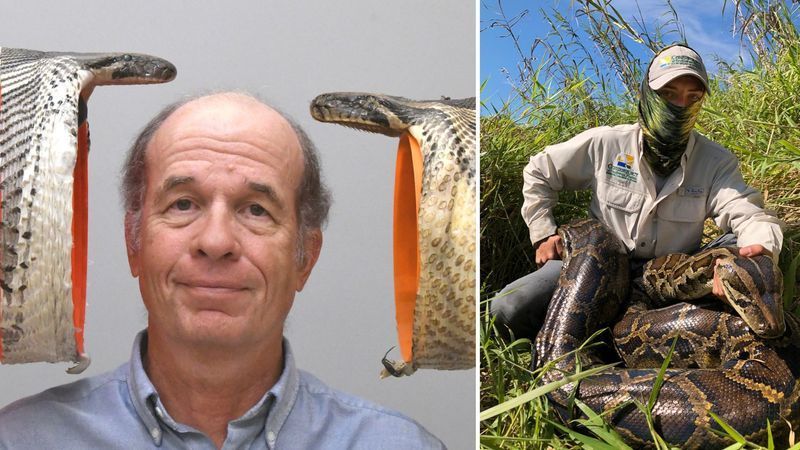
UC Professor Bruce Jayne poses with a Burmese python specimen with a 22-centimeter gape, right, compared to an even larger specimen with a 26-centimeter gape. (Photo/Bruce Jayne)
Scientists found the snakes’ remarkable feeding ability comes largely from highly stretchable soft tissue between their lower jaws. The tissue accounted for roughly 57% to 59% of the total gape area, allowing the pythons to consume prey much larger than most other snake species of similar size.
Lead author Bruce Jayne, a professor of biological sciences at the University of Cincinnati, said adding measurements from the giant snakes helped refine estimates of what the species is physically capable of eating.
Using the updated data, researchers found a Burmese python approaching the maximum size of the species could potentially have a gape diameter of around 30 centimeters. According to the study, that would be large enough to swallow a deer weighing nearly 58 kilograms, or about 128 pounds, and even an alligator weighing more than 95 kilograms, or 210 pounds.
The study also documented a real-world example of the reptiles pushing their physical limits.
**Warning: The photo below contains an image of a Burmese python consuming a deer that some readers may find disturbing.**
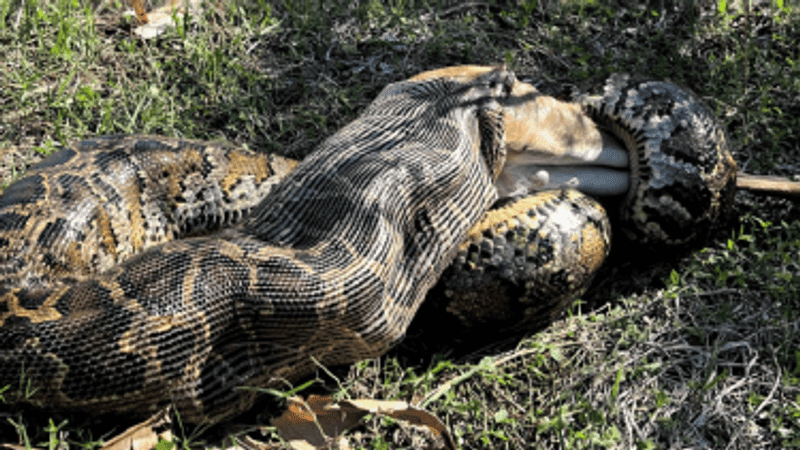
A nearly 15-foot-long Burmese python devours a 77-pound deer in Florida. (Photo/Ian Bartoszek/Conservancy of Southwest Florida)
One of the pythons was discovered while swallowing an adult white-tailed deer weighing about 77 pounds. Researchers determined the deer occupied roughly 93% of the snake’s maximum gape area, indicating it was eating prey close to the largest size it could physically swallow. The deer itself weighed nearly two-thirds as much as the snake.
The findings highlight the ecological threat posed by Burmese pythons in Florida, where the invasive snakes have become established throughout much of South Florida after being introduced through the exotic pet trade. Previous research has linked the spread of the species to sharp declines in native mammal populations in and around the Everglades.
See also: Found 7 miles south of Florida Keys, massive 450-pound turtle carried ashore to rehab
While giant pythons remain relatively uncommon, researchers noted Florida has likely not yet seen the largest Burmese python living in the wild. Of more than 9,500 pythons captured in Florida, only a small percentage measured longer than 420 centimeters, or roughly 14 feet.
Researchers said understanding the upper limits of what pythons can consume could help wildlife managers better predict the impact the snakes may have as they continue expanding into new areas. The study found that some of Florida’s largest pythons are capable of eating prey remarkably close to their anatomical limits, raising concerns about the range of animals vulnerable to the invasive predator.
Read the full study here: