
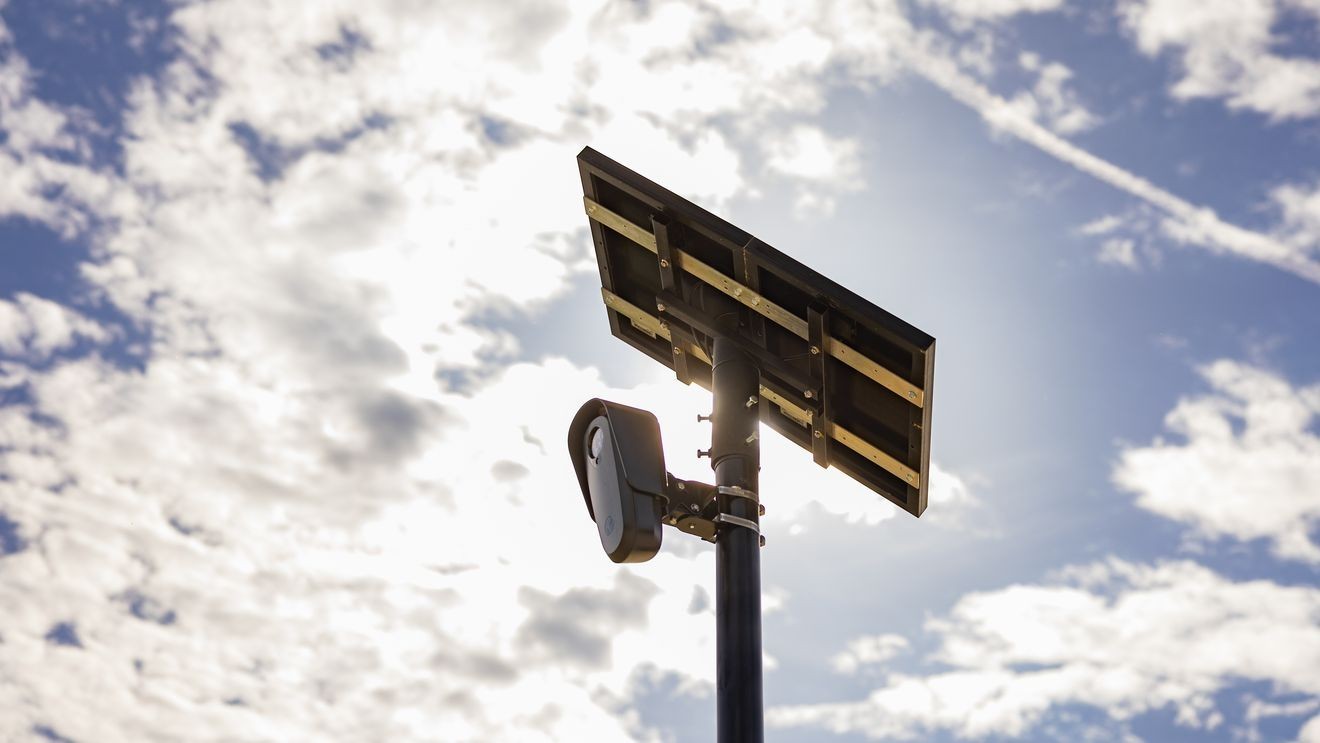
PALM BEACH COUNTY, Fla. (CBS12) — Small black cameras mounted on poles, often beneath solar panels, are quietly recording vehicles across South Florida.
They do not flash, issue tickets or warn drivers.
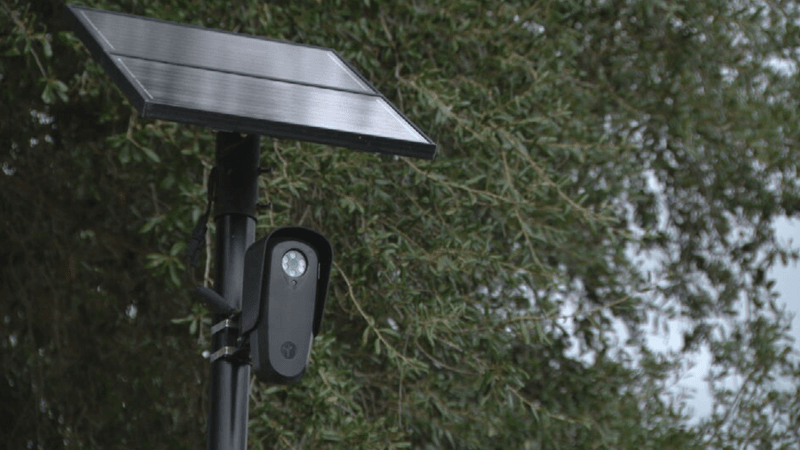
As Flock cameras expand across South Florida, their role in solving violent crimes is fueling a broader debate over privacy, access and oversight. (Flock Safety)
The devices are automated license plate readers, many manufactured by Flock Safety. As vehicles pass, the cameras capture images and record details including the license plate, make, model, color, location and time.
Police can search those sightings for vehicles connected to crimes. The cameras, however, do not record only suspects. They capture other passing vehicles within view.
More of the cameras are also being reported across South Florida.
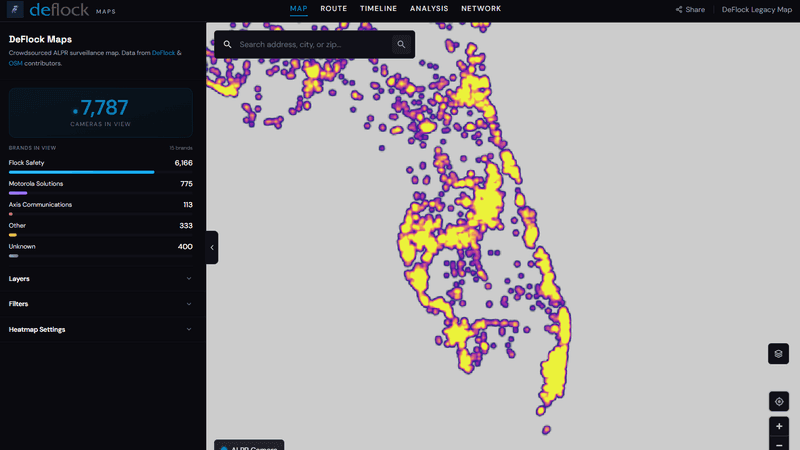
DeFlock, a crowdsourced map of reported license plate readers, shows more camera locations appearing across South Florida as users add them. It is not an official inventory, may include products made by different companies and does not independently verify every entry. (DeFlock)
DeFlock, a crowdsourced map of reported license plate readers, shows users adding camera locations throughout the region. The map is not an official inventory, and its timeline reflects when cameras were added to the map, not necessarily when they were installed.
The technology itself is not new to CBS12 News viewers. In December 2025, the CBS12 News I-Team showed how Border Patrol had accessed local and private license plate reader networks outside Florida as part of a system used to follow vehicles hundreds of miles from the border. The I-Team found the same type of infrastructure was already operating across Palm Beach County and the Treasure Coast. At the time, there was no documented evidence that Florida’s plate data had been used by Border Patrol in the same manner.
Seven months later, local cases are showing why police want the cameras—and cases elsewhere are showing what can happen when access is misused.
Digital leads in two local murder cases
Police used Flock to develop leads in two local double-murder investigations this year.
On Feb. 24, Philip Repaci Sr. and Joan Repaci were found shot inside their Hutchinson Island condominium. Fort Pierce police entered their son’s vehicle into the Flock system and received hits showing it leaving the city. Indian River County deputies later attempted to stop Philip Repaci Jr. and took him into custody. Fort Pierce police charged him March 30 with two counts of first-degree murder with a firearm.
One month later, the cameras became part of another investigation.
On March 24, police say Jesse Ellis fatally shot his wife, Stacie Mason, and her coworker, Danny Ooley, outside the Indian River County Main Library. Investigators used the sheriff’s office Flock network to trace Ellis’ pickup to South Beach Park, where it was found abandoned. The cameras located his truck—not Ellis. His body was discovered May 27 and identified the following day.
In both cases, a vehicle sighting gave investigators a lead within minutes.
“These cameras can give police an immediate lead that could save lives in minutes,” said Dave Aronberg, the former Palm Beach County state attorney who now works as a defense attorney.
Having worked on both sides of the criminal justice system, Aronberg does not support banning the technology. He said its value, however, must be balanced with clear rules covering access, retention and misuse.
“You should have penalties for anyone who treats this important public safety infrastructure like a personal stalking tool,” Aronberg said.
When police search for personal connections
That concern is now playing out in Fayetteville, Georgia. The Fayetteville Police Department fired three officers after an audit uncovered searches involving their own license plates and plates belonging to family members and acquaintances. The department determined the searches had no legitimate law enforcement purpose and violated agency policy. It did not identify the officers or speculate about why they conducted the searches.
The department asked the Georgia Bureau of Investigation to investigate. No charges had been announced in the Fayetteville case as of July 21.
The case exposed the system’s risk—but also one of its safeguards. The searches were conducted, but the audit trail allowed the department to uncover them.
See also: Shelter caring for 92 cats, dogs from postal worker hoarding home; some are microchipped
Debate reaches Florida governor’s race
The security-versus-surveillance fight has now entered Florida’s Republican race for governor.
During a July 2 debate, former Florida House Speaker Paul Renner questioned how far the state should allow the technology to reach.
“How far do we want to go in the name of security before we lose our freedom?” Renner asked.
Businessman James Fishback said he would ban Flock and Palantir systems in Florida. The companies operate separate systems, and Flock says Palantir has no access to its customers’ data.
Lt. Gov. Jay Collins defended Flock’s crime-fighting value while acknowledging the need for accountability.
“Flock does make a difference. It does save lives, and it keeps our people safe,” Collins said. “But they’re also held accountable if that thing goes wrong or if it’s misused.”
Flock says its customers own and control the data collected by their cameras, including who may access or share it. Users must provide a reason for each search, and the company says every search is logged so it can be audited. The default retention period is 30 days, according to Flock. Information may be preserved for an investigation, and retention can vary under applicable laws, contracts or agency policies.