

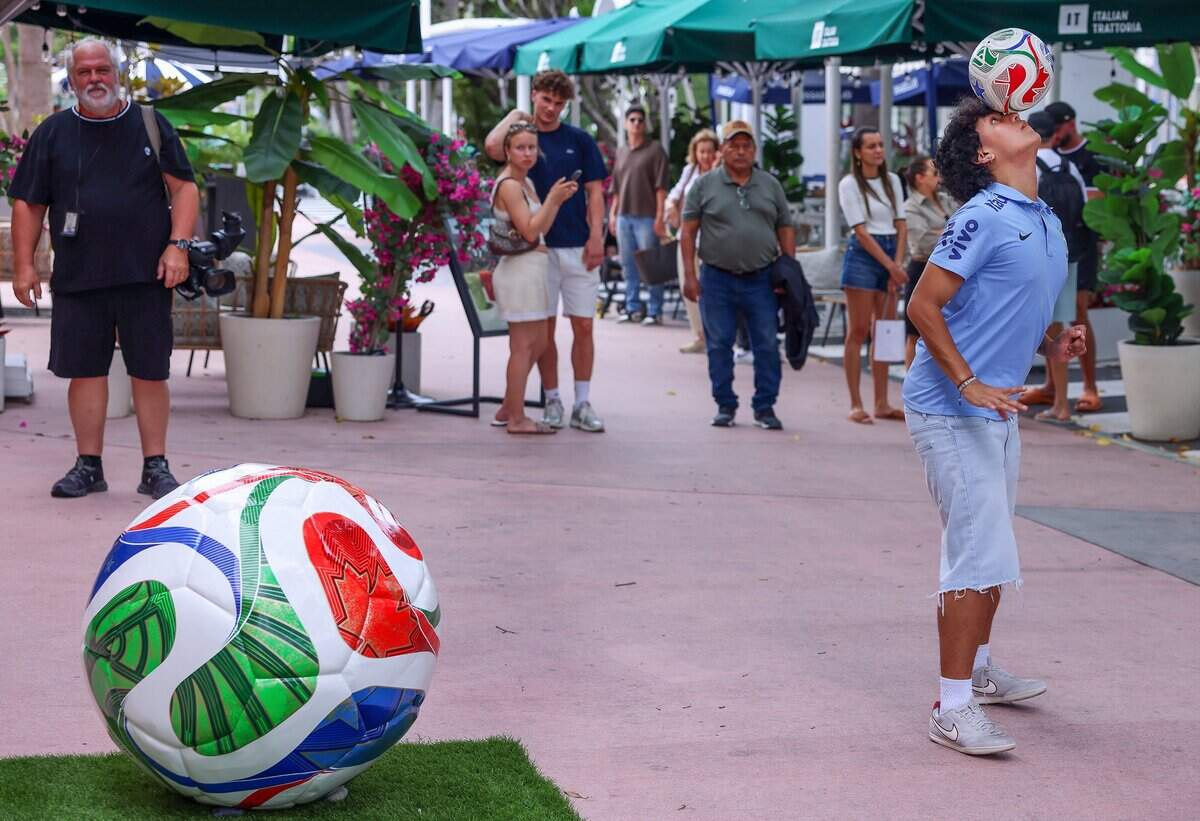
 Ricky Martínez, from St. Thomas University, in Miami Beach. Carl Juste cjuste@miamiherald.com
South Florida hosts who rented out their homes during the World Cup got a bump in income, according to new data. However, their gains resulted more from increasing daily rates than any massive jump in demand, similar to what many area hotels experienced.
The Miami and Fort Lauderdale market for short-term rentals, or STRs, generated total revenue of $203.7 million during the period of the World Cup, from June 10 to July 19. That marked a 27% — or $42.7 million — increase when compared to the same period in 2025.
But the bump in revenue mostly came from hosts raising their rates. Just $6.2 million came from additional nights booked, according to the data.
The findings come from data analytics firm AirDNA, which tracks short-term rental Airbnb and Vrbo data.
Average daily rates in Miami hit $302 for both game nights and eves, according to AirDNA. That is up 24% from the same days one year ago. Meanwhile, rates on surrounding dates averaged $273, up 21%. Miami ranked sixth among U.S. host cities for year-over-year rate growth.
Overall, the short-term rental market generated $1.33 billion in revenue for the 16 host cities.
The $42.7 million bump in revenue that South Florida saw was the most among the 11 host cities the U.S. had, according to AirDNA. That’s attributed largely to Miami’s position as the largest short-term rental market among World Cup hosts, with 42,700 available listings in June. Los Angeles is second with about 40,000 listings.
Hosts sold approximately 22,000 more nights this year than they did during the same period last year. However, that was mostly due to the individual games. Tourism and FIFA officials’ hopes that tourists come to South Florida for the entire tournament or at least spend one month did not seem to materialize in the short-term rental market.
Demand in South Florida on game days and the nights preceding them totaled 297K nights, up 12% year over year. Miami ranked third among U.S. host cities for demand growth on game days and eves, behind Kansas City, up 40%, and Dallas/Fort Worth, at 19%.
But beyond those dates, bookings for June 10 through July 19 totaled 430K nights, roughly flat compared to last year, suggesting no real uplift on those days, Linda Rollins, an AirDNA research analyst told the Miami Herald.
Not only was broad demand tepid, new inventory was, too. Available listings in June increased by only 4% versus the same period last year, Rollins indicated. That’s despite a lot of effort companies such as Airbnb put in into enticing new hosts.
Miami Herald
Vinod Sreeharsha covers tourism trends in South Florida for the Miami Herald.