
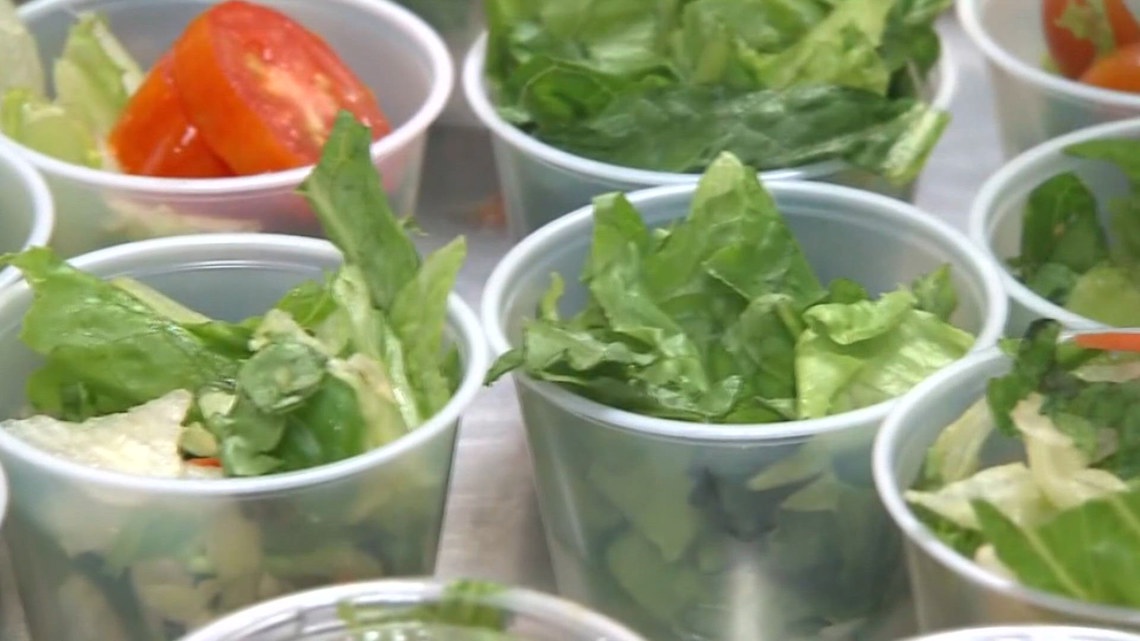
The Centers for Disease Control and Prevention (CDC) has confirmed a Cyclospora outbreak affecting nine states, with cases confirmed here on the First Coast.
JACKSONVILLE, Fla. — The Centers for Disease Control and Prevention (CDC) has confirmed a Cyclospora outbreak affecting nine states. While Florida and Georgia are not currently included among the confirmed outbreak states, recalled lettuce products linked to the investigation were distributed in both states, and health officials report dozens of illnesses in each.
A Baptist Health physician said the First Coast has also seen confirmed cases.
Dr. Shalika Katugaha, Medical Director of Select Specialties at Baptist Health, said there have been four confirmed Cyclospora cases in Duval County and four in St. Johns County. According to the CDC, both Florida and Georgia have reported between 31 and 80 Cyclospora cases.
“Take precautions, not panic, and just be aware of what you eat and how you prepare it,” Katugaha said.
The primary concern in the current outbreak is shredded and iceberg lettuce.
Katugaha advises people to avoid lettuce products included on the U.S. Food and Drug Administration’s recall list. The FDA has urged consumers not to eat recalled iceberg lettuce supplied by Taylor Farms, which was distributed to Taco Bell restaurants.
Although testing on the lettuce later produced a false positive result, investigators said the voluntary recall remains necessary because they traced illnesses and Taco Bell’s supply chain back to Taylor Farms.
Taco Bell has confirmed it removed lettuce from its menu ingredients as a precaution.
Katugaha said people can still eat lettuce if it is prepared properly, but people should be aware that simply rinsing it may not be enough.
“It requires a lot of caution because Cyclospora can stay despite washing it,” she said.
She recommends thoroughly brushing lettuce to help remove contamination, but says cooking the lettuce is the most effective way to eliminate the parasite.
Katugaha also emphasized that Cyclospora is not spread from person to person.
“So you can’t get it from other people or from whoever cooks your food,” she said.
Symptoms of Cyclospora infection are similar to food poisoning and include explosive watery diarrhea, fatigue, and nausea. Unlike many other foodborne illnesses, symptoms typically do not appear immediately after eating contaminated food. Instead, they often develop about a week later.
Without treatment, symptoms can come and go for weeks or even months.
“It’ll wax and wane and go on for weeks to months, and you’ll have this relapsing diarrhea that goes away and then comes back and goes away and comes back,” Katugaha said.
The infection is treated with a week-long course of antibiotics.
Katugaha said Cyclospora infections are seasonal, with cases typically peaking between May and August. She encourages consumers to follow guidance from the CDC and FDA, check recall notices before purchasing produce, and seek medical care if they develop persistent gastrointestinal symptoms after eating fresh produce.