
(TNND) — More than 12,000 pounds of imported bacon sold in three Western states have been recalled after federal officials discovered the products entered the United States without undergoing a required safety inspection.
The U.S. Department of Agriculture’s Food Safety and Inspection Service (FSIS) announced Maple Leaf Foods Inc., based in Lisle, Illinois, is recalling about 12,036 pounds of not-ready-to-eat smoked bacon imported from Canada. The agency classified the action as a Class I recall, its highest risk level. Officials said there have been no confirmed reports of illness linked to the recalled products.
FSIS said the issue was discovered during routine inspection activities.
The recalled bacon was produced on June 9, 10, 12, 13 and 15, 2026, and distributed to grocery distributors and retailers in Idaho, Oregon and Washington, including Grocery Outlet stores.
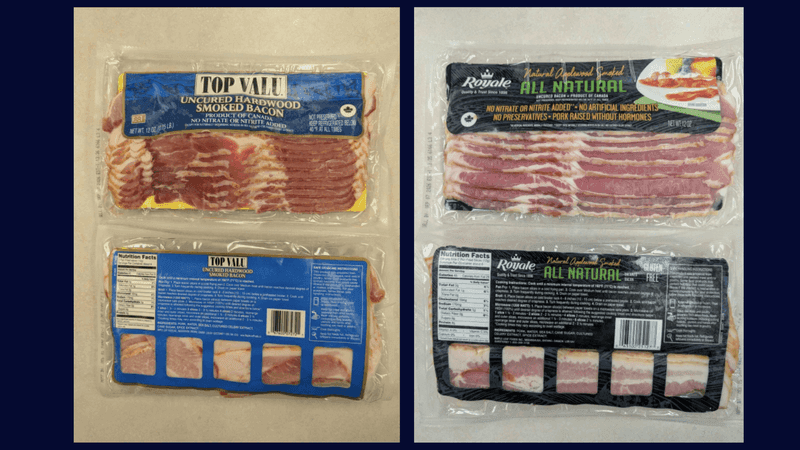
Maple Leaf Foods bacon recall July 28, 2026 (FSIS)
The recall includes:12-ounce packages of Royale Natural Applewood Smoked All Natural Uncured Bacon (Product of Canada) with sell-by dates of Sept. 1 and Sept. 7, 202612-ounce packages of TOP VALU Uncured Hardwood Smoked Bacon (Product of Canada) with sell-by dates of Sept. 1, 2, 4, 5 and 7, 2026
The affected products bear the Canadian establishment number “EST. 1” on the side of the package. Master case boxes also display health certificate 2026-S732971612.
Anyone who purchased the recalled bacon should not eat it. Instead, FSIS advises consumers to throw the product away or return it to the place of purchase for a refund. Anyone concerned about illness after eating the bacon should contact a healthcare provider.
The recall comes as federal health officials are dealing with multiple nationwide food safety concerns. A salmonella outbreak linked to recalled eggs has grown to include more than 19 million recalled eggs, while a record-breaking cyclospora outbreak tied to shredded lettuce and possibly other food sources has sickened thousands of people across several states.
Why this recall is considered high risk
Although no illnesses have been reported, the USDA assigned the recall its most serious Class I designation because the products bypassed the required federal import reinspection process before entering the U.S. market. That inspection helps verify imported meat products meet U.S. food safety requirements.