
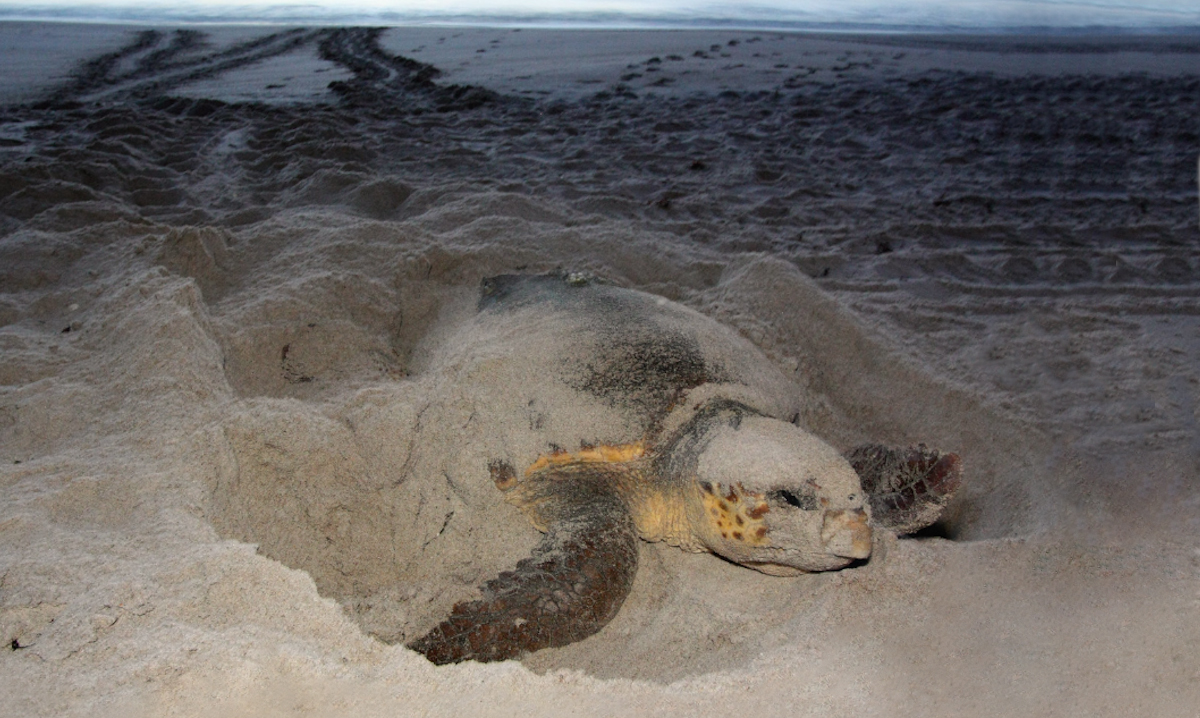
Sea turtle disorientations are unfortunately a common occurrence.
After hatching, the tiny marine reptiles look toward the brightest horizon to find their way to the ocean. Under natural conditions, moonlight and starlight reflecting off the water guide them. However, artificial lights from streets and buildings can confuse hatchlings, causing some to crawl toward roads instead.
Over the past four years, progress has been made. This is particularly due to efforts such as amber lighting conversions in beachfront areas. The technology is less disruptive to sea turtles.
Duke Energy Florida representatives held a demonstration Tuesday evening at Sunset Beach on Treasure Island to showcase its outdoor lighting program. Team members from partners Sea Turtle Conservancy and Clearwater Marine Aquarium also attended.
Duke Energy collaborates with municipalities and businesses to replace standard white LED lights with amber LED fixtures. The organization has converted over 2,500 lights in coastal communities statewide; 91% are in Pinellas County.
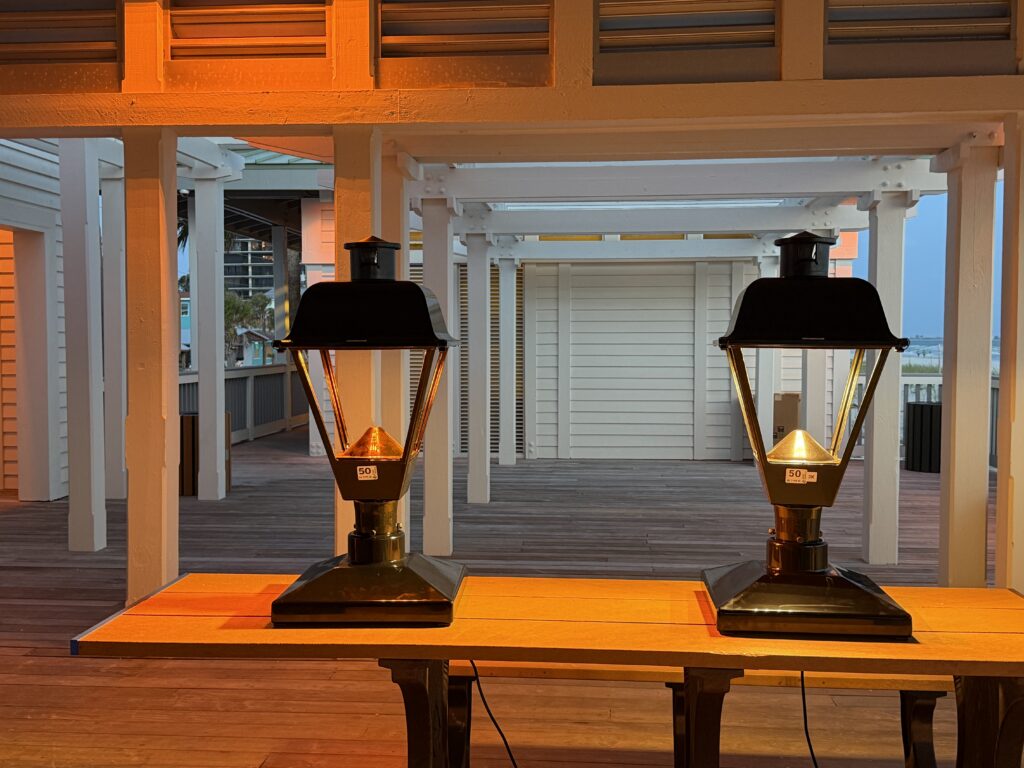
A comparison of an amber LED light, left, with a standard white LED fixture. Photo by Michael Connor.
“We’ve been involved with sea turtle lighting since the early 2000s, but we really started to kick it into high gear around 2017 when the pilot program was done in Treasure Island,” said Michael Smith, Duke Energy outdoor lighting senior products and services manager. “We live in the communities that we serve. It’s important to all of us. Our leadership supports and encourages us to look for ways to help the environment.”
He explained that the narrow-band amber lights used by Duke have a wavelength of 590 nanometers. “Turtles are indifferent to that particular spectrum of light,” Smith said. “It’s virtually invisible to them.”
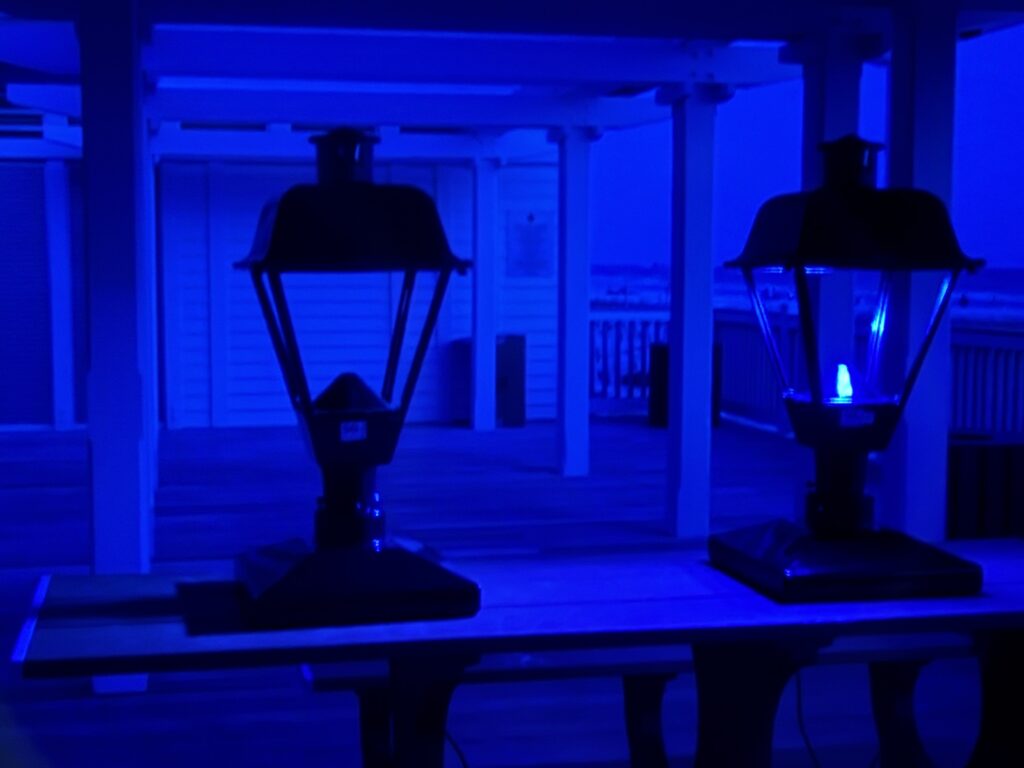
Another comparison of an amber LED light, left, with a standard white LED fixture. This photo was taken through a sea turtle safelight test lens provided by the Clearwater Marine Aquarium. Photo by Michael Connor.
Most of State Road 699 (Gulf Boulevard) has been converted. The technology was installed according to the Florida Department of Transportation’s wildlife-sensitive lighting specifications. He added that approximately 22 linear miles, extending from St. Petersburg to beyond Clearwater, “will be completed soon.”
“I think that Pinellas County is in a really unique scenario where it’s one of the few areas in the state where street lights are actually being retrofitted alongside or in some cases even ahead of individual properties,” said Emily Wooley of the Sea Turtle Conservancy. “I think that hopefully it’s inspiring to property owners that they too can make this change.”
She added that the Sea Turtle Conservancy has been conducting lighting retrofits on beachfront properties in “this area of the state” since 2019. This led to a collaboration with Duke Energy.
Carly Oakley, sea turtle nesting team manager at the Clearwater Marine Aquarium, echoed that the effort can help encourage residents to switch over to sea turtle-friendly lighting.
“We don’t want to see any more disorientations,” she emphasized. “So unfortunately with disorientations, we do have hatchlings that get negatively impacted by cars. We do find them in storm drains and residential pools.”
“When they hatch, they have a 72 hour energy reserve,” Oakley continued. “So, while they’re going in the wrong direction, they’re wasting all that energy. When they already have a one in a 1,000 survival rate, that becomes a problem.”
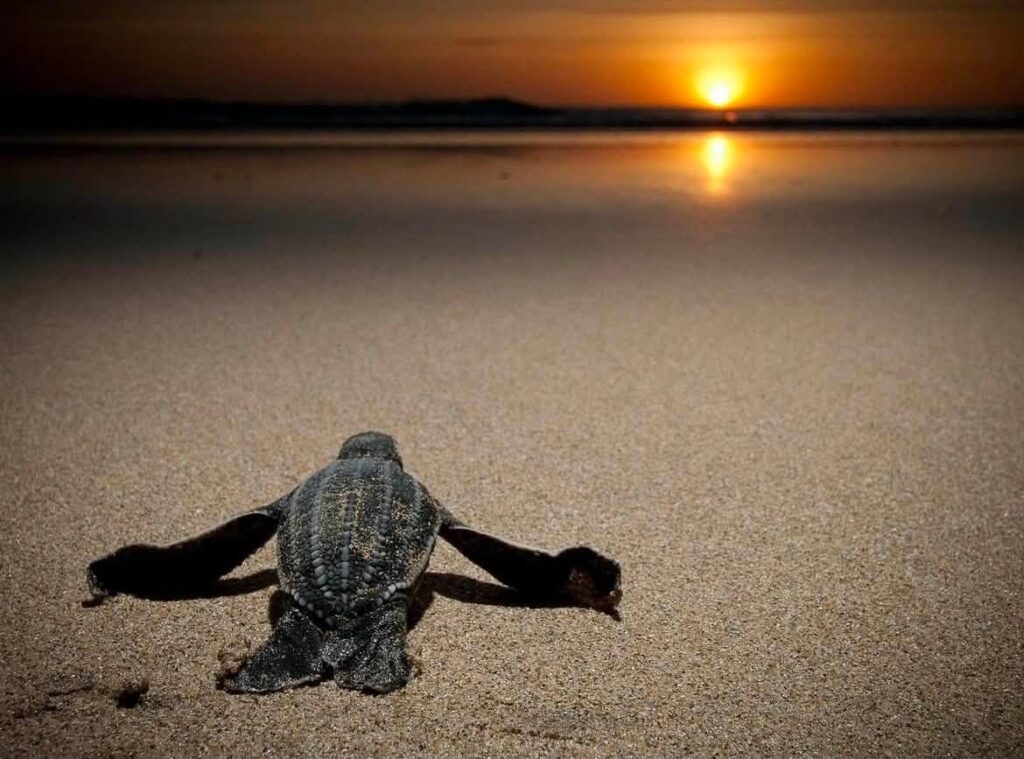
A hatchling leatherback sea turtle makes its way towards the Gulf of Mexico. File photo.