
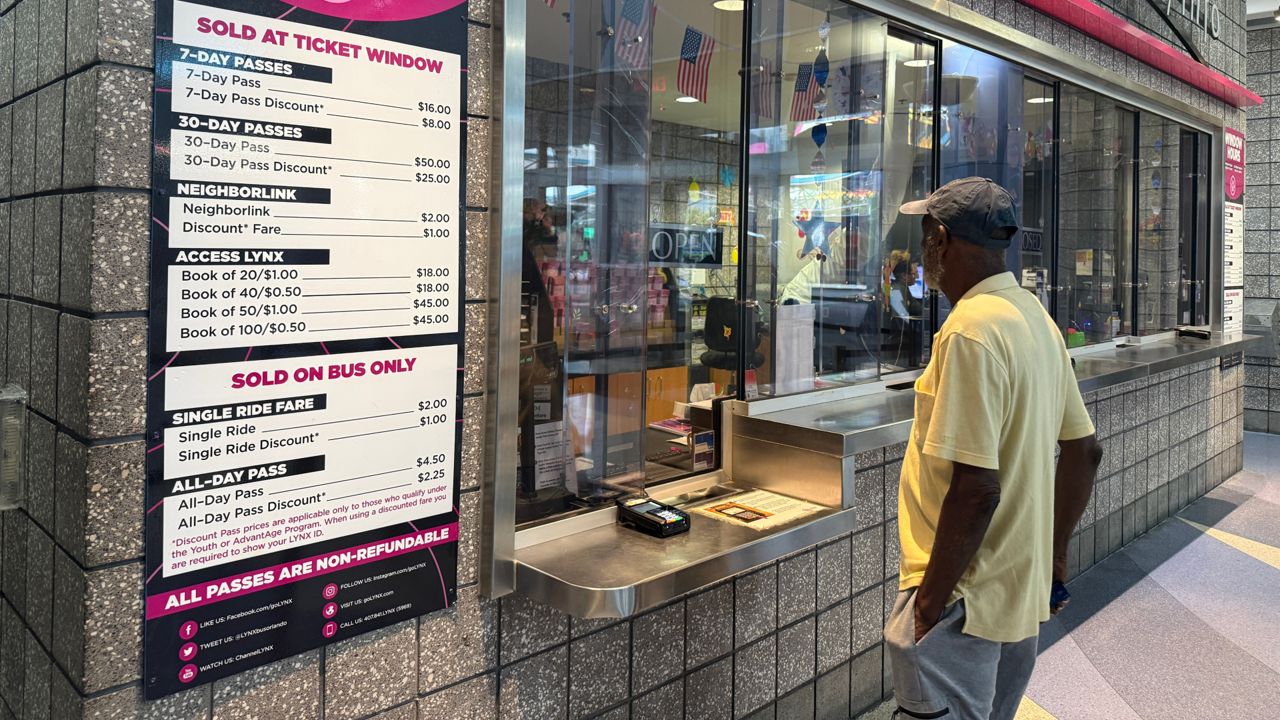
ORLANDO, Fla. — LYNX is asking bus riders for feedback on possible changes to how fares are paid and how much rides cost, including potential fare increases, fare capping, and a new reloadable payment card.
Its online survey is open until the end of August. LYNX plans to present the findings to its board before the end of the year to get direction on what to do next.
Current LYNX fares are $2 for a single ride, with a free transfer. According to LYNX, fares have not increased since 2009, and the board wants to review whether the current rate still fits their budget.
LYNX is also looking at newer transit industry trends that could streamline the payment process. One option under consideration is a reloadable card that riders could use to pay for bus trips.
Hakim Jones, a LYNX rider, said he often uses cash but supports the idea of a reloadable card. “I think that is awesome,” Jones said.
Another option under review is fare capping. According to LYNX, fare capping is used by many other transit agencies and allows riders to pay per ride until they reach a daily, weekly, or monthly threshold. After that, they stop being charged for additional rides during that period.
Jacin Strother, a LYNX rider, said fare capping would help him. “That would be positive for me, that helps me out honestly, big time,” Strother said.
LYNX is also considering increased fares, though no decisions have been made. “I think the fare is affordable,” Jones said. “If you raise it a little more, it is going to be a little too much.”
Strother said many riders rely on the bus system for daily needs. “Please don’t go too hard on us because there are people like me who are really struggling, honestly,” Strother said.
Matt Friedman, director of marketing and communication for LYNX, said they are looking at this because fare structures and payment trends change over time.
Friedman said the review is also connected to farebox recovery, the industry term for the share of an agency’s budget covered by fares. “You are always looking at bringing in fare box recovery,” Friedman said. “You want to have it as a certain percentage of your overall budget, and so this may be something that we need to do.”
Friedman said rider input will be central to the process. “We want your feedback. This is your system,” Friedman said.