
WEST PALM BEACH, Fla. (CBS12) — More than 10,000 people have been diagnosed with cyclosporiasis in the United States this season, a sharp increase from the hundreds of illnesses reported in July.
The Centers for Disease Control and Prevention said 10,468 laboratory-confirmed, domestically acquired cases were reported from May 1 through Aug. 3. At least 517 patients were hospitalized and two people died. Cases have been reported in 47 states.
The CDC is also reviewing more than 12,255 additional illnesses that have not been laboratory-confirmed or require further investigation, including determining whether patients were exposed while traveling outside the country. Because illness reports can take about six weeks to reach the agency, the CDC expects the numbers to continue rising.
The agency separately said Michigan accounted for many of the more than 12,255 additional cases that were unconfirmed or still under investigation.
Florida numbers
The CDC’s National Notifiable Diseases Surveillance System recorded 168 Florida cases during 2026 through July 18, including 62 cases reported during that week alone. At the same point in 2025, Florida had reported 63 cases. The figures are preliminary and can change as investigations are completed.
Data from the Florida Department of Health also showed 168 confirmed or probable cases reported from Jan. 1 through July 17. State figures included:
Miami-Dade County: 36Lee County: 18Broward County: 13Palm Beach County: 7Orange County: 7Osceola County: 7Pinellas County: 6Polk County: 6St. Lucie County: 2Martin County: 1
Florida recorded four cases in January, two in February, one in March, three in April, two in May, 42 in June and 114 during the first 17 days of July, according to state data.
Florida’s surveillance system includes confirmed and probable cases and assigns them to the patient’s county of residence, regardless of where the person was exposed, diagnosed or hospitalized. That methodology can produce a different total from the CDC, which said its main seasonal surveillance count includes only laboratory-confirmed domestic cases and excludes probable illnesses.
The latest Florida figure represents a substantial increase from CBS12 News’ previous report, when the state had confirmed at least 60 cases and the CDC was tracking 843 illnesses nationally across 31 states. Florida’s count has since nearly tripled, while the national laboratory-confirmed total has grown more than twelvefold.
Lettuce recall and outbreak investigation
Federal health officials are investigating several clusters of illness, including a multistate outbreak linked to iceberg lettuce.
Taylor Farms recalled iceberg lettuce sourced from central Mexico on July 17. The affected lettuce was sold in retail stores, supplied to restaurants and included in products distributed to food-service customers. Florida was among the states where recalled lettuce was distributed.
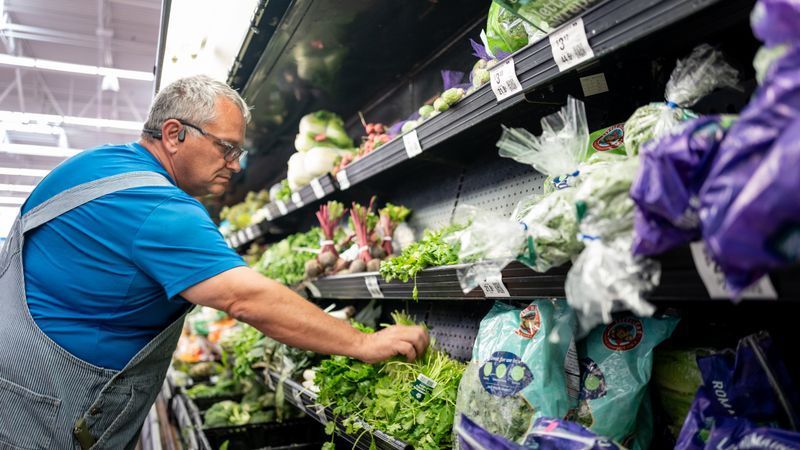
AUSTIN, TEXAS – JULY 23: A customer shops for cilantro at a Walmart Supercenter on July 23, 2026 in Austin, Texas. The cyclosporiasis outbreak, an intestinal illness caused by the microscopic parasite Cyclospora cayetanensis, has spread across multiple states and remains under investigation by federal health officials after the first known illness onset was reported in early May. (Photo by Brandon Bell/Getty Images)
However, the identified lettuce outbreak does not account for every illness under investigation, and public-health agencies have not connected all Florida cases to one food or exposure.
See also: Florida leprosy cases reached a record. See where cases are being reported
Cyclospora is a microscopic parasite that spreads when people consume contaminated food or water. It does not typically spread directly from one person to another because the parasite must spend time in the environment before becoming infectious.
The most common symptom is frequent, watery diarrhea. Other symptoms can include stomach cramps, nausea, loss of appetite, fatigue, weight loss, bloating and increased gas. Symptoms can begin several days to about two weeks after exposure and may persist for weeks or return after appearing to improve.
People experiencing prolonged diarrhea should contact a health-care provider and mention any recent consumption of fresh produce. Cyclosporiasis can be diagnosed through stool testing and is commonly treated with the antibiotic combination trimethoprim-sulfamethoxazole.
The CDC cautions that rinsing produce may reduce contamination but does not guarantee Cyclospora has been removed. Consumers should discard recalled products and thoroughly wash their hands, utensils and food-preparation surfaces after handling produce.