
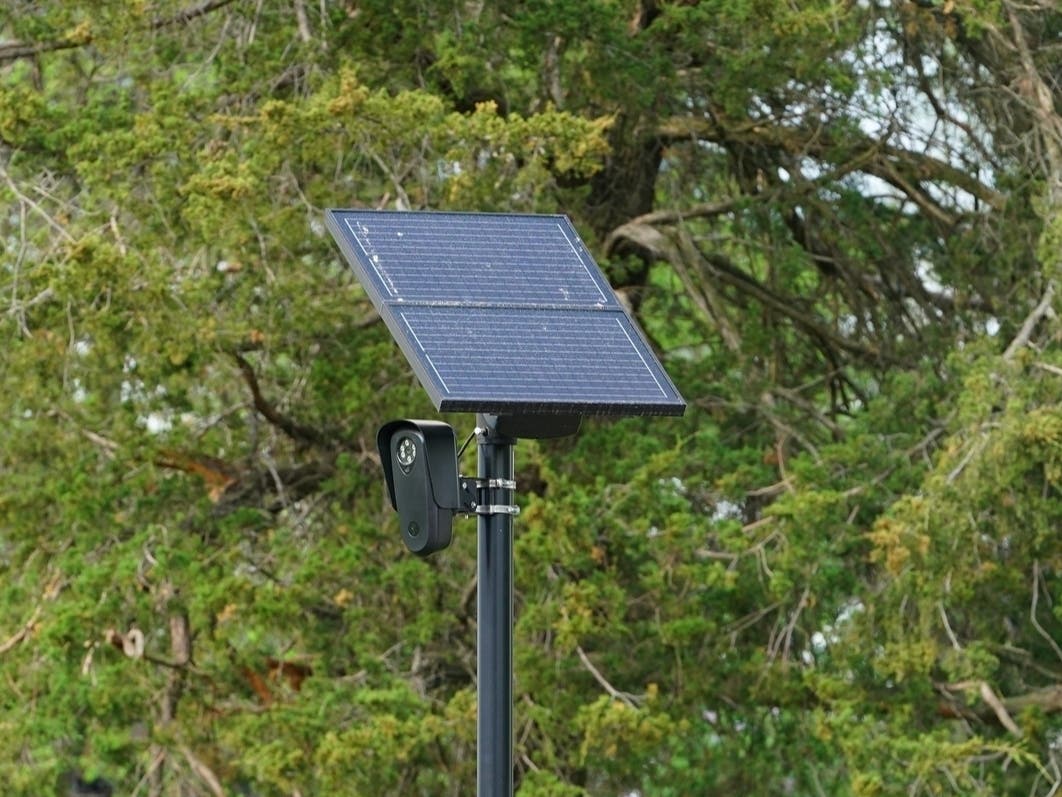
Carl Gunn has spent his last three Saturdays sitting in front of Flock cameras in different areas while holding a cardboard sign to block their view. He plans to continue these protests every weekend.
“I want the people to know that these are watching us as law-abiding citizens. The Constitution protects us from this. It says it right in there but our government has forgot to read it,” Gunn told WTSP.
Privacy advocates, including the American Civil Liberties Union and Electronic Frontier Foundation, have called for warrants, tighter limits on data sharing, shorter retention periods and regular audits. Flock rejects the description of its system as mass surveillance, arguing that its cameras capture vehicles only at fixed public locations rather than following them continuously.
Unless local rules or contracts specify otherwise, Flock says vehicle data is automatically deleted after 30 days.
St. Petersburg police Chief Anthony Holloway defended the use of flock cameras, calling them “a valuable investigative tool.” He said the St. Petersburg Police Department only uses the cameras to solve crimes and “does not use the cameras to monitor people’s daily activities or track where people go without a legitimate law enforcement purpose.”