
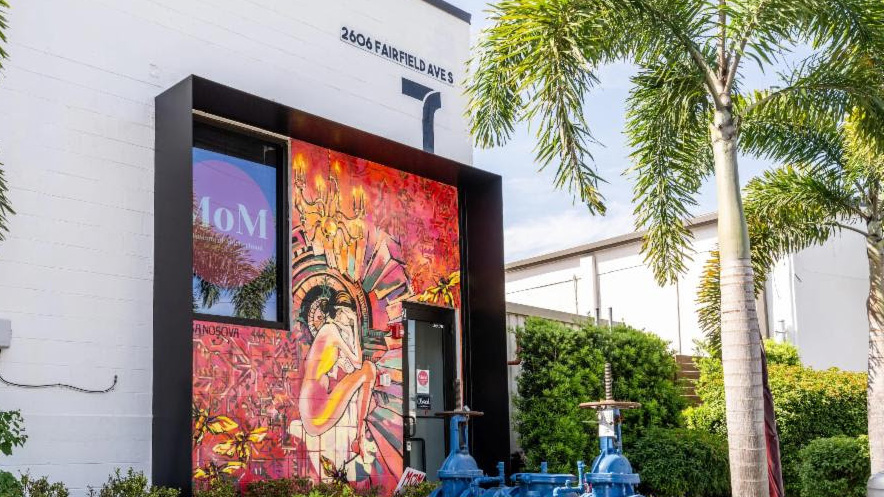
The Museum of Motherhood, or MoM, is closing its doors at the end of August and ushering in a new era in the digital sphere (at mommuseum.org).
Founded in 2002 by musician-mom-activist-academic Martha Joy Rose, the MoM’s mission is to redefine how society talks about motherhood. MoM administrators consider it a “living museum,” meaning that the exhibits and programs are didactic, interactive and iterative.
Inside the museum, at The Factory St. Pete, you can see work from artists from around the world depicting the experience of motherhood, from the moments of celebration and joy to the lesser-discussed experiences of grief, shame and confusion. Visitors can leave notes to their mothers on the “Write Out Loud” wall and browse a selection of books on parenthood, motherhood, women’s history and art.
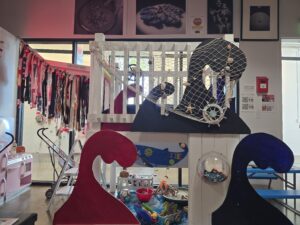
The museum offers programming like The Baby Cafe, a weekly event where community members can receive lactation guidance, emotional support and a place for their kids to play with others. In addition, the museum offers a rotating roster of events like artist talks and performances, community discussions and pop-up art experiences.
The move out of the location in The Factory is a response to “the evolution and the adoption of the organization and the ability to go into places that we need,” said Courtney Kessel, president of the board.
“The people who visit our museum are as much a part of our fixed installations because we also invite them to participate,” explained Alyssa Grannum, docent at the Museum of Motherhood.
“We had a child who was 9 years old come in and make a woman with an umbilical cord, and just her understanding of that [was incredible]. And so we said, ‘Now your sculpture is part of our museum, and we can talk about it.’ So I think from my perspective and space, everyone who comes in adds to the conversation, and then continues to add to the museum.”
In addition to the physical facility, the arts aspect of the organization includes an artists-in-residency program that has hosted artists from all over the world creating works centered around motherhood.
The roster has included Danish performance artist Julienne Doko, who performed her Worth of My Body at MoM in 2025, and Raisa Nosova, a New York-based multimedia artist who painted a mural.
Hosted in collaboration with the University of South Florida, the annual MoM Academic and Arts Conference serves as a nontraditional “classroom” arm of the institution. The three-day conference held in the spring provides a space for academics, artists, activists and average folks to come together and join the global conversation about mother studies.
Through art, experience, discussion and reflection, the conference “educates everyone, not just women, on what reproductive identity means and how broad that that spectrum is and can be,” said Kessel, an academic and interdisciplinary artist based at Ohio University.
The public sphere of the museum includes community offerings, such as motherhood meetups, fitness classes, community conversations and more.
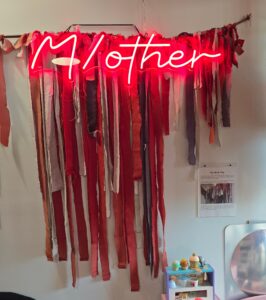 While the physical space that has housed MoM for the past three years is closing, these offerings to the community will continue via an online platform.
“Even though we may not have the physical walls, we’re still going to have these [safe] spaces for the women,” explained Barbara Lynch, a member of the MoM board.
The time to experience MoM’s exhibitions in person is limited, but there’s a full slate of events on deck to catch before the doors close Aug. 31. The organization will host a Community Celebration Tuesday, Aug. 18, at 6 p.m. to commemorate the legacy that MoM has built at The Factory, and to build excitement about the next chapter.
MoM will also host a reception featuring the work of Savannah Caroll, the current artist-in-residence, from 7-9 p.m. on Wednesday, Aug. 19.
Kessel likened the closure of the Factory space to “Superman going into the booth and changing,” and insisted the transition isn’t a setback but rather a nimble adaptation, a response to the moment at hand.
“We’re fluid. We have the ability, with the living museum, not to be confined by walls.”