
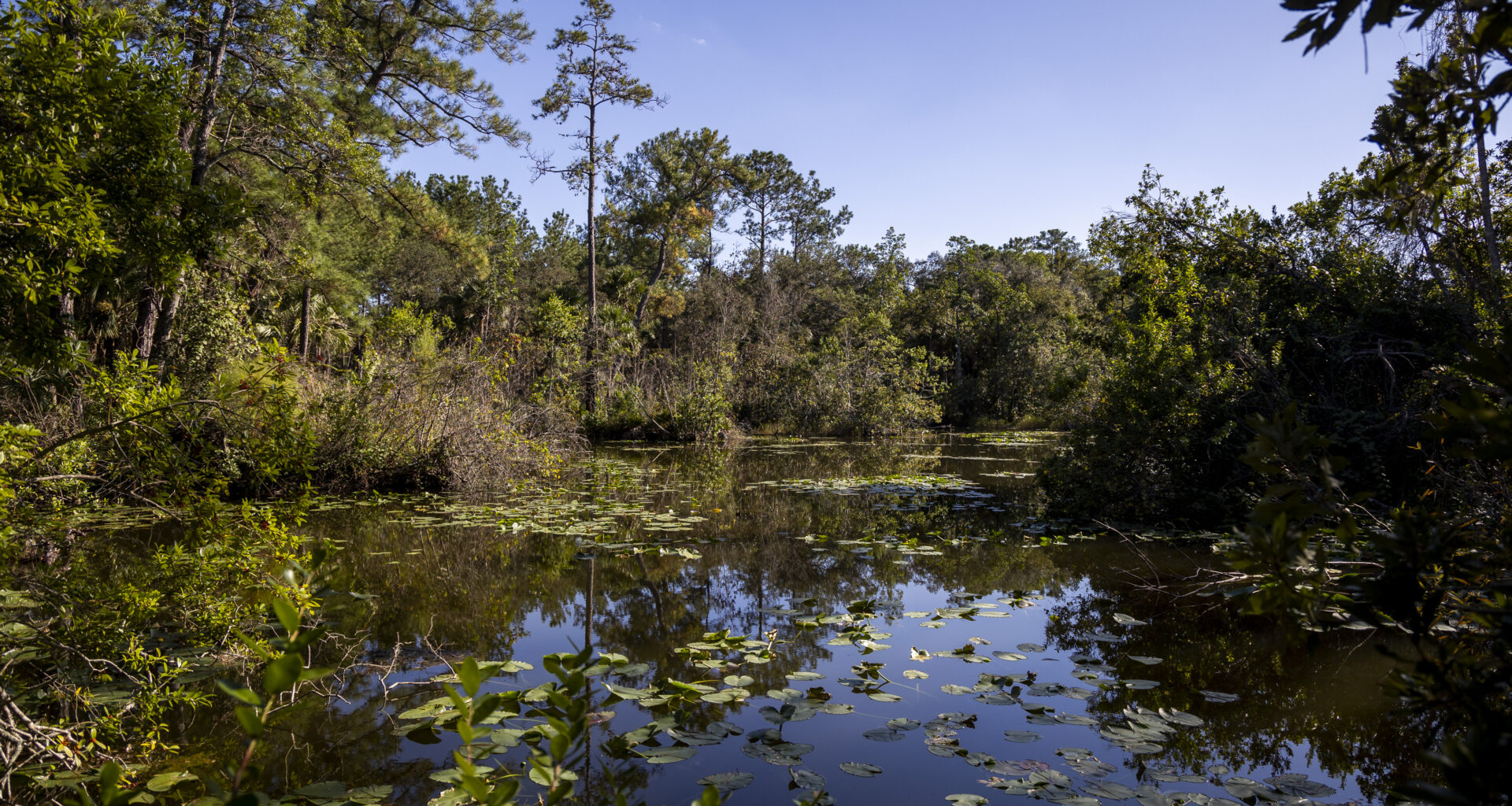
Florida is turning an ordinary visit to public land into another government appointment.
Wekiwa Springs State Park requires day-use reservations for every visitor, including annual-pass holders. Blue Spring State Park began requiring them on July 15. Rainbow Springs and Henderson Beach also use mandatory day-use reservations.
A family should not need an online account, password, advance payment and government-issued reservation merely to swim in a spring, ride a bicycle, walk through the woods or spend an afternoon outdoors.
Public parks are not theme parks, resorts or ticketed performances. They are land, water, trails, grass and trees maintained by government for the public.
The traditional system is simple: first come, first served. When a parking lot actually becomes full, pause vehicle entry. When a car leaves, admit the next visitor. That system responds to physical reality.
Reservations respond to predictions.
A reservation may be held by someone who is sick, working, delayed by weather or no longer planning to come. Until that unused reservation is released, an empty parking space can coexist with a government website declaring the park unavailable.
Florida should publish the relevant data: reservations issued, actual check-ins, cancellations, no-shows, refunds, fees retained, parking utilization and visitors denied admission while reserved capacity remained unused.
 Without those figures, the state cannot demonstrate that mandatory reservations increase access rather than merely making attendance more predictable for administrators.
The policy is particularly irrational when applied to bicyclists and pedestrians. A cyclist does not occupy an automobile parking space. A pedestrian does not add a vehicle to the entrance line. If parking is the problem, manage parking. If a swimming area has reached a scientifically established limit, manage that area. Do not treat every visitor and every activity as an identical unit of “capacity.”
At Blue Spring, a bicyclist may qualify for a zero-dollar reservation, but a zero-dollar reservation is still a requirement to obtain advance permission. A person can ride 20 miles, consume no parking space and arrive under his own power, only to be told he cannot enter because he did not secure a digital reservation.
That is not conservation. It is administrative convenience.
The reservation system also burdens ordinary family life. Floridians must decide in advance whether work, illness, weather, traffic and children will cooperate. When plans change, the citizen must cancel through the government’s process to obtain a refund. A no-show is nonrefundable even though the state provided no admission.
The amount may be small, but that makes the system less accountable, not more. Many people will not recover a few dollars because doing so requires another login, password search or telephone call. Meanwhile, the unused reservation may prevent another family from entering.
Government frequently describes these systems as improving the “visitor experience.” But the experience of people excluded by the system is rarely measured. A shorter gate line may benefit those who obtained reservations, while the person unable to reserve never reaches the gate and disappears from the agency’s statistics.
Florida can manage popular parks without imposing universal advance permission. The state can provide live parking information, retain optional reservations for visitors who want certainty, reserve substantial capacity for walk-up admission, release unused reservations promptly and allow payment at the gate.
Restrictions may sometimes be necessary to protect wildlife, water quality, public safety or a genuinely limited resource. But government should identify the actual problem, publish the evidence and tailor the rule to the affected use.
A full parking lot justifies temporarily pausing vehicle entry. It does not justify requiring every potential visitor to seek permission days in advance.
Florida’s Constitution recognizes that certain natural resources are held in trust for all the people. That principle does not eliminate reasonable park rules, but it establishes the proper relationship: government is the steward, and the public is the beneficiary.
Florida should restore first-come, first-served day use, preserve optional reservations and guarantee walk-up admission whenever actual capacity exists.
Public land should begin with public access—not a demand that the public reserve permission in advance.
Jeffrey T. Donner is an Orlando-based Florida trial lawyer with more than 26 years of experience in commercial, civil, insurance, environmental and government litigation.