
Casinos, sports betting apps, online gaming and prediction markets are spending millions on Florida’s midterm election in a historic spending spree, campaign finance reports show.
Through July, gaming interests gave at least $12.2 million to statewide candidates or committees in the 2026 election cycle. Three out of every four dollars given came from the Seminole Tribe, which operates the Hard Rock Hotel & Casino brand and controls much of the gambling in the state, including online sports betting.
Breaking into the market, however, are fledgling tech and finance companies that are redefining what it means to gamble. Online prediction market platforms, such as Kalshi, and all-purpose platforms like FanDuel and DraftKings that offer online casino gambling in other states, have given hundreds of thousands of dollars.
Some of this election cycle’s biggest spenders are contributing to Florida’s political campaigns for the first time ever.
This windfall of political contributions comes as the gaming industry finds itself at a digital crossroads. Online platforms are crashing a Florida marketplace that’s already controlled by the Seminole Tribe.
Gov. Ron DeSantis reached an agreement with the Seminole Tribe five years ago that guaranteed the state at least $500 million in annual revenue payments over 30 years in exchange for giving the tribe a monopoly on digital sports betting.
Yet the more money that is spent on prediction markets and online casino games, the more money that isn’t spent with the Seminole Tribe, eroding the tax revenue the state receives from the sanctioned betting, said Daniel Wallach, a gaming and sports betting attorney from Broward County.
“The next battleground is prediction markets and online gaming,” Wallach said. “It’s hardly shocking that politicians accept money from both sides of the debate.”
Both sides are betting Republicans will decide the outcome. U.S. Rep. Byron Donalds, the GOP front-runner for governor, received half of the $12 million doled out by gambling entities. No Democrat comes close.
Former governor Charlie Crist, who is running for St. Petersburg mayor and is a registered Democrat, did nab a $50,000 donation from the Seminole Tribe. That donation reflects how much gaming interests are splurging on political campaigns, said one of his opponents, Mayor Ken Welch.
“It is a concern to see the Seminole Tribe make a single contribution in a St. Petersburg race that’s more than all the money that some other candidates have raised,” Welch said. “It’s a dangerous moment.”
ActorTimothée Chalamet stars in a series of ads for Kalshi, the prediction market. ActorLuis Guzmán and former basketball player Blake Griffin talk about the NBA in a series of ads for FanDuel, the sports betting platform. SingerPost Malone and actorMatthew Broderick promote the Hard Rock gambling brand.
Ever since the U.S. Supreme Court in 2018 allowed states to legalize sports betting, the industry has exploded in the U.S. It produced $125 billion in revenue last year, a stream that is forecasted to surge in the coming years as brick-and-mortar casinos expand, mobile betting apps proliferate and regulations continue to vanish.
Lured by flush tax revenue, 47 states have approved some form of gambling compared with three (Nevada, New Jersey and Mississippi) in 1990, according to the American Gaming Association.
An estimated two-thirds of Americans have seen the recent glut of gambling ads, with one in five having an active account on a betting app, according to a poll last year by the Siena College Research Institute.
Despite clear academic consensus that gambling poses hazards to one’s mental health and financial security, cultural acceptance of gambling stretches from the boardroom to Hollywood to ball fields to campaign coffers.
“It’s normalized because gambling isn’t viewed as a sin anymore,” Wallach said. “The rise of digital gaming has increased the competitive pressure, which is sparking a spending frenzy in political campaigns. The gambling industry has gone mainstream.”
Here are the big spenders on statewide candidates and committees in Florida through July 31 for the 2026 election:
Seminole Tribe has made $9.1 million in contributions, the most it has spent since the 2022 election cycle. The tribe does more than gambling. It oversees a massive operation that includes citrus groves, cattle ranching, smoke shops and tourism. Aside from the $4 million that went to the Donalds’ campaign, the political committee for Commissioner of Agriculture Wilton Simpson got $1 million, incoming Senate President Jim Boyd’s committee took in$750,000, the Republican Party of Florida received$750,000 and the Florida Democratic Party got $200,000.
FanDuel Inc., which offers online sports betting in 25 states but not Florida, offers digital casino gaming and a prediction market. It gave $581,000. Nearly all of that went to Donalds’ political committee.
DK Crown Holdings Inc., which owns DraftKings and offers sports betting in 28 states but not Florida, also offers online casino gaming and a prediction market. It contributed $525,000; most of it went to Donalds’ campaign.
Sideprize, better known as the sports betting app PrizePicks, gave nearly $400,000, with about a quarter of that each to Donalds’ campaign and the Republican Party of Florida.
Kalshi, the prediction market, gave $268,000, with $75,000 going to Donalds’ campaign. In addition, Philadelphia billionaire Jeff Yass, the co-founder of Susquehanna International Group, one of Wall Street’s most successful trading firms, has championed prediction markets and is a part-owner of Kalshi. He’s given $7.5 million to Donalds’ campaign and another $3.5 million to a political committee that later donated to Donalds. When asked if Kalshi was a reason for his $11 million in contributions, a Yass representative replied that “Donalds is a school choice warrior.” Yass is a supporter of charter schools, a key plank in Donalds’ campaign.
A subsidiary of Caesars Entertainment, which owns Caesars Palace, Harrah’s, and other resorts, contributed $245,000. Donalds’ campaign got $25,000, while Boyd’s committee received $60,000.
The Sports Betting Alliance, a lobbying group that backs legalized online sports betting and casino gaming, gave $250,000, all of it going to Donalds.
Robinhood Markets, an online brokerage firm that makes money on platforms like Kalshi, gave $200,000, all of it going to Donalds.
Unless the donor explains the reason behind their contributions, or a document lays out their motivations, it’s hard to understand why exactly these gambling entities are opening their wallets this year.
Most of the big spenders couldn’t be reached.Robinhood Markets responded via a spokesperson, saying it gave to Donalds because it “remains focused on preserving and expanding access to the financial markets.”
Gary Bitner, the Seminole Tribe’s longtime spokesperson, said the tribe doesn’t comment on its political contributions.
St. Petersburg officials would like an explanation for the $50,000 the tribe gave Crist’s mayoral campaign in February. Welch said he hasn’t spoken to the tribe and doesn’t know why it would spend on a St. Pete race.
Is the tribe interested in expanding its Hard Rock brand into St. Pete? If so, where would it go?
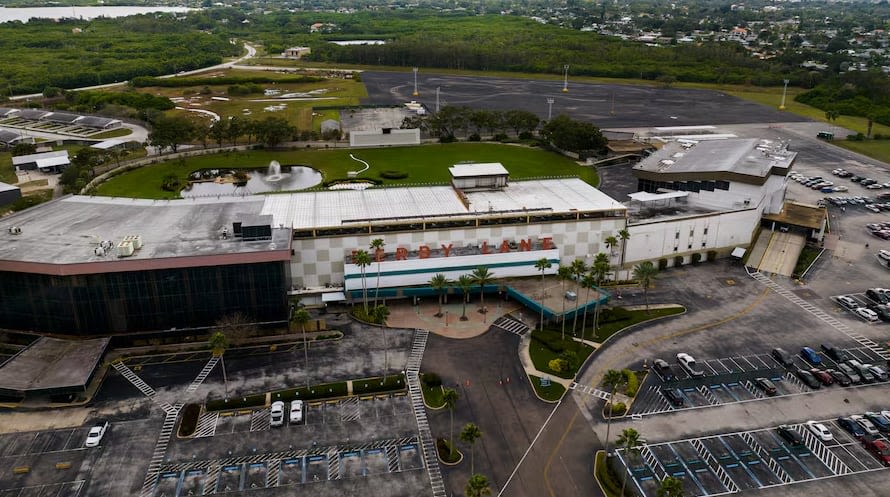
The most obvious candidate is Derby Lane, a 130-acre sitealong Gandy Boulevard that once hosted greyhound racing but is now home to poker games and a massive parking lot. It was bought by Rally Development last year.
Its CEO, Sagi Genger, has a gaming background and wants to turn the property into a premier entertainment hub.
The Times asked Genger if he’s spoken with tribe officials and why Rally Development contributed $450 to Crist’s campaign. Genger didn’t respond.
Welch pointed out that Derby Lane isn’t in the city, so the land would need to get annexed before St. Pete officials could help oversee it. It’s also low-lying and susceptible to flood waters, Welch said.
The Crist campaign said the tribe has no known interest in St. Petersburg politics “beyond wanting competent government in the larger Tampa Bay community,” said Michelle Todd Schorsch, the chairperson for Crist’s campaign committee, St. Pete Shines.
When the Times asked the Donalds campaign about the $6 million it got from gambling interests, a spokesperson said the donations wouldn’t steer policy decisions.
“Byron Donalds answers to no one but the people of Florida. Byron will always make policy decisions that are in the best interest of our citizens and that abide by the constitution and laws of the land,” said senior campaign adviser Danielle Alvarez.
Donalds’ likely Democratic opponent in the Nov. 3 general election, former U.S. Rep. David Jolly, lags far behind in contributions. During a gala dinner for Democrats in Tampa on Saturday, he said big donors like the Seminole Tribe, major utilities, tech companies, private equity firms and for-profit schools want to sway public policy to their benefit.
“All of them are funding Byron Donalds,” Jolly said. “They don’t care about Byron Donalds. They want to make sure that they have more power than we do. And they’re using Byron Donalds to do it.”
• • •
Tampa Bay Times Election Coverage
Know your candidates: 2026 Florida election candidates: Primary voter guide
Congressional midterms: St. Petersburg and Wauchula are in the same congressional district. We drove it
Property tax amendment: DeSantis has claims about his tax amendment. Here’s what it actually does.
State races: Here’s who wants to represent Tampa Bay in Legislature, Cabinet primaries
Congressional candidates: Who’s running for the US House in Tampa Bay after redistricting?
Governor’s race: Field set for Florida 2026 governor race