
STOCK PHOTO
Bob Morgan lives on a small farm in the Acreage. There, on slightly more than an acre, he raises chickens, peacocks and bobwhite quail. When the quail reach maturity, he releases them into the surrounding community he’s called home for about a decade.
“I wanted to try to be a kid again,” he said of his farming life.
Nearly 50,000 people live in this unincorporated part of Palm Beach County, made up mostly of rural neighborhoods and homesteads.
As president of the Acreage Landowners Association, Morgan has fought a few battles over the years to keep the area rural.
But none of that prepared him for Project Tango.
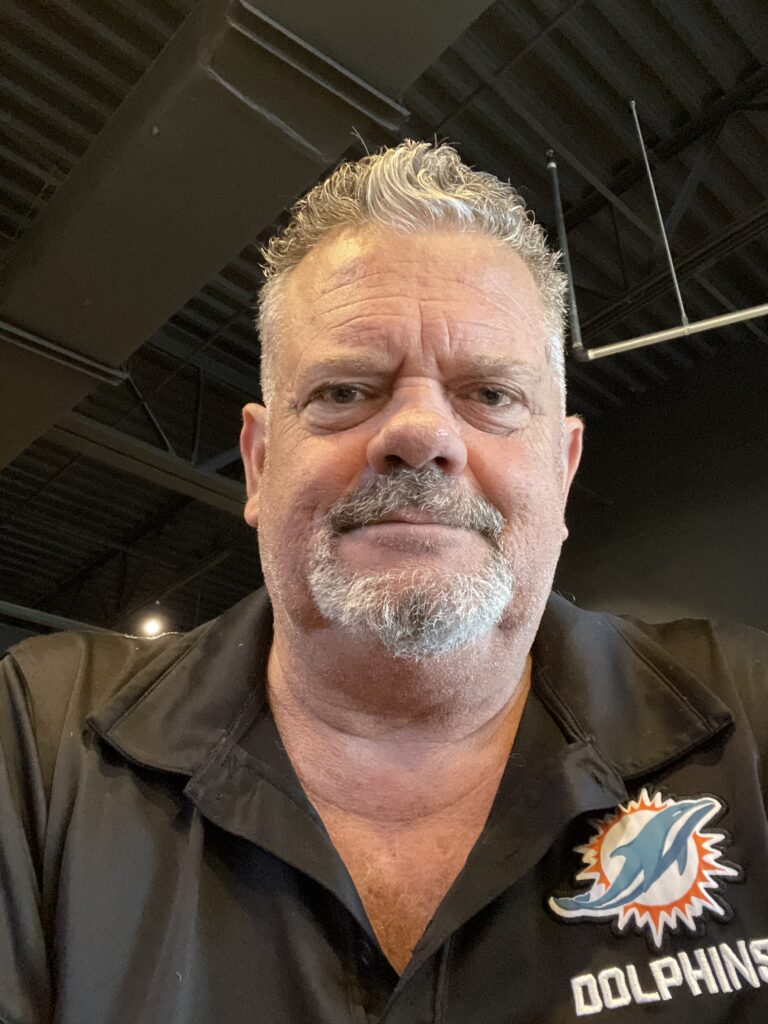
Bob Morgan, president of the Acreage Landowners Association. -COURTESY PHOTO
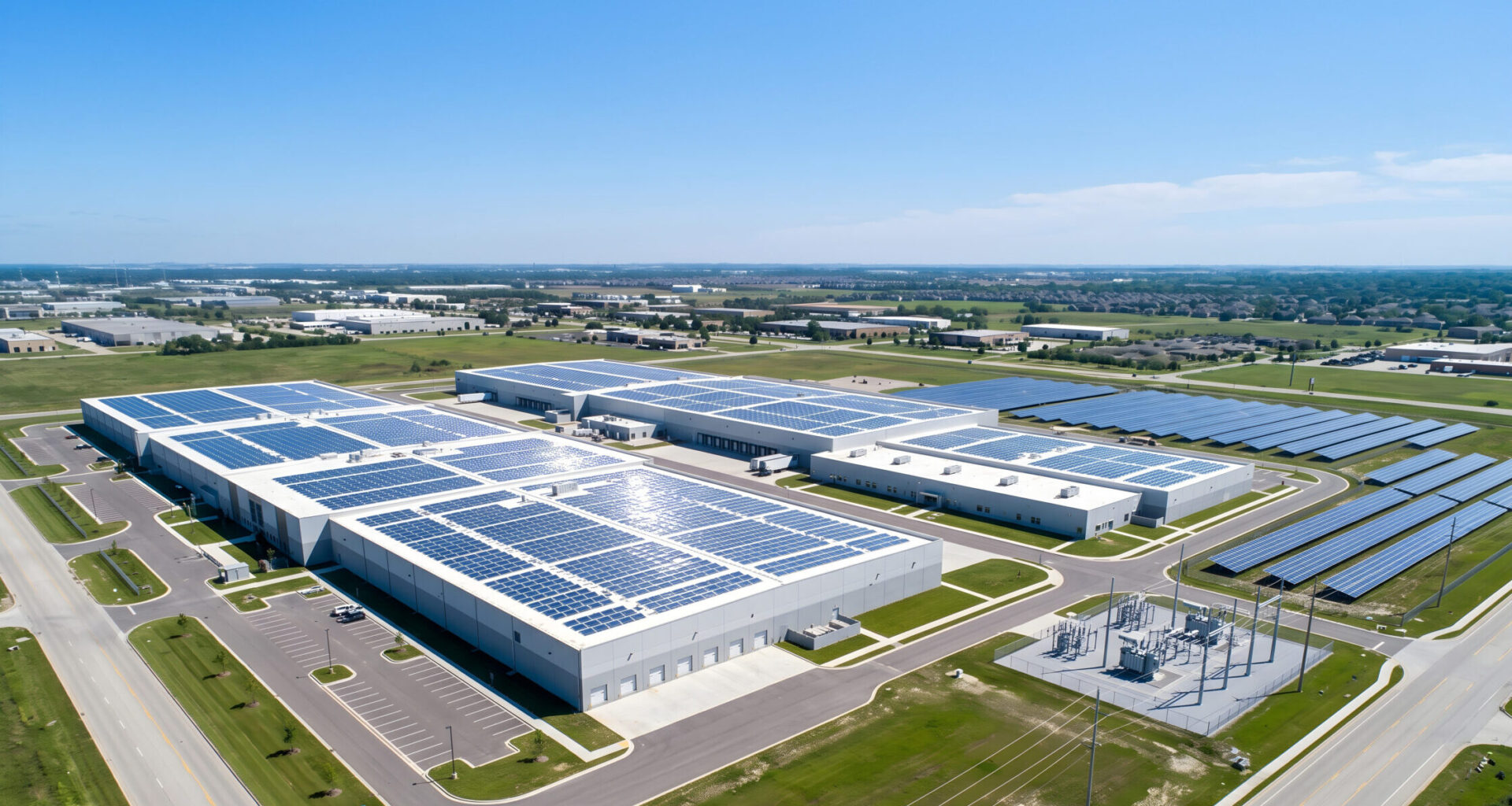
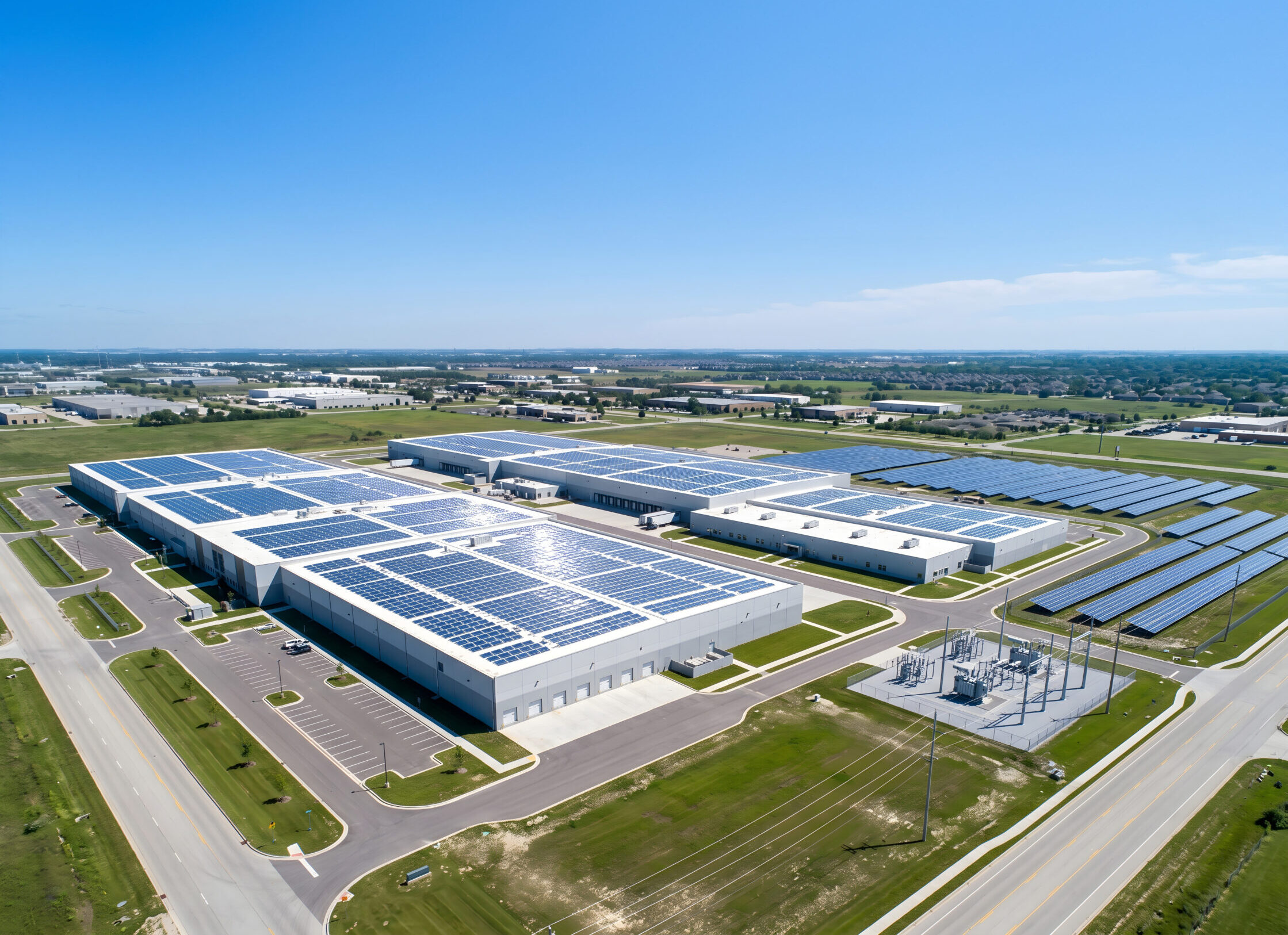
PBA Holdings’ Project Tango sought approval to expand a previously approved project in western Palm Beach County into a proposed hyperscale AI data center totaling more than 3.5 million square feet – about the equivalent of 60 football fields.
Residents were outraged. Not only was the center located close to the Arden residential community, but it also sat within 1,000 feet of an elementary school – in addition to the noise and the environmental toll it would bring, Morgan said.
He was among those who attended a marathon 12-hour public hearing in July, which ended with Palm Beach County commissioners rejecting the expansion by a 5-1 vote.
Despite the decision, Morgan remains frustrated. As a farmer who must pull a permit and submit floodplain drawings to build a five-by-six-foot chicken coop, he wonders how Project Tango got as far as it did with seemingly little public scrutiny.
“Up until this recent meeting, there was really never any exact data known,” Morgan said. “You didn’t know how they were going to build it. They just said they were going to do this, but there was never anything on paper.”
The fight isn’t over. The commission’s decision was “without prejudice,” meaning the developer can revise and resubmit its plan.
“We’re still in a predicament of what is a hyperscale data center, and can they build without any restrictions?” Morgan said.
“The counties or whoever’s in charge of approving these projects, they need to spend the time and money on getting unbiased data, getting the facts of how these data centers are going to be built. And each one’s going to be different.”
The Tango fight speaks to a larger issue facing communities across Florida: What should the public know, and what rules should be in place, before the next hyperscale arrives?
The responses differ. Some communities are trying to stop projects with temporary bans, some are rewriting outdated zoning rules, and others are trying to develop regulations before an application is submitted.
As of July 30, at least 14 Florida counties had declared moratoriums on data centers, and one, Wakulla County, enacted a permanent ban. Several other counties are discussing moratoriums or some kind of action to prevent projects whose scale and resource demands may be far beyond what their existing land-use codes envisioned.
The U.S. now has more than 3,000 operating data centers, with more than 1,500 additional facilities in development, according to Pew Research Center.
A ‘hot potato’
Much of the world’s internet traffic flows through a community in Virginia called Loudoun County. With about 250 data centers, one of the world’s largest concentrations, it’s known as “Data Center Alley.” Not coincidentally, it ranks as one of the richest counties in America by median household income.
Yet local officials in Florida don’t see prosperity when they look at Loudoun. They see a cautionary tale.
“I don’t want to become a Loudoun County,” said Charlotte County Commissioner Bill Truex.

STOCK PHOTO
He and the rest of the county board discussed regulating data centers at a workshop in June, ultimately deciding to wait six months to see what action other counties take.
Shaun Cullinan, the county’s zoning official, explained that counties need to act in response to the state’s new data center law that went into effect in July. Among other things, SB 484 gives local governments the ability to regulate data centers.
“This is different from what we usually see with legislation, where they’re taking away our rights to govern,” he said. “This is a hot-potato issue.”
Cullinan said Florida is emerging as a data center market for several reasons: rapid population growth, expanding fiber connectivity, proximity to Latin America and the Caribbean, strong telecom infrastructure in Miami, and increased demand for AI computing.
He also noted several “cons” associated with data centers, including high energy consumption, water usage, wastewater contamination and heat generation, grid strain, rising utility costs and land-use conflicts. Other concerns are noise, limited employment relative to space, and air-quality issues from diesel generators.
A large hyperscale data center can consume as much water as a town of roughly 50,000 people, according to the California Little Hoover Commission.
“What takes this off the table for me is the water requirement,” said Commissioner Chris Constance. “We can show our water projections are strained and stressed. We can’t afford this. This isn’t anything I want to see here.”
The county’s comprehensive plan – which defines what can be built and where – doesn’t include data centers.
“It appears that we do have to do something,” Cullinan said, referring to the new statute.
Truex said the ambient noise associated with hyperscalers is a big concern not only for humans but for wildlife: “The humming and the buzzing are a real concern for me.”
Commissioner Joseph Tiseo said that setting standards for data centers would likely open the door for a company to meet them. So far, the county hasn’t received any data-center applications.
“I think we should just change our land-use code and prohibit them,” he said.
If legally challenged, he said, “we can cross that bridge when we come to it.”
Golden goose or Trojan horse?
While Charlotte takes a wait-and-see approach, other counties are moving fast.
Among those is Palm Beach County, where, in the aftermath of Project Tango, commissioners directed staff to establish a one-year moratorium on new data-center applications. The ordinance is still undergoing adoption and will have a final vote in late September.
In Collier County, commissioners declared zoning in progress. This signals that new land-use rules are being written that may affect future applications.
County zoning regulations allow data centers but don’t currently address hyperscalers, according to Collier County Planning & Zoning Director Michael Bosi. In fact, the county’s definition of a data center hasn’t been updated since the 1980s.

STOCK PHOTO
“The hyperscale centers are the ones with the greatest concern for water and power consumption,” Bosi said, while noting the county hasn’t received any hyperscale proposals.
“We need to do something to pump the brakes on it and get ahead on it,” said County Commissioner Burt Saunders.
Rather than declare a moratorium, commissioners and county officials believe the zoning-in-progress is a better approach. Unlike a moratorium, it doesn’t stop development. Instead, it tells developers that the rules are changing.
“What we’re doing is a more detailed approach,” said Commissioner Rick LoCastro. “It’s a much smarter approach, more legally supportable, a better template for what counties can do about the unknowns of a data center.”
The city of North Port in Sarasota County recently proposed an 18-month moratorium. The ban would be retroactive to include a pending data-center application.
City Commissioner Phil Stokes noted how aggressively companies are moving to build data centers in Florida.
“Is it the golden goose or the Trojan horse?” he said before the board’s unanimous vote.
“This is, in my opinion, a hill to die on.”
When a data center isn’t a data center
Bonita Springs has seen similar concerns about data centers play out, as residents recently took to social media with questions about a new facility under construction.
Mayor Mike Gibson explained the project is actually an internet relay station, but the city’s outdated land-use terminology required the developer to apply for it as a data center.
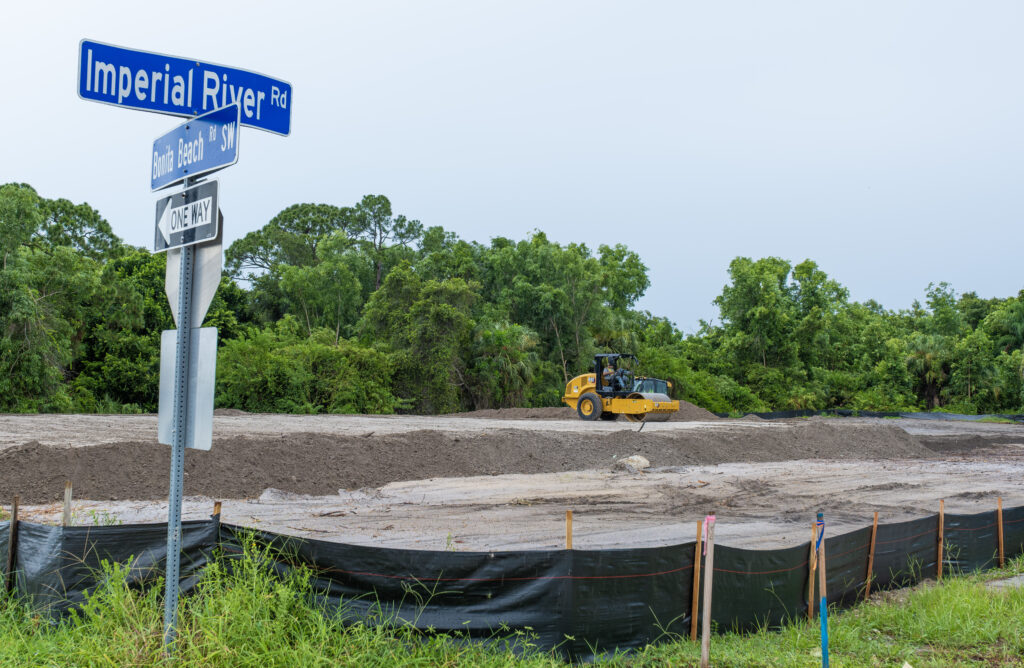
Street views of 27695 Imperial River Road on the corner of Bonita Beach Road in Bonita Springs, the site of the city’s planned data center. -DAVID WISHTISCHIN / FLORIDA WEEKLY
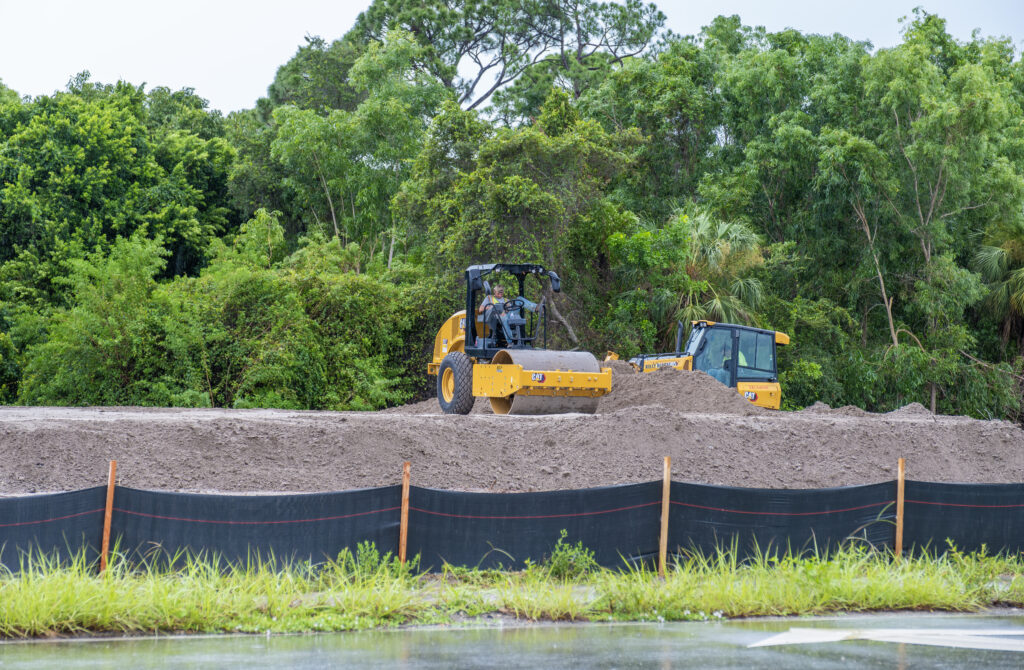
Street views of 27695 Imperial River Road on the corner of Bonita Beach Road in Bonita Springs, the site of the city’s planned data center. -DAVID WISHTISCHIN / FLORIDA WEEKLY
Because the project is small, it would employ only about six people and is not expected to create significant traffic, flooding or utility impacts, it passed the council without opposition last year, he said.
“Fast forward to this year and everyone is worried about large AI data centers being built and concerns over the water and electricity they use,” he said.
But Gibson said those concerns largely subsided after people learned what is actually being built.
“It’s just going to look like an office building and will be smaller than a standalone Walgreens or CVS,” Gibson said. “Its water and electrical connections are the same as what most commercial uses would require, so it won’t be a burden on our resources.”
He said Bonita Springs is an unlikely site for a major data project, as the little vacant land remaining is low-lying and flood prone.
What makes a hyperscaler different?
As Cullinan explained to Charlotte County commissioners, not all data centers are the same.
While a large-scale data center has an anticipated monthly peak load of 50 megawatts – enough to power 50,000 homes for a year – hyperscale data centers can demand up to 100 megawatts, occupy 100 to 300 acres or more, and encompass a building footprint from 500,000 to more than 1.5 million square feet, according to Cullinan.
He referred to a proposed hyperscale project in DeSoto County that would total more than 8 million square feet, making it one of the largest in the country if built.
In May, DeSoto officials approved a rezoning request from DCIP Group to build a hyperscale data center on a 34-acre site. The company has since presented a revised campus proposal spanning more than 850 acres and a long-term potential build-out of up to 1,315 acres.
Responding to backlash, DeSoto County commissioners in July passed a moratorium on new data-center applications, but it doesn’t apply to projects already in the development pipeline.
Collier County addresses their codes
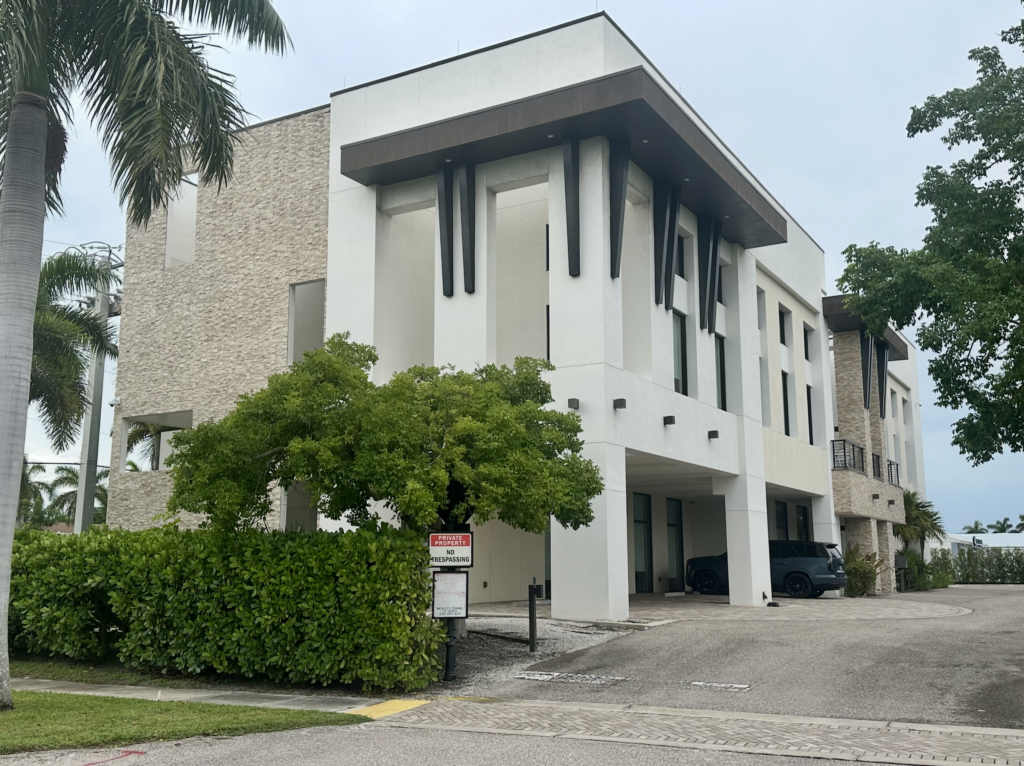
Naples only data center, operated by Skylink, offers IT services. It is about 100,000 square feet, at 801 Orchid Drive, near Naples Preserve, Fleischmann Park, the Coquina Sands community and the Chabad Jewish Community Center. -KELLY J FARRELL / FLORIDA WEEKLY
Prior to a Collier County Commission decision on Tuesday, July 28, Collier County Community Planning Manager Mike Bosi reported that the County has not approved any hyper scale data centers yet but one could potentially be allowed per County land development code based on a legal definition written in 1987. So, Collier County Commissioners enacted a “zoning in action” to stop any hyper scale data center applications while the County gathers data about data centers and amends codes accordingly.
Commissioners gave their consensus during their Tuesday, July 28 meeting to review the LDC and policies for any inconsistencies and outdated parameters while researching the true effects of data centers to best amend policies for the protection of the community and/or for best construction parameters of data centers, particularly defining data centers and hyper scale data centers within the code to match current technology, said Collier County Commissioner Bill McDaniel. The matter will be reviewed by the County Planning Commission before returning to the elected County Commissioners.
Ironically, AI will likely be used to gather the data on codes and policies and to point out inconsistencies, McDaniel said. Meanwhile, research is underway by County government to determine water usage, radiation, electricity usage, potential sound barriers and other data, to inform decisions on what will be allowed in the future.
DataCenters.com shares information on the location and other details about data centers throughout the U.S., including a data center operated by Skylink Data Centers that is 100,000 square feet located within the City of Naples at 801 Orchid Drive, near Fifth Avenue South and Ninth Street South. The Center offers hosting; leasing of software and hardware; security; storage and backup options; and other services. (Skylinkdc.com).
A statewide focus
Data centers have become a key issue in Florida’s gubernatorial race.
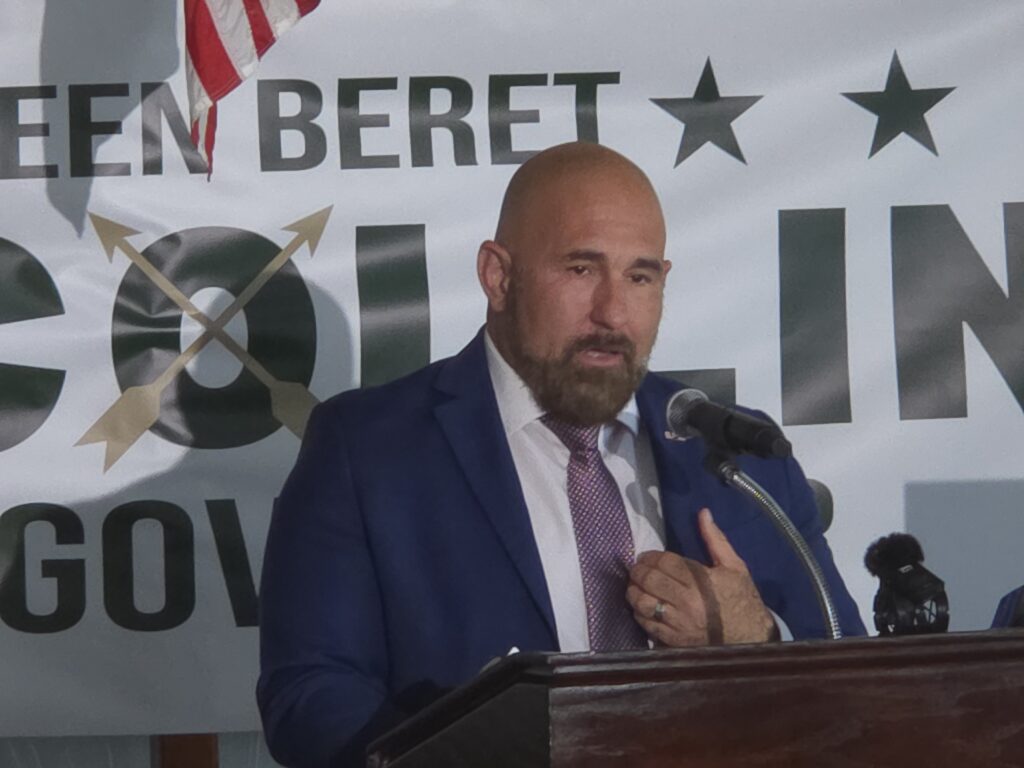
Lt. Gov. Jay Collins spoke about data centers during a campaign stop in Port Charlotte. -GARRY OVERBEY / FLORIDA WEEKLY
During a campaign stop in Port Charlotte in June, Lt. Gov. Jay Collins, a candidate for governor, said data centers have become a “universal” issue for Florida residents second only to immigration.
“Hyperscalers are something very new, and we’re trying to come to grips and terms with exactly what that means.”
Water is a big concern.
“Every family depends on it,” Collins said. “Every farmer, every small business, every community, and once it’s gone, once it’s tarnished, it’s gone, and you can’t fix that.”
He doesn’t think moratoriums are the answer, however, comparing them to gun control.
“We have to manage the system and have firewalls and protections to protect our people.”
He praised Gov. Ron DeSantis for signing SB 484 into law.
DeSantis said the legislation would protect communities from hyperscale data centers by requiring them to pay the full cost of electric service and prevent costs from shifting to ratepayers.
The law also preserves local governments’ zoning and land-use authority, including the ability to set stricter standards, and requires an independent study of the impacts of large-scale data centers.
The environmental question
Government officials aren’t alone in grappling with data centers. Environmental advocacy groups are also troubled by the potential effects.
The devil’s in the details,” said Jason Pim, board president of Calusa Waterkeeper. “They’re all different.”
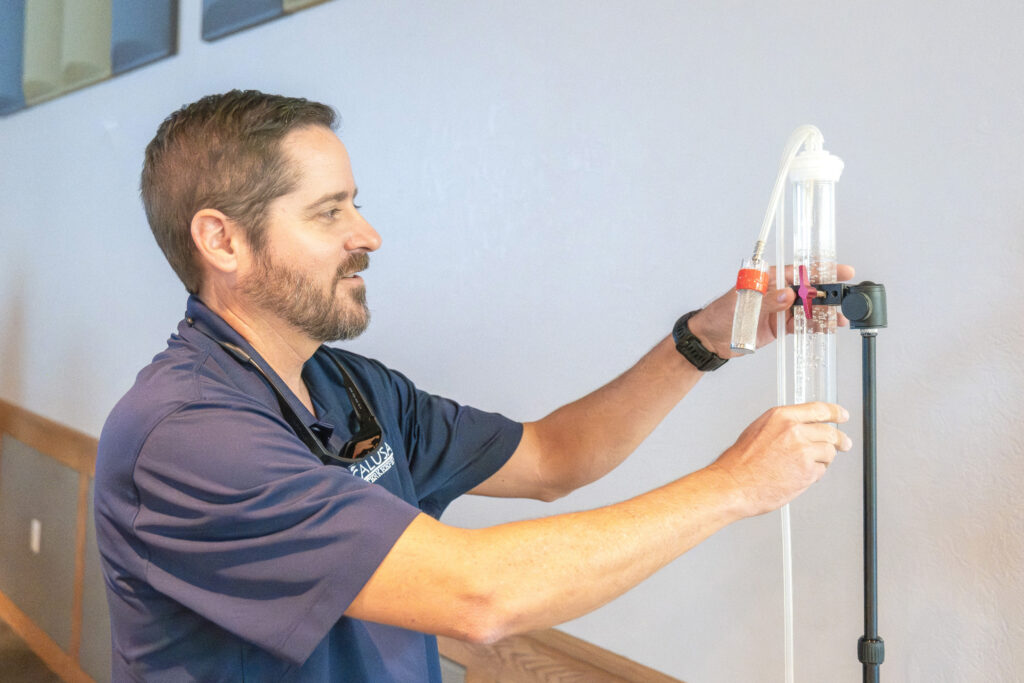
Jason Pim with Calusa Waterkeeper. -DAVID WISHTISCHIN / FLORIDA WEEKLY
Calusa Waterkeeper is a volunteer nonprofit organization that monitors the Caloosahatchee River watershed, from Lake Okeechobee to the coastal estuaries and Gulf waters of Southwest Florida.
Pim said the organization isn’t necessarily opposed to data centers, but it advocates for officials to carefully vet projects and seek independent analysis.
“Whoever the private entity is applying for the permit has specialists to create reports,” Pim said, “and it’s really important to be able to analyze the impacts independently in case anything gets left out.”
Water used to cool data centers can pollute waterways when discharged, especially if chemicals like glycol are added, according to Pim.
“Even if the water is relatively clean, even a higher temperature getting discharged can be a very serious issue,” he said, adding that this can threaten wildlife, fish and aquatic habitat.
Pim also noted that as technology becomes more efficient, it tends to grow more compact over time, which raises the question: What happens when a hyperscaler occupying millions of square feet becomes obsolete in a decade?
“That’s one reason to be hesitant or to take your time and make sure a project’s in the best interest of a community,” Pim said.
“You hear a lot of rhetoric about these projects being essential or critical, but the environment is a pretty critical resource too, and we need to make sure we’re doing our best to not impact that adversely.”
In Palm Beach, Morgan is watching Project Tango’s next move. He echoed Pim’s comment that large-scale projects need time for proper vetting. “They need to spend the time and money to get data, to get correct data, non-biased data.”
Kelly J. Farrell contributed to this report.