
Hours after Hurricane Ian stormed through Central Florida in 2022, Mark Greenwald and his neighbors in Winter Springs watched as catfish, snakes and crayfish swam through their flooded yards.
“We’ve never seen anything like that,” Greenwald said this week. “All kinds of critters just flowing by.”
One homeowner used a kayak to navigate his way through the submerged streets, while another pulled an inner tube with his golf cart.
Now, Greenwald and others in Winter Springs are worried that Seminole County may exacerbate the flooding threat.
The county is moving to sell Jetta Point, a property it owns nearby and once eyed for a regional recreation site. If the land ultimately is used for commercial development, large rooftops and parking lots might lead to huge runoff problems.
The property, a vacant 46-acre greenbelt of woods, grass and swamp just west of State Road 417, also sits along the south side of busy S.R. 434, which sees roughly 28,500 vehicles a day. And the Cross Seminole Trail, with scores of daily bicyclists and pedestrians, cuts through the western edge of the land.
However, because Jetta Point sits at a slightly higher elevation, stormwater not captured by the surrounding ditches and underground pipes tends to flow west and southwest toward the neighboring homes. And in recent years, the flow of water has increased because of new development as far away as Oviedo, as well as increasingly powerful storm events dropping more rain.
Residents and city officials say the county’s aging stormwater infrastructure has not been regularly cleared and upgraded, and it’s not designed to handle a sudden deluge of water.
“Do not sell the property until all the drainage and stormwater issues have been addressed,” said Victor Westhall, whose home on Peregrine Court abuts Jetta Point, to Seminole commissioners at a meeting last month.
Seminole purchased Jetta Point in 2002 for $4.3 million with plans to build a sports complex, with help from a $1.7 million grant from the Florida Communities Trust.
But in 2012, county commissioners nixed the project after droves of nearby residents turned out to a meeting to protest a complex that would bring noise, traffic and bright lights, along with the destruction of eagles’ nests.
Four years later, Seminole decided to buy the shuttered 96-acre Rolling Hills golf course near Altamonte Springs instead and turn it into a passive public park.
To help pay for the purchase and development of Rolling Hills, Seminole asked state officials to lift and transfer the conservation restrictions placed on the Jetta Point property from the state grant to the former golf course property.
Otherwise, Seminole would lose that state grant money once it dropped plans to build a complex and park at Jetta Point, county Manager Darren Gray said.
Last month, Seminole commissioners finalized the exchange in an unanimous vote, paving the way for the land to be designated as surplus property and eventually put on the real estate market.
But no decision has yet been made by commissioners on when to sell Jetta Point. Commissioners and county staff have not said whether anyone has inquired about purchasing the land for a development.
Even so, Commissioner Jay Zembower pointed out that Jetta Point is within Winter Springs, therefore any future development — whether it’s for stores and businesses or recreation — would have to be approved by the city, not Seminole County.
Seminole also needs the benefits from a sale of the property, as well as a state grant, to build a county park elsewhere.
“The promise was made to the taxpayers of this county – not once but multiple times – that this property would be [sold] to fund improvements” at the Rolling Hills park, Zembower said.
Winter Springs Mayor Kevin McCann said “the most important thing” is that nearby residents are protected from flooding. He urged county and city officials to work together on stormwater drainage along with Oviedo staff, whose city boundaries cross into a southern portion of Jetta Point.
“I would be thrilled if we could buy the property for preservation” and a passive park, said McCann, estimating the purchase could cost up to $10 million. “But that’s big money for us…We might be able to chase down some grants.”
Seminole Commissioner Lee Constantine suggested Jetta Point could be considered for purchase by the county’s Seminole Forever land acquisition program.
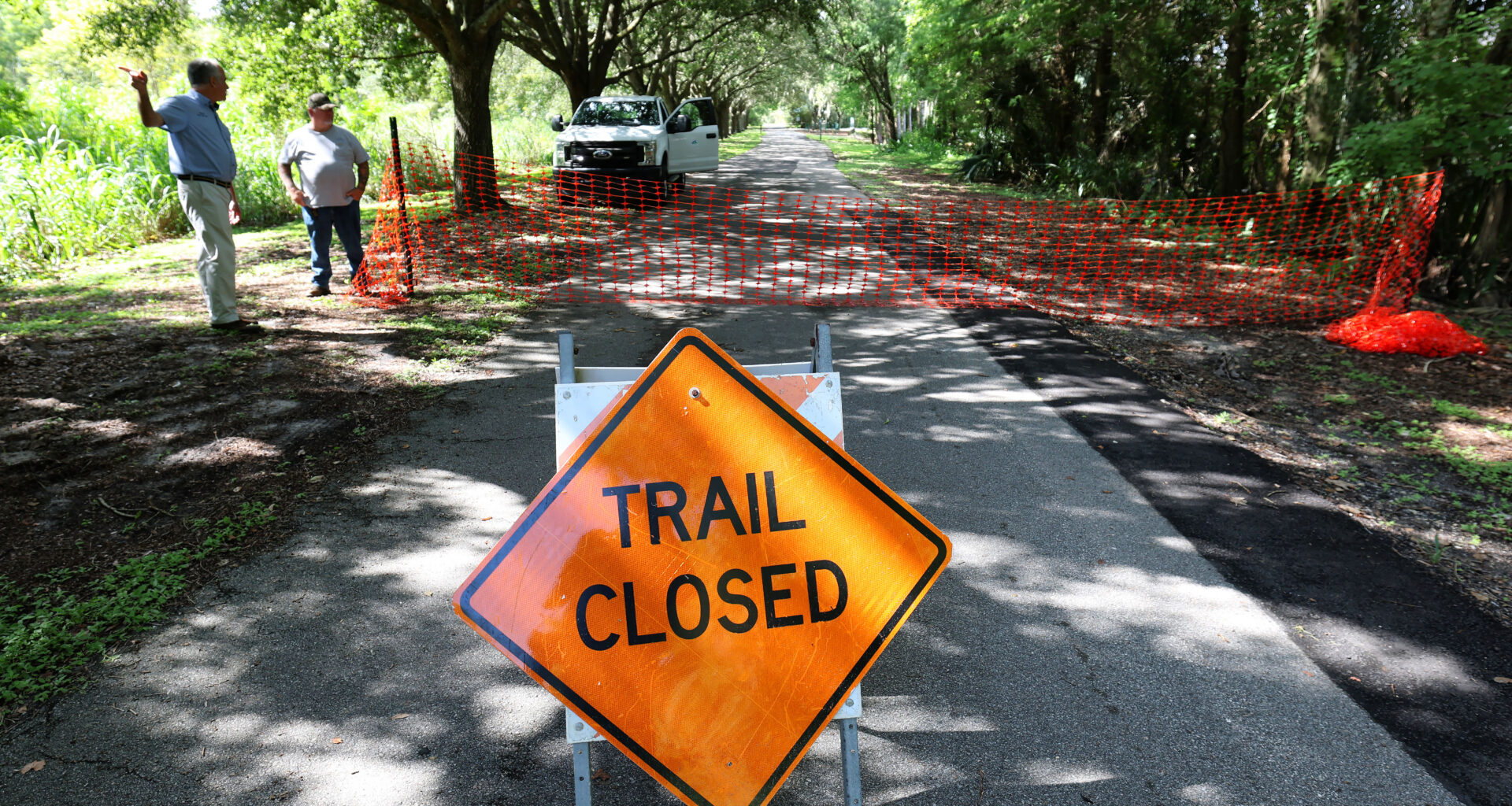
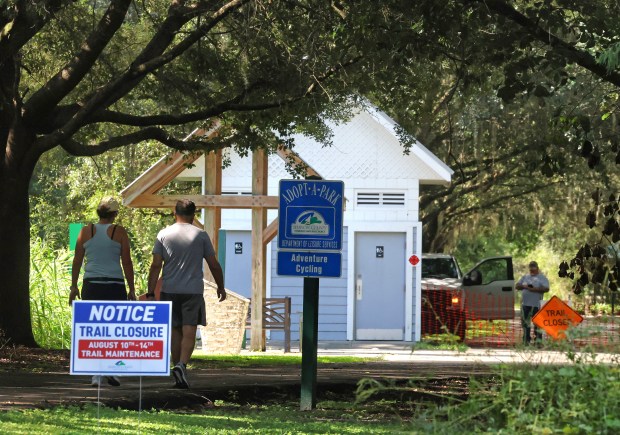 Signage indicates a closed trail as Seminole County workers repair drainage on the Cross Seminole Trail at the Black Hammock Trailhead, off State Road 434 at S.R. 417, Wednesday, August 12, 2026. Residents worry that the 46-acre wooded greenbelt known as Jetta Point —adjacent to the trail— will be sold off to developers by Seminole County, possibly worsening ongoing flooding concerns in the area. (Joe Burbank/Orlando Sentinel)
To help prevent future flooding, Seminole crews this week visited Jetta Point and the adjacent Cross Seminole Trail “to clean out any potential clogging” on the ditches and stormwater drains, said Tawny Olore, Seminole’s public works director.
Nearby resident Mark Cordiner, a civil engineer, said that was a good step.
“The first half of this battle is to get Seminole County to clean out the infrastructure and bring it up to standards,” he said. Whatever development happens, “it’s important that if any water flows out of Jetta Point, it flows into infrastructure that is designed to hold that much water. … And it will not impact our subdivision.”