
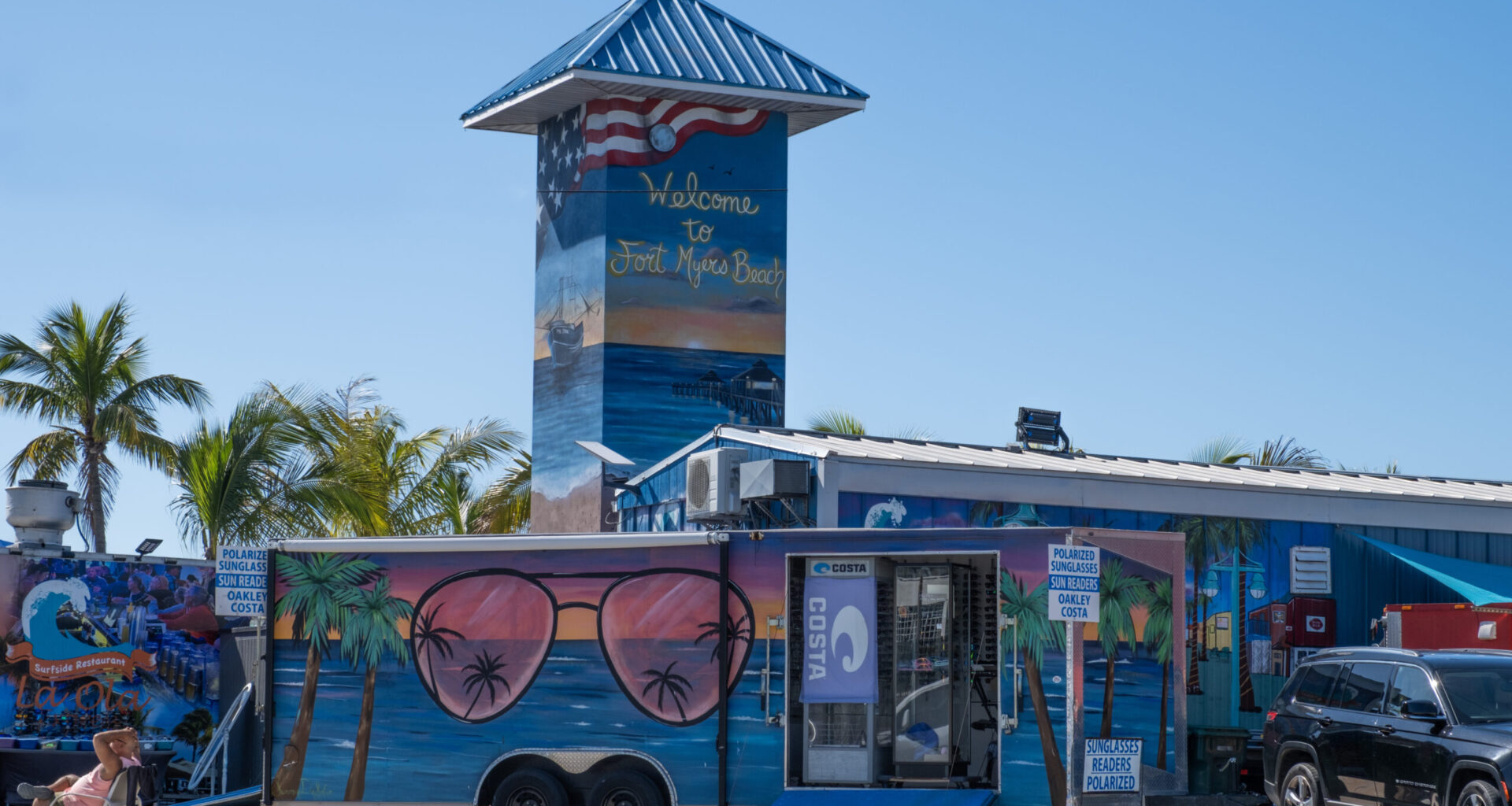
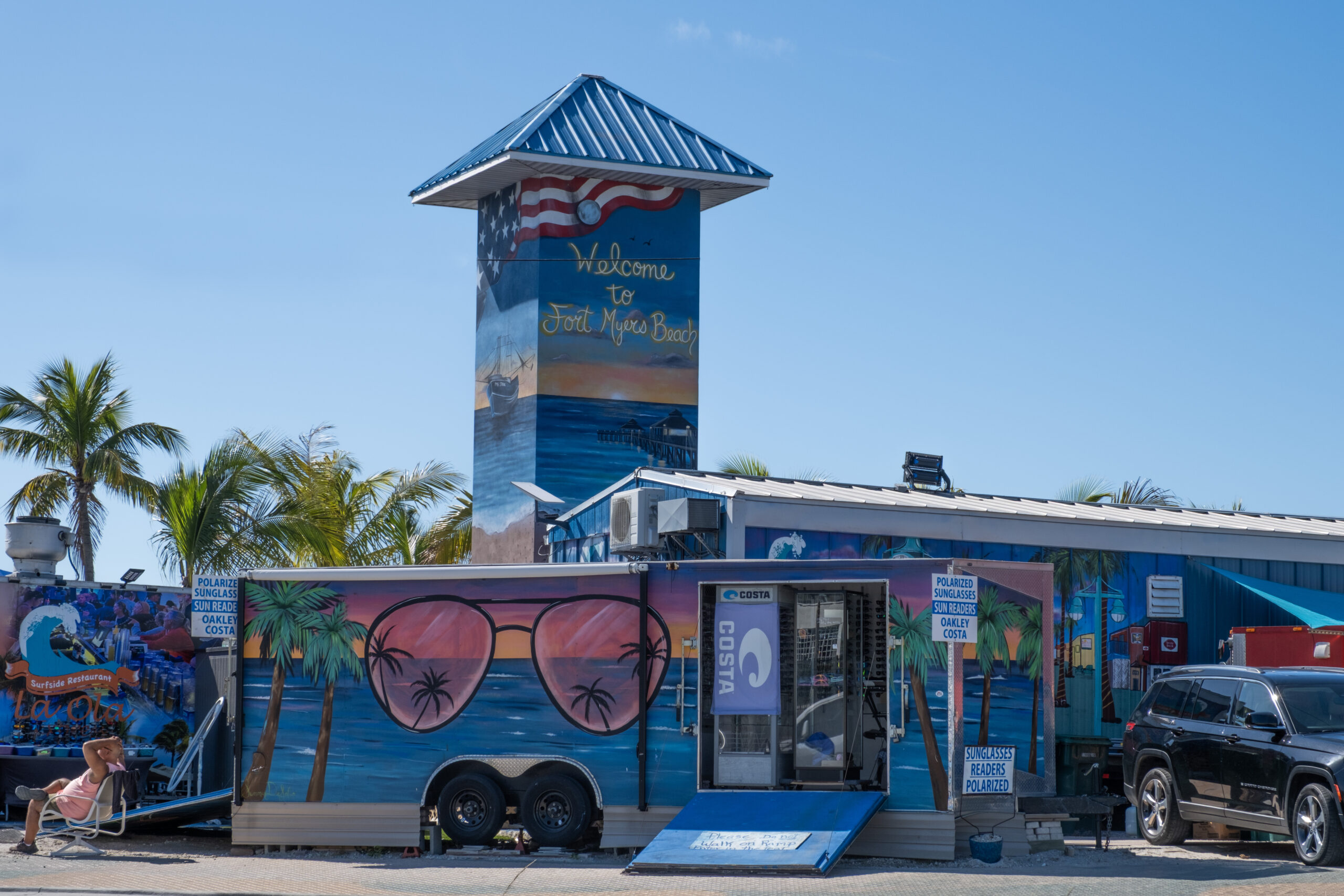
Welcome to Fort Myers Beach.- DAVID WISHTISCHIN / FLORIDA WEEKLY.
When Hurricane Ian struck Fort Myers Beach in September 2022, it changed nearly every aspect of the island. Beyond the destruction of homes, businesses and infrastructure, the storm stripped away much of the mature vegetation that had long defined the barrier island.
Nearly four years later, the landscape is steadily growing back.
The Town of Fort Myers Beach recently completed another phase of its tree canopy restoration program, planting 74 new trees on town properties along North Estero Boulevard, at Bay Oaks Recreational Campus and at Palm Avenue Beach Access.
For a community where recovery is often measured through rebuilt roads, reopened facilities and new construction, restoring the tree canopy represents another important part of bringing the island back.
“Town staff is committed to planting as many Florida-friendly trees as possible for the benefit of our residents, visitors, and wildlife,” said Chadd Chustz, environmental project manager for the Town of Fort Myers Beach. “Every tree we get back in the ground is a step toward restoring the shade, habitat, and character that made this island special before the storm.”
The latest plantings include 27 Royal Palms, 16 Orange Geiger trees, 12 Hong Kong Orchid trees, 11 Jatropha, seven Silver Buttonwoods and one Paradise Tree. The species were selected with the island’s coastal conditions in mind, with an emphasis on Florida-friendly trees capable of adapting to salt, wind and the challenging environment of a barrier island.
Royal Palms, Orange Geiger and Jatropha were planted primarily along North Estero Boulevard. Silver Buttonwoods and Hong Kong Orchid trees were planted in an alternating pattern at Bay Oaks Recreational Campus and Palm Avenue Beach Access.
The project was made possible through FDACS Contract #32104, a $23,449 federal subrecipient agreement between the Town and the Florida Department of Agriculture and Consumer Services, with funding provided by the U.S. Department of Agriculture Forest Service through its Cooperative Forestry Assistance program.
It builds upon an earlier Town project that brought 75 Royal Palms to Bay Oaks Recreational Campus, also supported by U.S. Forest Service funding facilitated through FDACS.
The Town is grateful to its federal partners, including U.S. Senator Rick Scott, U.S. Senator Ashley Moody and U.S. Representative Byron Donalds, for supporting the availability of federal resources that help Florida communities pursue projects such as canopy restoration following major disasters.
While the visual transformation will take time, the environmental impact of the new trees has already begun.
Early estimates suggest the 74 trees could intercept approximately 23,700 gallons of stormwater runoff and remove nearly 16,000 pounds of carbon dioxide from the atmosphere during their first five years. Over the next 25 years, as the canopy matures, those figures are projected to increase to more than 420,000 gallons of stormwater intercepted and more than 257,000 pounds, or approximately 130 tons, of carbon dioxide removed.
“Restoring our tree canopy is about much more than aesthetics. It is an investment in the long-term resilience, environmental health and quality of life of Fort Myers Beach,” said Abigail Eberhart, public information officer for the town. “Hurricane Ian dramatically changed the landscape of our island. With every new tree planted, we are restoring another piece of what was lost while building a stronger and more resilient community for the future.”
Town staff continues to pursue additional grant funding to expand tree planting throughout Fort Myers Beach.
Today, the newest trees are still young. In the years ahead, their roots will strengthen, their canopies will widen, and their shade will stretch farther across the island.
Like Fort Myers Beach itself, the canopy is growing back, one tree at a time.