
By Eva Lantzy
As students return to school, much of the focus naturally turns to academics: reading, writing, mathematics and the skills children will build in the classroom throughout the year. But for elementary school children, back to school also provides an important opportunity to discover interests, develop confidence and learn to communicate, collaborate and think in new ways.
At Jacksonville Country Day School, the fine arts are an important part of that broader learning experience. More than an opportunity to paint a picture, learn a song or step onto a stage, the arts are woven into the school day and give students another way to communicate, solve problems, collaborate and make connections across what they are learning.
“Arts education in the elementary years invites students to think creatively and approach the world with curiosity and openness,” said Lindsay Curry, director of fine arts at JCDS. “Through music, theatre, dance and visual arts, young learners discover that there is more than one way to solve a problem or tell a story.”
That philosophy is reflected throughout the school’s fine arts program, where students have regular opportunities to create, perform and express themselves in different ways. The goal is not simply to develop artistic skills, but to use creative experiences to strengthen critical thinking, confidence and communication.
For students, those connections often extend directly into the classroom.
“I really like that I get to do art at JCDS because it’s been my passion,” said Karina, a recent JCDS graduate who enjoys drawing and painting. “I got really good at comprehending images and complex ideas, and this helped me with learning. It’s also really fun for me to do this creative work as a part of the school day.”
One distinctive part of the JCDS program is the way the fine arts connect with other areas of the curriculum. Concepts students encounter in their academic classes may reappear through creative projects, giving them opportunities to explore the same ideas from a different perspective.
Those experiences make learning more memorable while helping students see connections between subjects. They also give children opportunities to stretch beyond traditional academic work and discover strengths and interests they might not otherwise encounter during the school day.
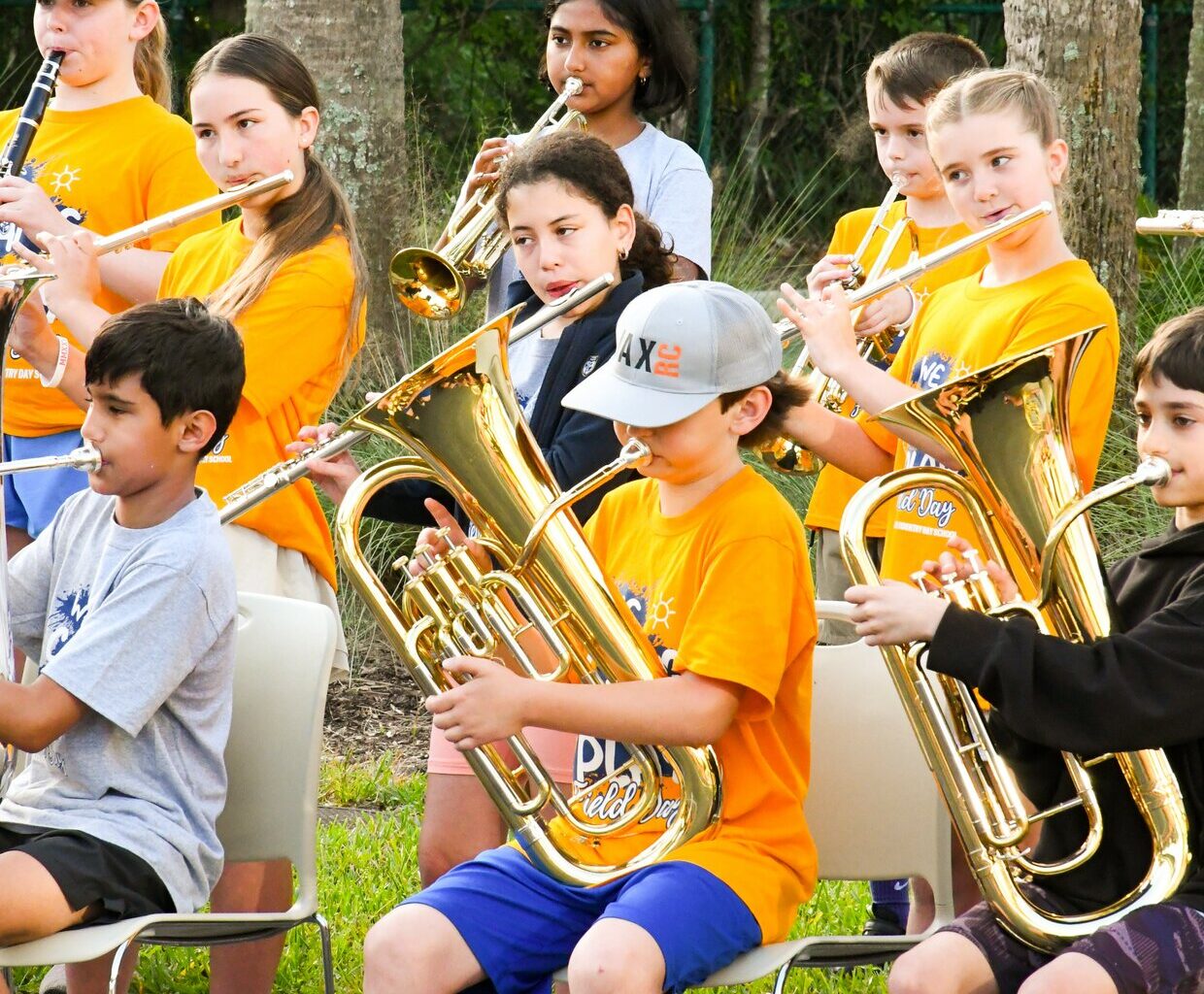
The fine arts also provide regular opportunities for collaboration. Preparing for a performance, participating in an ensemble, or completing a group project is another way that students learn to listen to one another, adapt, contribute ideas and work toward a common goal.
That freedom to explore is an important part of the arts program too, Curry said.
“At JCDS, our fine arts programs encourage joy, spontaneity and a ‘come as you are’ mindset,” she said. “These early experiences support meaningful character development that we hope will stay with students and shape who they are as they move through the world long after they leave JCDS.”
The program also complements JCDS’ 7 Mindsets curriculum, which encourages students to pursue their interests, develop confidence, embrace new experiences and contribute to their community. In the arts, students practice many of those skills by taking creative risks, responding to challenges and sharing their work with others.
Whether students are performing on stage, creating in the art room, learning a new piece of music or expressing themselves through movement, the emphasis is on both the process and the finished product.
As a new school year begins, those opportunities are an important reminder that learning in the elementary years extends well beyond mastering core academic subjects. Children also need time and space to explore, create, work with others, take appropriate risks and discover what captures their interest.
Through fine arts, JCDS students have opportunities to develop not only as young artists, but as communicators, collaborators and creative thinkers, building skills and confidence they can carry with them well beyond the classroom.