There are countless stories of Nigerians making their mark around the world. Every now and then, however, you come across one that reminds you how deeply Nigeria can shape a person’s life—even when that person ultimately builds their career thousands of miles away.
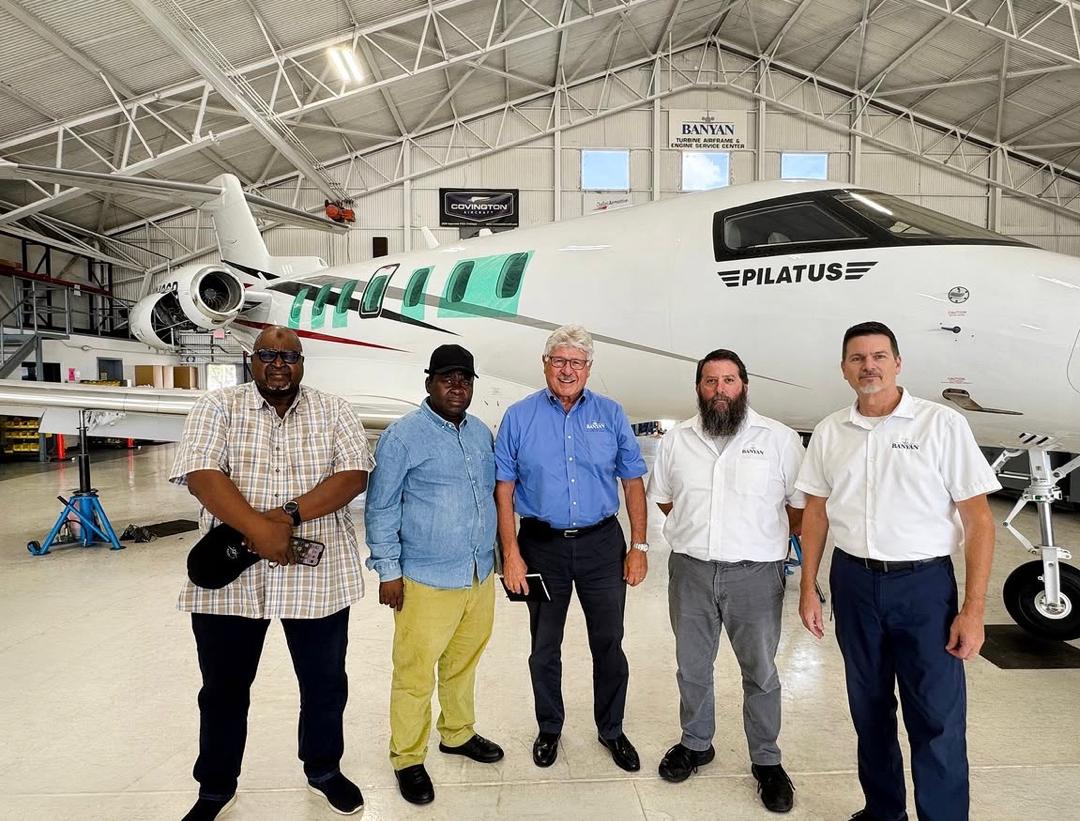
This week, I had the privilege of touring Banyan Air Service at Fort Lauderdale Executive Airport in South Florida. If you spend any time around business aviation in the United States, Banyan is a name you quickly come to know. It is one of America’s premier fixed-base operators (FBOs), providing aircraft maintenance, avionics, charter support, fueling, hangar facilities, aircraft sales, flight support, and concierge services for corporate and private aviation. Its Pilot Shop is widely regarded as the largest brick-and-mortar pilot store in the world, and the company has consistently been recognized as one of the finest FBOs in North America for customer service and technical excellence.
What many people in South Florida do not realize, however, is that one of the region’s greatest aviation success stories has its roots firmly planted in rural Nigeria.
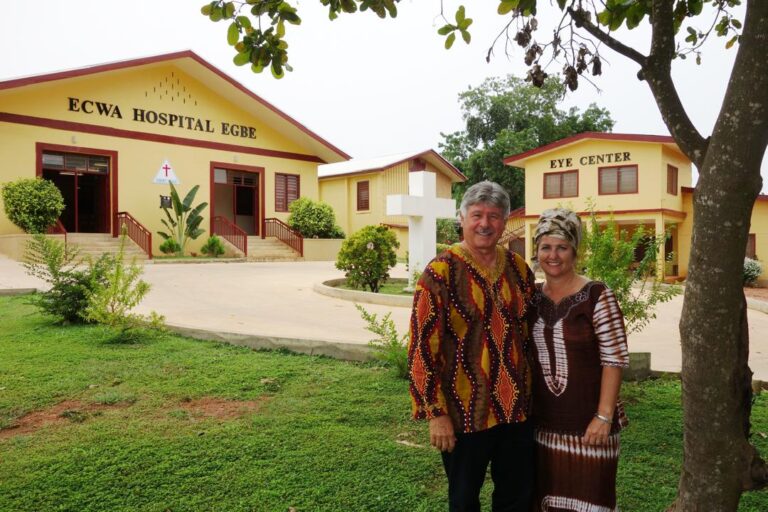
Banyan’s founder and CEO, Don Campion, was born and raised in Egbe, in present-day Kogi State. His parents, Dr. George and Esther Campion, were pioneering medical missionaries who established ECWA Hospital Egbe in 1952, creating what would become one of the most important medical institutions serving rural communities across central Nigeria. Don spent his childhood in Egbe, attended boarding school in Jos—often flying aboard small missionary aircraft to get there—and eventually left Nigeria for aviation studies in Canada before moving to South Florida in 1979.
Those childhood flights from the grass airstrip beside Egbe Hospital sparked a lifelong passion for aviation. They also inspired the name of the company he would later build. “Banyan” comes from the magnificent shade trees that Don remembered from his childhood in Nigeria—a reminder that even after building an internationally respected aviation company in Florida, his connection to Nigeria never faded.
From a single hangar in 1979, Banyan has grown into a more than 100-acre aviation campus employing over 200 people and serving thousands of aircraft each year. It has become a leader in aircraft maintenance, avionics, charter support, aircraft sales, and fixed-base operations, earning repeated recognition as one of America’s premier business aviation companies.
Today, Banyan’s connection to Nigeria extends well beyond Don Campion’s personal story. The company is one of a select group of foreign maintenance organizations approved by the Nigerian Civil Aviation Authority (NCAA) to perform maintenance on Nigerian-registered aircraft. For Nigeria’s business aviation community, this carries significant practical value. Aircraft serviced by an NCAA-approved maintenance organization can return to Nigeria without requiring additional maintenance validation or reassessment, giving owners and operators confidence that work performed abroad fully satisfies Nigerian regulatory requirements.
That distinction is more important than it may first appear. Nigeria has one of Africa’s largest private aviation fleets, with more than 250 business jets owned by corporations, entrepreneurs, governments, and high-net-worth individuals. Many of these aircraft travel overseas each year for scheduled inspections, major maintenance, avionics upgrades, and refurbishment. Banyan now offers Nigerian operators a compelling option: a world-class maintenance facility in South Florida whose owner understands Nigeria not as a distant market, but as home.
There is something uniquely fitting about that. A Nigerian-registered aircraft can fly across the Atlantic for its annual inspection and be maintained by a company whose founder first fell in love with aviation while watching missionary aircraft land on the grass strip beside a rural hospital in Egbe. In an increasingly global aviation industry, trust still matters—and shared history matters too.
Yet impressive as Banyan’s commercial success is, it may not be Don Campion’s greatest achievement.
About fifteen years ago, Don returned to Egbe with his wife Sueanne for the first time since leaving Nigeria. What they found was heartbreaking. The hospital his parents had helped establish had deteriorated dramatically. Buildings were crumbling, equipment was obsolete, electricity was unreliable, the nursing school was on the verge of losing accreditation, and what had once been a regional referral hospital had been reduced to a struggling rural clinic despite serving communities with enormous healthcare needs.
Many people would have mourned what had been lost and moved on. Don chose something different.
Drawing upon the same entrepreneurial skills, leadership, and network that built Banyan Air Service, he launched what has become the Egbe Medical Mission. Working alongside SIM, ECWA, Samaritan’s Purse, World Medical Mission, hundreds of volunteers, and supporters across North America and Nigeria, the mission has transformed ECWA Hospital Egbe into one of the country’s most remarkable rural healthcare success stories.
Over the past decade and a half, the hospital campus has undergone a remarkable transformation. New clinical facilities have been constructed, surgical and diagnostic services expanded, modern medical equipment installed, staff housing improved, and the College of Nursing revitalized. The hospital now treats more than 30,000 patients annually, performs over 1,200 surgeries each year, operates a Family Medicine Residency Programme, and trains approximately 450 nursing students—helping address Nigeria’s growing healthcare workforce needs while serving some of the country’s most underserved communities.
The vision continues to expand. One of the latest initiatives is the installation of what will become one of Nigeria’s largest private hospital solar and battery storage systems, providing reliable 24-hour electricity for the entire medical campus. At the same time, Don is helping restore the Egbe airstrip in partnership with Mission Aviation Fellowship, allowing humanitarian and medical flights to once again connect this remote community with Abuja in under an hour rather than the seven to nine hours often required by road. For critically ill patients, specialist referrals, medical personnel, and emergency supplies, that is not simply a convenience—it is potentially lifesaving.
As someone who has spent much of my career working at the intersection of business, healthcare, and development, I found Don’s story particularly inspiring because it demonstrates that commercial success and social impact need not exist in separate worlds. The same operational excellence, leadership, customer focus, and financial discipline that built one of America’s premier aviation companies are now being applied to rebuilding a hospital, training Nigeria’s next generation of healthcare professionals, and restoring vital infrastructure in a rural community.
Nigeria often celebrates those who leave and succeed abroad. We should celebrate even more those who never forget where they came from.
Don Campion’s story is ultimately about much more than aviation. It is about how childhood experiences can shape a lifetime of purpose. The same boy who watched missionary aircraft land on a grass airstrip in Kogi State went on to build one of America’s leading aviation companies, only to return decades later to help rebuild the hospital, restore the airstrip, and provide the reliable solar power that will sustain healthcare for generations to come.
In an era when we often speak of the Nigerian diaspora in terms of remittances and investment, Don reminds us that perhaps the most enduring contribution is something even greater: using the success achieved abroad to transform lives back where the journey first began.
Dr. Wiebe Boer, Chief Growth Officer, JIPA Network, and Member, BusinessDay Editorial Advisory Board