

Florida’s peptide craze is in full swing. Thousands of Floridians are injecting the compounds even without FDA approval or robust safety data.
On TikTok, “the Miami guy” credits his supersized muscles to peptides, and a woman in Naples flaunts her “peptide stack” to reduce inflammation and achieve “that glow look.”
Florida’s social media influencers claim therapeutic peptides help with everything from easing joint pain to losing weight, sleeping better, increasing libido, deepening a tan, and even slowing the aging process. Some advertise, “These peptide benefits are especially important when living in the Sunshine State, where everyone is chasing that younger look.”
Beyond social media influencers, operators of Florida medical spas, fitness studios, and longevity clinics promote injectable peptides to customers seeking an anti-aging edge.
Peptides are short chains of amino acids that the body absorbs and uses as messengers to manage hormones, healing and inflammation. The body can make some peptides on its own. Others can be synthesized in labs, which is how many of the popular ones touted by influencers are made. The lab-made peptides are typically self‑administered injectables with an alphabet soup of letters, numbers, and a variety of purposes.
“From a drug development and marketing perspective, peptides are really not looked at as conventional medications,” said Dr. Lewis Nelson, dean at the Florida Atlantic University Charles E. Schmidt College of Medicine. “Yet, people are injecting themselves with them for all kinds of different reasons.”
Do peptides work? Are they safe?
Whether peptides work — and whether they are safe — depends entirely on which compound is being used and who you ask.
Jay Campbell, a Tampa peptide advocate and author, says he has taken peptides for two decades and has a regimen for using them to signal the body’s own cells to repair, heal and regulate themselves. When used properly, they work, he said.
“The smart doctors in the functional health profession and in the longevity space are already adopting peptides because they see it as something that can really help their patients,” Campbell said.
While robust scientific data for many therapeutic peptides remains sparse, users — ranging from influencers like Campbell to retired bodybuilders like Ronnie Coleman — tout them as essential tools for injury repair, fat loss and longevity.
The word peptide has become a catch-all term for FDA-approved medicines like insulin and weight-loss GLP-1 drugs like Ozempic. Those are among the few peptides that are actually FDA-approved, meaning they have been tested through clinical trials and proven safe and effective for certain diseases.
“Peptides have been used in medicine for years,” said Dr. Shan Siddiq, associate medical director at 10X Health’s Aventura wellness clinic. “They really became a big deal recently because of social media and the gray market where influencers are able to sell peptides, and I think that’s kind of what had a snowball effect.”
At his clinic, Siddiq prescribes peptides to help patients improve their health as part of a comprehensive plan informed by their bloodwork.
“We look at how we can improve a patient’s life, and if peptides fit into that, that’s something we would consider for them,” he said.
 Dr. Shan Siddiqi, an anti-aging physician, specializes in whole-body wellness, IV therapy, the Superhuman Protocol, hormone balance and peptide treatments at the 10X Treatment Center in Aventura. “Peptides have been used in medicine for years,” he said. “They really became a big deal recently because of social media and the gray market where influencers are able to sell peptides, and I think that’s kind of what had a snowball effect.” (Mike Stocker/South Florida Sun Sentinel)
Where peptides are sold
When integrative health doctors like Siddiq prescribe non-FDA-approved peptides, they typically route prescriptions through state-regulated compounding pharmacies subject to federal oversight. Some Florida longevity clinics and medical spas purchase batches to sell directly to patients in-office as part of bundled treatment packages.
But another pipeline is driving the craze — one that has federal regulators increasingly alarmed.
Unapproved peptides are widely accessible through online vendors and influencers who label products “for research use only” (RUO). That legal disclaimer allows sellers to bypass federal drug regulations and market directly to consumers under the premise that the substances are not meant for human consumption.
Campbell says anyone who buys this type of peptide is “doing research on themselves.”
He sells peptides through his BioLongevity Labs and says that purchasing from online sellers will cost less, but places the responsibility on the buyer to determine dosage and purity. His website has a peptide reconstitution calculator that he says receives tens of thousands of views each month.
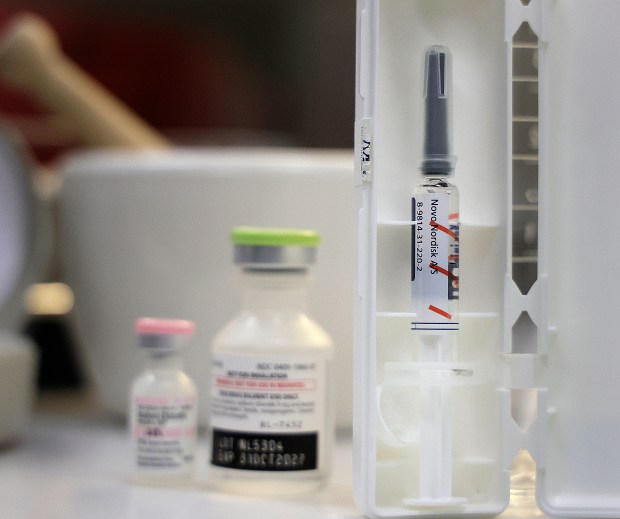 Examples of manufactured peptides seen at Nova Southeastern University pharmacy in Davie. (Carline Jean/South Florida Sun Sentinel)
When purchasing from unregulated online storefronts, quality is far from guaranteed. Products may contain significantly more or less active ingredient than advertised, rendering them ineffective or triggering dangerous adverse reactions. They may also harbor chemical impurities that can trigger severe immune responses.
“You can be buying products that are being made in somebody’s garage, and while that is somewhat an exaggeration, you don’t know where these products are coming from,” said Matthew Seaman, associate professor of pharmacy at Nova Southeastern University. “They could be full of impurities, full of toxins or other dangers, or maybe it’s just a complete placebo.”
A recent federal criminal case underscores these concerns. In July, a peptide seller was sentenced to nearly six years in prison for deceiving thousands of customers and selling unapproved, adulterated and mislabeled peptide products.
Paradigm Peptides advertised its products as American-made and 99% pure. The drugs were actually imported from China and were never quality tested, according to the U.S. Department of Justice. Customers reported all kinds of reactions, including cardiac issues.
Campbell points out that there is no government oversight guaranteeing that online peptides contain what their labels claim. Human error further complicates home use. Because injectable peptides typically arrive as powder, users must manually reconstitute them with bacteriostatic water before injecting.
“You have to be educated enough to understand how to reconstitute the peptide, measure your dosing, source syringes and bacteriostatic water, and calculate the appropriate dose,” Campbell said.
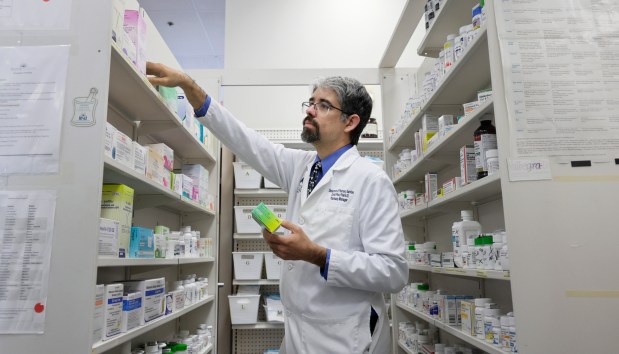 Pharmacist Dr. David Pino checking medications at the University Pharmacy in Davie on Friday. (Carline Jean/South Florida Sun Sentinel)
The wellness benefits
Popular wellness peptides like BPC-157 are promoted to accelerate recovery from tendon and ligament injuries; CJC-1295 is marketed for muscle growth and deeper sleep; GHK-Cu (Copper Peptide) is promoted for wrinkle reduction, skin barrier repair, and hair follicle growth.
Nelson at FAU says he has heard those claims, and it is possible some peptides do have therapeutic benefits. However, there is not enough evidence to know for certain, he said.
Some animal studies showed promise but never advanced to meaningful clinical investigation, yet high-profile podcasters tell audiences they are effortlessly dropping body fat, regrowing hair, taming inflammation and achieving better mental clarity from peptides.
“The people who are marketing big wellness have managed to replace the gold standard clinical trials with testimonials of people, which are not evidence-based,” he said. “We need to do the work to figure out what doses should be taken, who should be taking them, and do they actually produce the types of effects that people are claiming that they produce?”
Most peptides haven’t cleared any of the regulatory hurdles that Americans typically expect for drugs to be advertised and used.
“Some of these peptides have some good clinical effect,” said Seaman at Nova Southeastern University. “I absolutely believe they do. Peptides are signal messengers that signal your own body to respond a certain way. If used properly, they probably work reasonably well. It’s a question of finding the right regimen and finding the proper safeguards in order to use them properly.”
Campbell said his company sells 96 peptide products on its website.
People are using them for fat loss and muscle gain, healing, longevity and anti-aging, cognitive improvement, and immunity, he said. “Some people are using more than one peptide at a time.”
The health risks
Medical experts and scientific researchers are raising concerns about the risks of using experimental, unregulated, injectable peptides. The concerns include the potential for serious immune or allergic responses.
A handful of animal studies suggest that the peptide BPC-157 may support injury recovery and wound healing. But there is a possibility BPC-157 also allows cancerous cells to grow.
Dr. Dhruv Khullar, a physician and writer who examined the trend for The New Yorker and PBS, highlighted the theoretical link to cancer. “Cancers are hungry for blood vessels, and angiogenesis is the process by which blood vessels are formed. And so, without doing the requisite studies, we’re not going to know what the potential benefits are and what the risks are of this compound,” he told PBS.
The changes ahead
In late July, an FDA advisory committee recommended that six previously restricted peptides move closer to being eligible for compounding by licensed pharmacies. While the recommendation is not a final FDA rule — nor does it constitute formal drug approval — it marks a potential shift in access.
“It’s just a recommendation. It hasn’t happened yet,” said Siddiq, the Aventura functional medicine doctor. “But if the compounding pharmacies can compound this, then we can get people away from the gray market where there’s no transparency and where there may not be good sterility processes, where they may be putting too much or too little of a peptide, or the wrong peptides all together in a vial.”
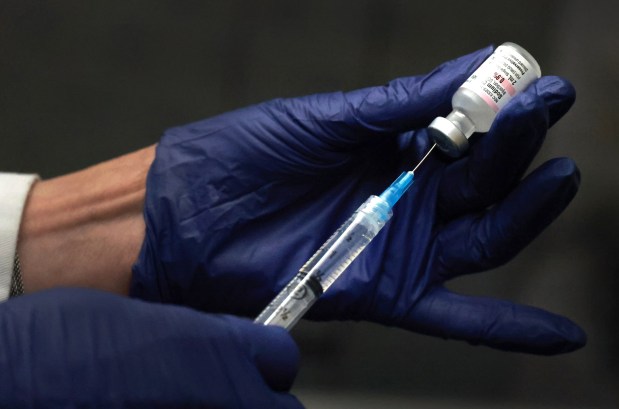 Pharmacist Dr.Nellie Simkin Zeltsman with Nova Southeastern University compounding medication in an aseptic environment at the university pharmacy in Davie. (Carline Jean/South Florida Sun Sentinel)
Doctors’ concerns
With public interest surging, mainstream physicians find themselves navigating uncharted territory. Dr. Amy Sheer, an internist with UF Health, says patients routinely ask her about peptide protocols.
“It’s really hard as a mainstream physician to figure out what to do in this era of peptides,” Sheer said. “Everyone knows about them. There are podcasts, and many sports team doctors are using them for recovery. Some seem to work, but it’s all one big experiment. People are cycling on and off these compounds without standardized protocols.
“As a doctor who vows to ‘do no harm,’ it’s difficult to ensure it’s safe to prescribe them based on currently available data,” she said.
The cost
Financial costs vary dramatically — from $30 for unverified raw powders online to $1,500 or more per month for managed protocols at private longevity clinics. Insurance almost never covers wellness, anti-aging or recovery peptides.
To offset costs, Florida clinics frequently package therapies into multi-month memberships that bundle medications with regular blood panels, body composition scans, and consultation visits.
Nelson at FAU believes the public’s appetite for costly, unproven peptides may eventually wane.
“I think there will be a market correction over time,” Nelson said, “as people realize they are spending substantial money on ineffective compounds that carry real health risks.”
South Florida Sun Sentinel health reporter Cindy Goodman can be reached at cgoodman@sunsentinel.com.