
For nearly 20 years, the Coconut Grove Playhouse has sat dark.
The historic facade is still standing, but the theater closed its doors in 2006.
Now, after years of design changes, preservation disputes, and court and zoning battles, the project is moving forward again. In July 2026, the City of Miami Commission unanimously approved Miami-Dade’s appeal related to the zoning requests.
The decision allows the county to move toward permits for the second phase, which includes completing the historic building, constructing the new theater, and developing a public parking garage.
What will the new Playhouse be like?
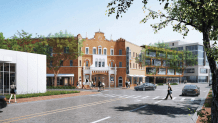
The most recognizable feature will remain: the historic facade will be restored and will keep its presence along Main Highway and Charles Avenue.
Behind it, a new theater with about 310 seats will be built—far fewer than the roughly 1,100 seats in the old auditorium. The space will become GableStage’s new home and will be designed for contemporary regional theater.
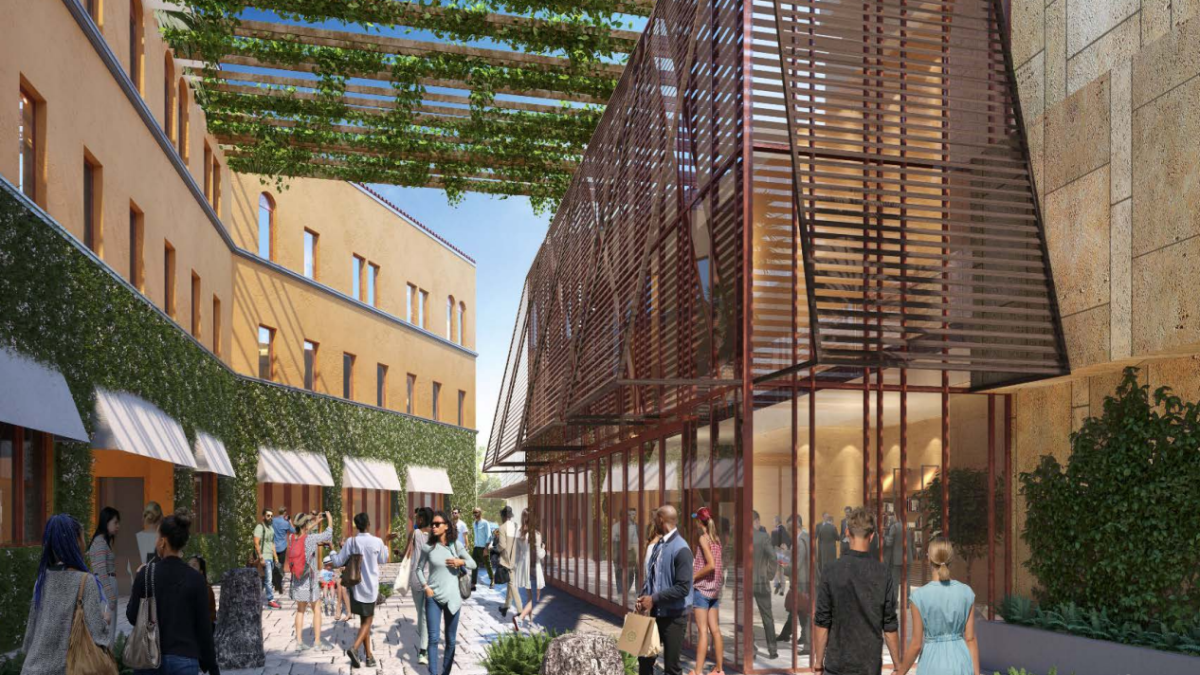
The project is being led by Arquitectonica, with landscaping by ArquitectonicaGEO. The proposal separates the historic facade from the new theater through open-air spaces and circulation areas.
The facade will be the link to the past
The Playhouse, built in the Mediterranean Revival style, opened in 1927 as a movie theater before becoming one of Miami’s most important stages.
The project is not aiming to preserve the entire building as it exists today.
The strategy focuses on restoring the front structure—considered the portion with the greatest historic value—and replacing the old auditorium with modern infrastructure.
In 2018, an appellate court sided with the county in a preservation dispute and determined that the front structure retained relevant architectural integrity, while the old auditorium did not carry the same historic value.
Documents submitted to the city show how historic elements will be integrated into the new complex.
A project that began a decade ago
The current transformation has its roots in studies Miami-Dade conducted in 2015 and 2016, when the county hired Arquitectonica to analyze different restoration alternatives.
Even then, the plans included a roughly 300-seat venue for GableStage, parking, and new spaces for production, administration, and education.
The 2016 plan even looked at a second 700-seat theater, though it was never funded.
The concept ultimately narrowed to a simpler idea: preserve the essential historic portion and build a smaller, more functional venue.
A plaza and a more open complex
The new Playhouse will be more than a theater.
The project includes a public plaza, green areas, pedestrian walkways, retail space, food and beverage, offices, and educational uses.
The goal is to connect the complex with Coconut Grove’s streets and turn it into a gathering spot during and outside of performances.
The project also includes a public parking garage with about 289 spaces, developed in coordination with the Miami Parking Authority.
But the transformation has raised concerns among some residents about traffic, noise, parking, and commercial activity near West Grove and Little Bahamas.
During the 2026 approval process, conditions were added to reduce those impacts, including measures for the retail frontage, a buffer zone next to homes, a traffic study, and a mitigation plan with neighborhood participation.
From the courts to construction
The road to this approval has been long.
In 2017, Miami’s Historic and Environmental Preservation Board conceptually approved the county’s master plan.
Then came appeals and new disputes over preservation, demolition of the old auditorium, and the project’s conditions.
Administrative and court proceedings kept the project stalled for years.
In May 2026, the Planning, Zoning and Appeals Board voted 5-4 in favor, but the proposal fell short of the required supermajority.
Miami-Dade appealed and, finally, on July 9, 2026, the City of Miami Commission unanimously approved the appeal.
That vote officially put the project back in motion.
The first phase has already begun
Construction of the new theater has not started yet, but the historic building has already undergone rehabilitation and stabilization work.
Miami-Dade reported in May 2025 that the exterior had been stabilized and reviewed after a pause in work.
The second phase calls for completing that rehabilitation, building the new venue, and developing the garage.
The official timeline points to a partial completion in 2027, matching the Playhouse’s centennial, and full opening in 2028.
The return of a historic stage
The new Coconut Grove Playhouse will not be the same theater earlier generations knew.
It will be a much smaller, modern venue tailored to the regional-theater model, set behind a facade that is part of Miami’s architectural memory.
This story was translated from Spanish with the help of a generative artificial intelligence tool. An NBC6 digital editor reviewed the translation