
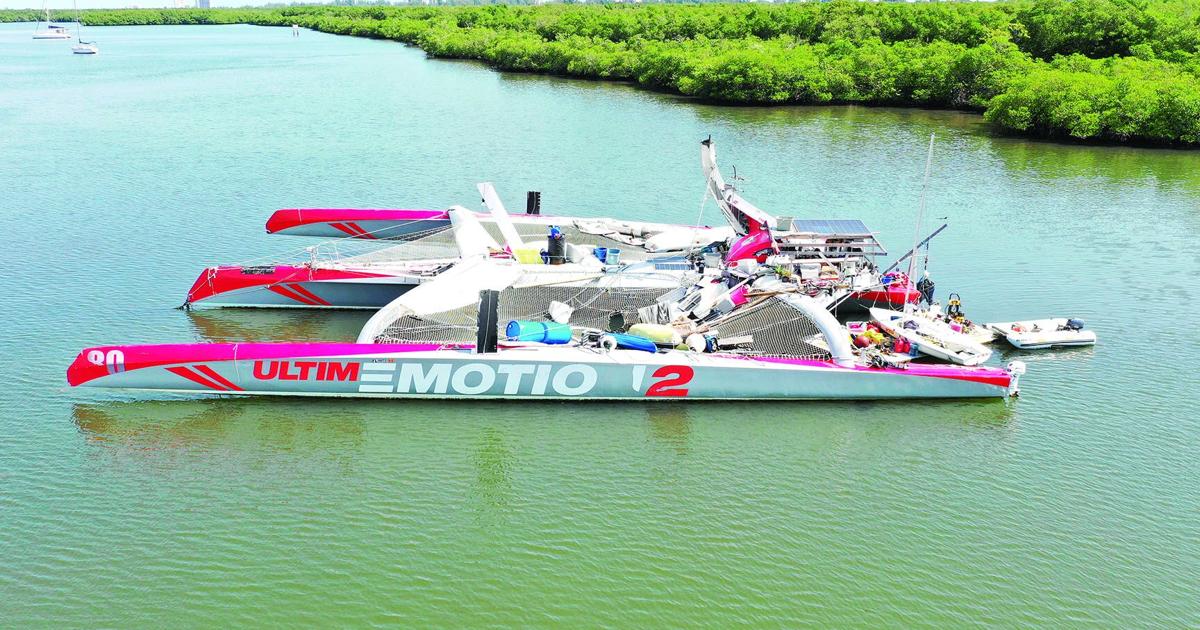
FORT PIERCE — Just north of the Little Jim Bridge, a growing collection of boats sits in the Indian River Lagoon.
Some appear abandoned or badly deteriorated. Others are occupied by people living aboard.
To nearby residents and boaters, however, the distinction doesn’t change the concern: They say the number of vessels accumulating in the area has become a safety, environmental and navigation problem.
In an Aug. 19 meeting video posted to his Facebook account, St. Lucie County Commissioner James Clasby said the issue has become one of the biggest complaints he hears from the local boating community.
“It’s truly become an issue and I want to get it solved,” Clasby said.
Residents along Wildcat Cove are taking note of the growing number of vessels.
Fort Pierce resident Tish Taylor Chapman said she has seen the problem worsen over the past year.
“They need to be removed,” Chapman said. She also expressed concern about sanitation and the potential for waste to enter the lagoon.
Fort Pierce resident Luke Logan said some of the boats are difficult to see after dark.
“A couple of them don’t even have lights on at night, so I can’t see them until I get closer to them,” Logan said.
Others say the boats and their anchor lines can make navigating the area difficult.
Wayne Hutnick of Vero Beach, who was fishing in the area with a friend, said one large catamaran has been in the water for years.
“I think the owners should have them towed away or the city and state should tow them away and charge them,” Hutnick said.
Dee Sincox, who lives on Wildcat Cove, said she can see several vessels from her home.
“Right now, I am looking out at approximately four abandoned boats within my sight,” Sincox said. “Going around the bend there are another 14 or so, some abandoned, some live-ons.”
Sincox said she is concerned about the impact on an area used by swimmers and recreational boaters and home to fish and wildlife.
Fort Pierce resident Nicole Velardo, a lifelong area resident, said she is also troubled by the vessels.
“As a Fort Pierce native, we hate to see them and we hate to see the boats polluting our water and wasting away in our waterways,” she said. “Something needs to be done about it.”
Who is responsible?
One complication is jurisdiction.
The Wildcat Cove area north of Little Jim is outside Fort Pierce’s municipal boundaries, Clasby said, potentially limiting what the city can do to address vessels in the area.
That leaves questions about which agency has authority to address boats that become derelict, create navigation hazards or pose environmental concerns.
Clasby said he does not want the problem to become a game of moving vessels from one location to another.
“I don’t want it to become a game of whack-a-mole as they move the collection of boats around,” he said.
Marty Minari of Loxahatchee, who has followed the issue, believes part of the problem extends beyond St. Lucie County and into Florida’s broader approach to regulating anchored vessels.
Minari points to House Bill 481, which deals with anchoring limitation areas. He said restrictions in larger coastal communities, such as Palm Beach County, can push vessels toward areas with fewer options for affordable mooring or marina space.
The result, he said, can be smaller coastal communities inheriting boats that have nowhere else to go.
That raises another question: What happens when a boat owner cannot afford a marina slip or mooring?
Minari said Florida already has laws addressing vessels that are unregistered, unsafe, derelict or otherwise creating hazards. The state also has programs intended to get at-risk boats out of the water before they sink.
But enforcement and removal can become complicated when an owner cannot afford to pay.
“The question is, what happened?” Minari said.
Minari argues that waiting until an aging vessel sinks can turn a relatively manageable removal into a far more expensive salvage operation. He said cities such as Fort Pierce could benefit from having specialized equipment and crews capable of removing vessels before they become major problems.
Once a boat sinks, removal can require specialized equipment, salvage work, storage and disposal — costs that can ultimately fall on taxpayers when an owner cannot be located or cannot pay.
Hurricane concerns
The issue also raises questions about what happens during a hurricane.
Fort Pierce resident Pancho Javier worries an unsecured vessel could break loose and damage mangroves, docks, other boats or private property.
“I am all about owning a boat, but the owners have to be held responsible for their property,” Javier said. “The water belongs to all of us.”
Javier said taxpayers should not ultimately be responsible for cleaning up vessels that owners have abandoned.
A sunken boat can also become an underwater hazard for other boaters and create additional costs for whoever is responsible for its removal.
Commissioner Clasby said he wants to see the problem addressed before it grows.
The challenge is distinguishing between people legitimately living aboard or anchoring their boats and vessels that have crossed the line into becoming derelict or dangerous.
For residents watching the collection grow, the concern is increasingly simple: Who is responsible?
They want to know how many vessels can accumulate in the lagoon before someone steps in — and who will pay when one sinks, breaks loose or becomes a larger problem.
For now, the boats remain — some occupied, some apparently abandoned and others deteriorating in the waterway.
Hometown News reached out to Clasby for additional comment but did not receive a response.