
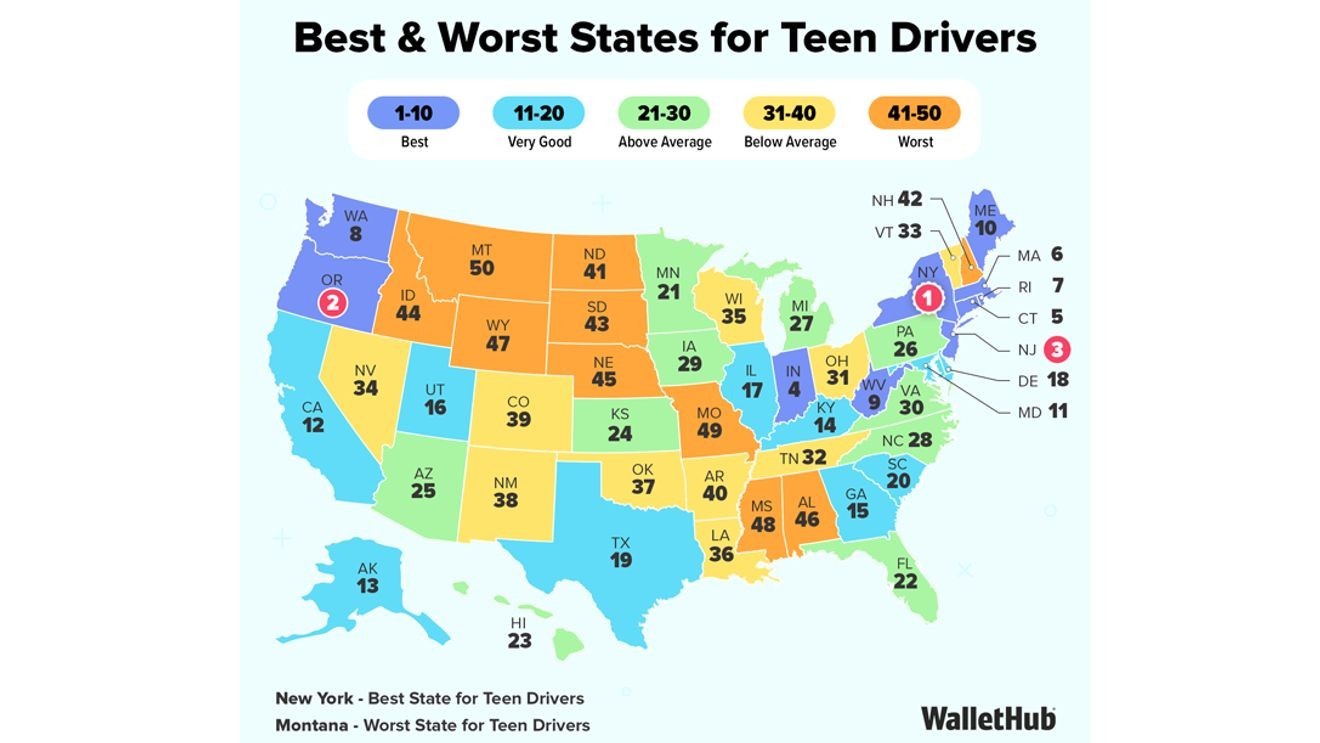
Florida teens are among the least likely in the nation to receive DUI citations, according to a new study. But Florida still ranks near the bottom for teen driver fatalities — a troubling contrast that raises a larger question about what is putting young drivers at risk.
WalletHub ranked Florida fifth for the fewest teen DUIs per 100,000 teens in its 2026 study of the best and worst states for teen drivers. At the same time, Florida ranked 35th for teen driver fatalities per 100,000 teens.
The state placed 22nd overall among the 50 states.
The findings do not identify a single cause for Florida’s fatal-crash ranking. But they point to a reality many parents of newly licensed drivers know well: alcohol is only one of the dangers teens face when they get behind the wheel.
For inexperienced drivers, speeding, distraction, failure to wear a seat belt, nighttime driving, rain-slick roads and the presence of teen passengers can all turn a routine drive into a dangerous one.
The issue is particularly timely as students return to school and more teenagers drive themselves to class, after-school jobs and activities. New drivers must navigate crowded school zones, sudden South Florida downpours, high-speed highways and traffic that can shift quickly around growing communities.
WalletHub examined 23 measures involving safety, driving laws and the costs of driving. Its safety measures included teen driver fatalities, traffic behavior, distracted driving, seat-belt use, road quality and driving after drinking.
See also: 12-year-old describes seeing friend struck by lightning in Boynton Beach
Florida ranked first for the presence of distracted-driving and texting-while-driving laws and 14th for its graduated driver licensing laws. The state, however, ranked 29th for occupant-protection laws and 37th in the study’s overall driving-laws category.
Motor vehicle crashes remain the leading cause of death for people ages 16 to 19 nationwide, according to the Centers for Disease Control and Prevention. WalletHub estimated crashes involving people ages 13 to 19 cost about $40.7 billion annually in medical expenses and lost work.
For parents, the study’s takeaway may be less about a state ranking and more about the conversations that happen before a teen leaves the driveway: putting the phone away, buckling up, limiting passengers, slowing down and building experience in rain, at night and on busy roads.