
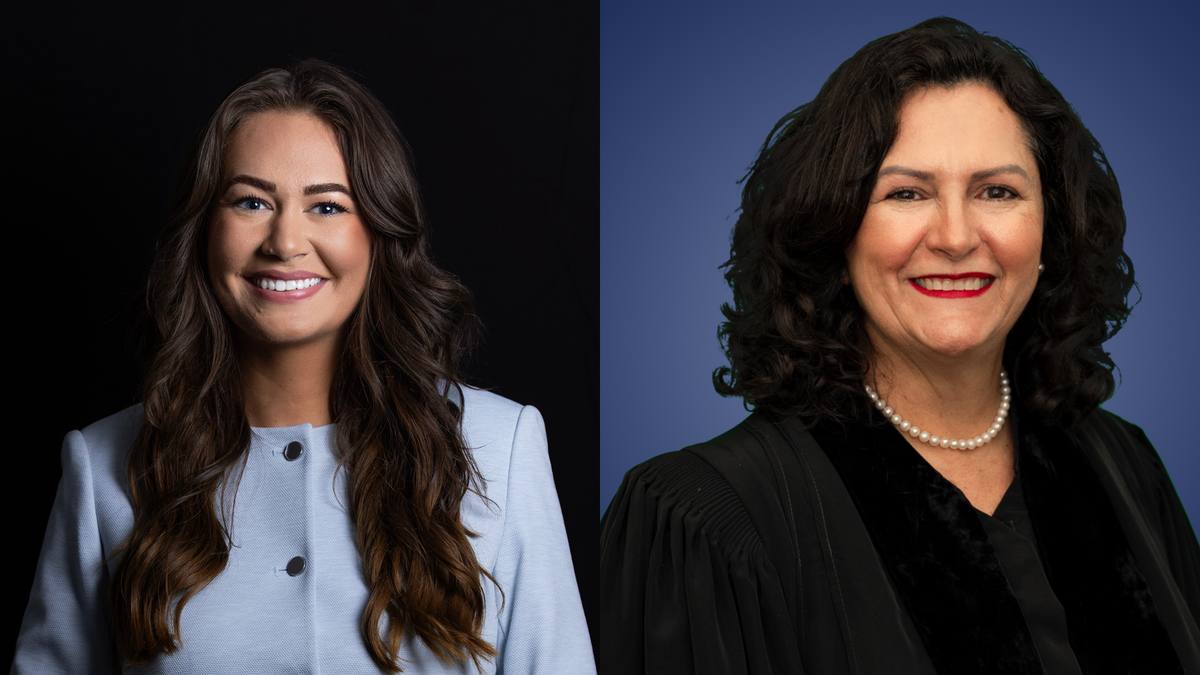
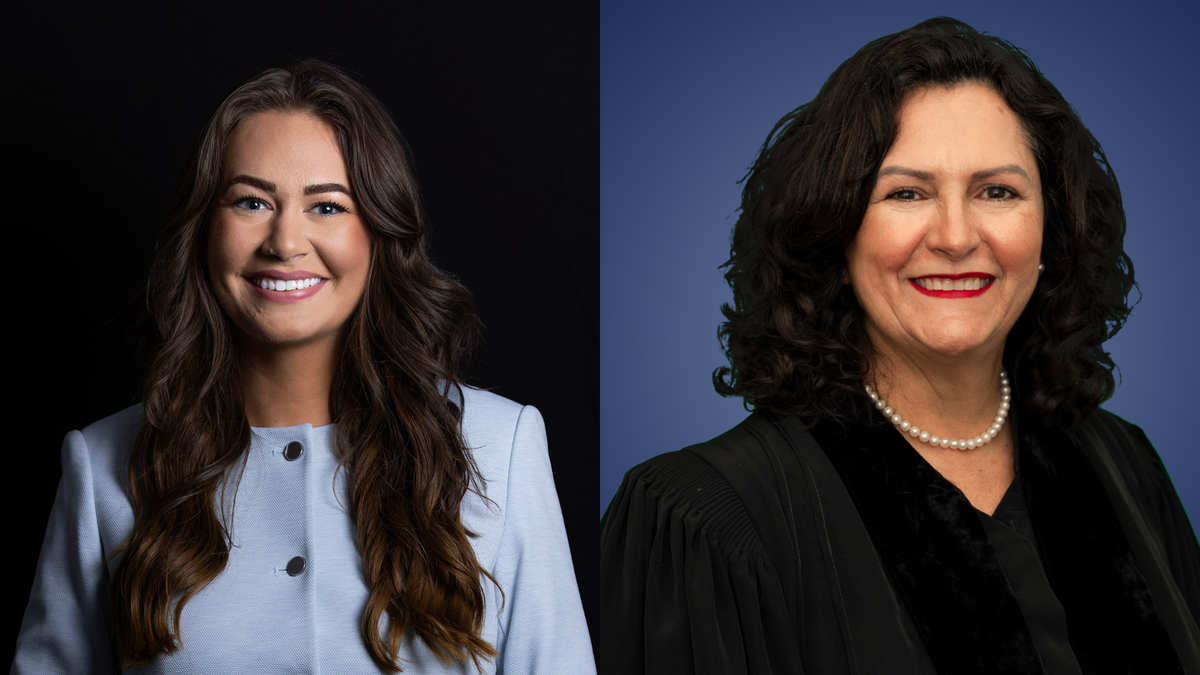
In the Aug. 18 primaries, Destiny Alvarez defeated Circuit Judge Mavel Ruiz in 11th Circuit Court Group 67.
If voters still expect politics to stay out of the courtroom, a race for Miami-Dade circuit judge disappointed them. It was tainted by suspicions that the results of last Tuesday’s nonpartisan primary election had too much to do with President Donald Trump.
Destiny Alvarez, a lawyer who’s never tried a case before a judge or a jury, unseated veteran Judge Mavel Ruiz in the 11th Judicial Circuit. Most judges get reelected without opposition, so it was good that Ruiz had a challenger. But Alvarez’s resume alone should have given voters pause — she barely met the minimum requirement of five years of Florida law practice necessary to be a circuit judge.
Circuit judges preside over cases ranging from financial disputes over $50,000, to child custody to capital murder. They literally have power over people’s lives.
Ruiz attracted attention when she issued a high-profile ruling in a case challenging a land donation for Trump’s presidential library in downtown Miami. After that ruling, a “network of politically affiliated persons” recruited and financed Alvarez to run against her, launching a “campaign of disinformation” against Ruiz “in retaliation for her rulings in the Library Case,” Ruiz alleged in a lawsuit she filed against Alvarez and others two weeks before the election. Alvarez has asked the courts to dismiss the case and, in a statement to the Herald, called the lawsuit “frivolous” and said it lacks “any legal or factual basis.”
In text messages sent to voters in the lead up to the primaries, Ruiz, who was born in Cuba, was called a “communist” who “hates our country” and was accused of preventing Trump from building his presidential library in Miami, according to the lawsuit. Plans for the Trump library, however, have been in full motion since Florida gave his foundation the $67 million downtown property in 2025. The Trump Library Foundation released the first rendering of a library tower in late March.
Ruiz did slow down the process when she essentially forced Miami Dade College last year to redo a vote to transfer the land. She ruled that a local historian who filed a lawsuit would likely be able to prove that the college’s board of trustees denied the public access to weigh in on the library plans before they voted. After the trustees voted a second time in December, Ruiz dismissed the case.
Ruiz also made a mistake that must have made Trump’s supporters even angrier. After she allowed the land transfer to go through, Miami Dade College’s Board of Trustees successfully requested she be disqualified from presiding over future cases involving the college and the library, saying she was personally biased in favor of the plaintiff in the case, Miami historian Marvin Dunn. Ruiz hugged him after one hearing.
Alvarez denied challenging Ruiz because of the Trump library case during an interview with the Herald Editorial Board in May. “This is not about a ruling on any case, on any political issue, and judicial candidates are not allowed to just to run on that,” she said. Alvarez’s campaign was partially financed by Trump allies and local Republicans, according to reporting by the Florida Bulldog.
We later endorsed Ruiz. Alvarez is a managing partner at her family’s law firm Goede DeBoest & Cross. She was admitted to the Florida Bar in November 2020.
“Judge seats belong to the people. These seats don’t belong to any one person forever, and I believe that the voters deserve a choice,” Alvarez said in May.
We agree with Alvarez on that point — no judge is entitled to cruise to reelection unopposed and Ruiz’s record has not been beyond reproach. In 2020, she and four other judges were reprimanded by the Florida Supreme Court after they signed a letter supporting a child-welfare provider during a state contracting process, which she later acknowledged was a mistake. The letter created the appearance of impropriety because it used the credibility of the court to boost a private company.
But even if we take Alvarez at her word that this wasn’t about the library case, the circumstances surrounding this race and the political attacks detailed in Ruiz’s lawsuit — claims that she hates America and targeted conservatives in her rulings — added a partisan spin that is severely damaging and should not exist in nonpartisan judicial elections. Among the defendants listed in the lawsuit are Alvarez’s husband, who is a political lobbyist, political operatives and committees and several John Does and a Jane Doe.
Anyone appearing in court should be able to rely on the judge being unbiased. They should also expect someone who has substantial knowledge of the law. If the allegations in Ruiz’s lawsuit are true — and no one knows if they are — they undermine faith in the judicial system, a basic foundation of democracy.
The courts will decide whether Ruiz has a valid defamation claim. But a message has already been sent: that a judge’s ruling in a politically-charged case could cost them their career. That’s a bad precedent for judicial independence. It’s now up to Alvarez to prove she can perform on the bench.
BEHIND THE STORY MORE What’s an editorial?
Editorials are opinion pieces that reflect the views of the Miami Herald Editorial Board, a group of opinion journalists that operates separately from the Miami Herald newsroom. Miami Herald Editorial Board members are: opinion editor Amy Driscoll and editorial writers Isadora Rangel and Mary Anna Mancuso. Read more by clicking the arrow in the upper right.
What’s the difference between an op-ed and a column?
Op-Eds, short for “opposite the editorial page,” are opinion pieces written by contributors who are not affiliated with our Editorial Board.
Columns are recurring opinion pieces that represent the views of staff columnists that regularly appear on the op-ed page.
How does the Miami Herald Editorial Board decide what to write about?
The Editorial Board, made up of experienced opinion journalists, primarily addresses local and state issues that affect South Florida residents. Each board member has an area of focus, such as education, COVID or local government policy. Board members meet daily and bring up an array of topics for discussion. Once a topic is fully discussed, board members will further report the issue, interviewing stakeholders and others involved and affected, so that the board can present the most informed opinion possible. We strive to provide our community with thought leadership that advocates for policies and priorities that strengthen our communities. Our editorials promote social justice, fairness in economic, educational and social opportunities and an end to systemic racism and inequality. The Editorial Board is separate from the reporters and editors of the Miami Herald newsroom.
How can I contribute to the Miami Herald Opinion section?
The Editorial Board accepts op-ed submissions of 650-700 words from community members who want to argue a specific viewpoint or idea that is relevant to our area. You can email an op-ed submission to oped@miamiherald.com. We also accept 150-word letters to the editor from readers who want to offer their points of view on current issues. For more information on how to submit a letter, go here.