
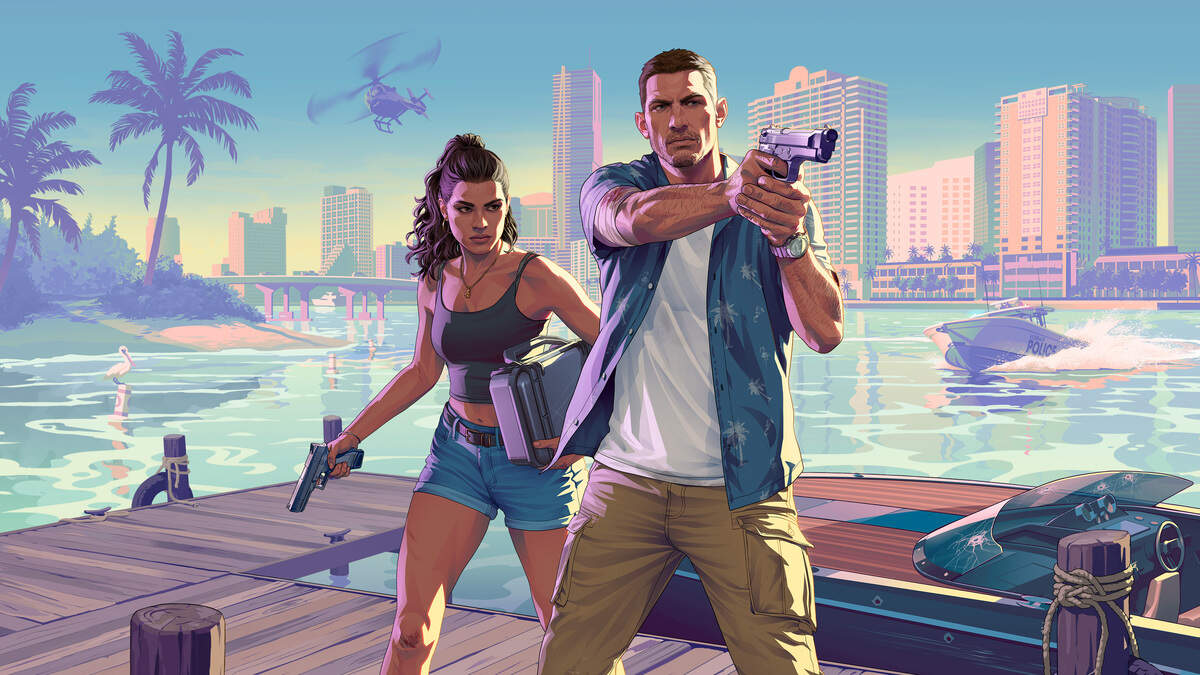
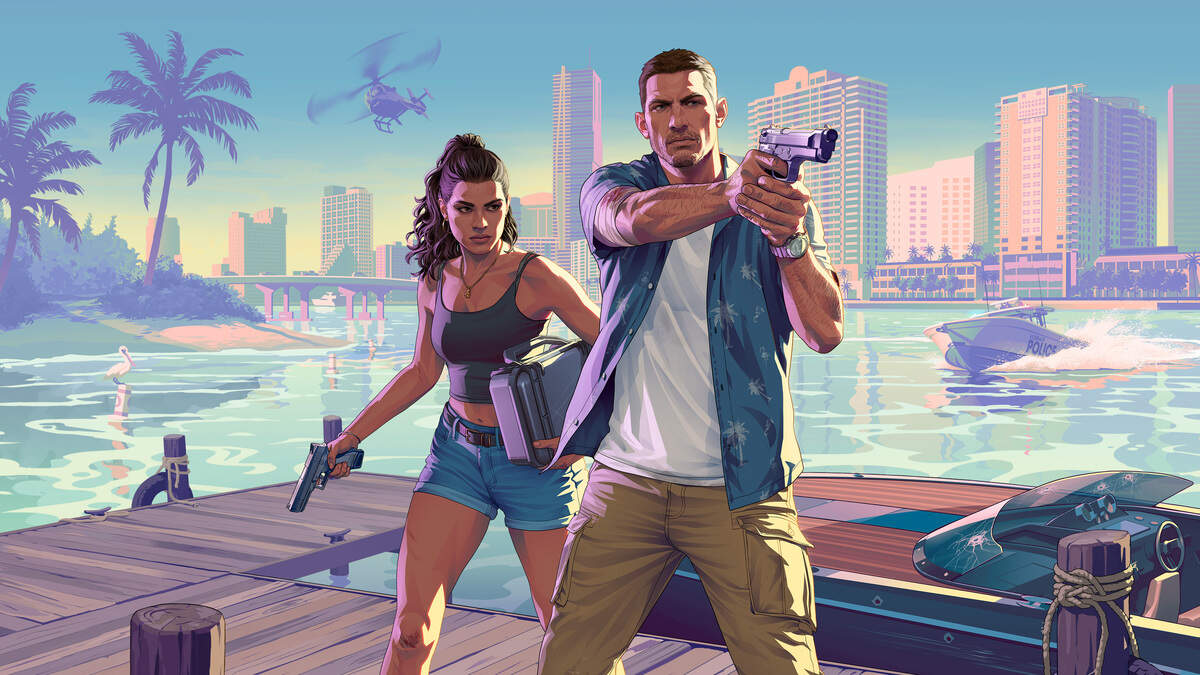
Grand Theft Auto VI will be released in November.
Rockstar Games
Miami-Dade is embracing its infamy — and trying to make a buck from it.
Smart? Probably. But also ironic. Miami has spent decades trying to shed its Miami Vice-Cocaine Cowboys reputation, but trying to sell Wall Street of the South doesn’t have the same ring to it.
As the Herald reported this week, county officials have pitched an unusual marketing deal to the company behind the popular-yet-controversial video game Grand Theft Auto ahead of the greatly anticipated release of its sixth installment. The proposal was first reported by The Miamian news website.
The idea is to transform some of Miami-Dade’s public buildings and infrastructure into real-world simulations of the game’s hometown of Vice City, which was inspired by Miami’s pastel colors, neon lights, palm trees, beach vibe from the 1980s — and the violence of that decade.
Picture this: parts of Miami International Airport become the Vice City airport with a display aircraft emblazoned with Vice City’s logo; a downtown Miami Metromover train transforms into Vice City train, wrapped in the fictional city’s graphics. Even our sewer system would be part of the homage with special manhole covers to honor the video game.
The July proposal does not mention how much Miami-Dade expects company Rockstar Games to pay for the marketing stunt, the Herald reported.
With Miami-Dade officials projecting budget deficits in coming years, everything helps, right? There’s just a tiny inconvenience: In GTA — as Grand Theft Auto is known — players take on the role of a criminal and participate in a host of law-breaking activities such as stealing cars, evading police and wreaking havoc.
“Grand Theft Auto: Vice City,” released in 2002, featured gangster Tommy Viccenti. Freshly out of prison, his goal was to rise through the criminal ranks of a sleazy yet sunny metropolis. There were, of course, drugs and rampant violence.
There was immediate backlash: Haitians who said the game’s depiction of immigrants was unfair and families of murder victims who sued game makers, claiming it influenced their loved ones’ killer.
With Grand Theft Auto VI getting a lot of buzz — there’s an “Extended Look” available on Netflix before the game is released in November — Miami-Dade seems to be in on the joke.
“Given Miami-Dade’s clear influence on the game, we think there could be a unique opportunity to generate revenue for the County while showcasing Miami-Dade to a massive audience,” Carlos Suarez, a spokesman for County Mayor Daniella Levine Cava, told the Herald.
Is Miami-Dade’s proposal in poor taste, or a clever marketing ploy? If it works, there will certainly be those who clutch their pearls — and many more who will post Instagram stories about Vice City-inspired trains and manholes.
If Grand Theft Auto will force Miami to remember some of its darkest hours as a community, let us at least cash in on it.
BEHIND THE STORY MORE What’s an editorial?
Editorials are opinion pieces that reflect the views of the Miami Herald Editorial Board, a group of opinion journalists that operates separately from the Miami Herald newsroom. Miami Herald Editorial Board members are: opinion editor Amy Driscoll and editorial writers Isadora Rangel and Mary Anna Mancuso. Read more by clicking the arrow in the upper right.
What’s the difference between an op-ed and a column?
Op-Eds, short for “opposite the editorial page,” are opinion pieces written by contributors who are not affiliated with our Editorial Board.
Columns are recurring opinion pieces that represent the views of staff columnists that regularly appear on the op-ed page.
How does the Miami Herald Editorial Board decide what to write about?
The Editorial Board, made up of experienced opinion journalists, primarily addresses local and state issues that affect South Florida residents. Each board member has an area of focus, such as education, COVID or local government policy. Board members meet daily and bring up an array of topics for discussion. Once a topic is fully discussed, board members will further report the issue, interviewing stakeholders and others involved and affected, so that the board can present the most informed opinion possible. We strive to provide our community with thought leadership that advocates for policies and priorities that strengthen our communities. Our editorials promote social justice, fairness in economic, educational and social opportunities and an end to systemic racism and inequality. The Editorial Board is separate from the reporters and editors of the Miami Herald newsroom.
How can I contribute to the Miami Herald Opinion section?
The Editorial Board accepts op-ed submissions of 650-700 words from community members who want to argue a specific viewpoint or idea that is relevant to our area. You can email an op-ed submission to oped@miamiherald.com. We also accept 150-word letters to the editor from readers who want to offer their points of view on current issues. For more information on how to submit a letter, go here.