
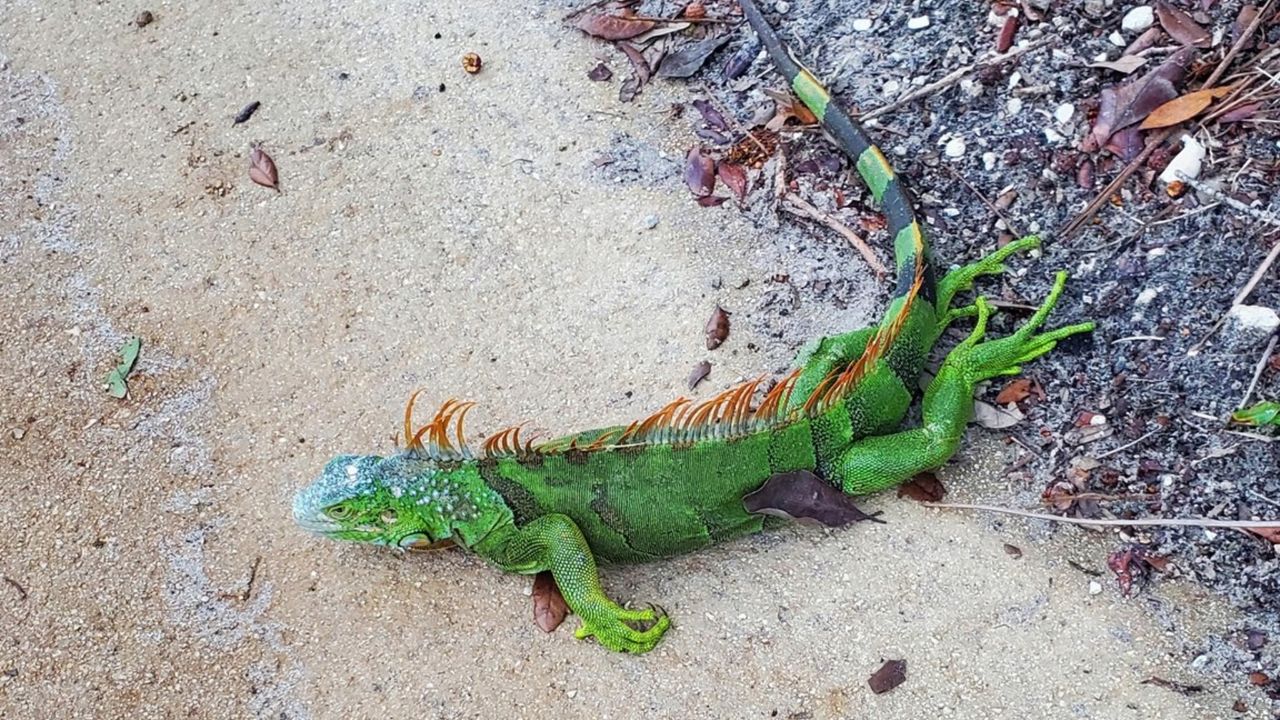
A strong cold front will push all the way into Florida early next week, bringing the potential for some record cold temperatures. Along with the potential for the first frost and freeze for many, there is another hazard you may have to look out for — falling iguanas.
What You Need To Know
Iguanas are spotted as far north as Central Florida
They can freeze in temperatures as high as 50 degrees
Falling iguanas can be a hazard for bypassers
Iguanas are native to southern Mexico, central Brazil, Paraguay, Bolivia and parts of the Caribbean. With human help, iguanas were first introduced to the United States in 1966.
They either hopped aboard a boat coming to the U.S. or were brought in as pets and have since become an invasive species over the years. There’s a reason these large lizards live mainly in tropical climates.
Being cold-blooded, iguanas cannot survive in colder climates and typically stay in south Florida or the Rio Grande Valley of Texas. They have been spotted recently, however, in Central Florida.
With a warmer-than-average summer, iguanas may have been able to migrate a little further north than usual. This could become a problem this winter as temperatures drop.
Thanks to a strong cold front bringing some early cold next week, cold air will surge into Florida, where temperatures are expected to drop into the 30s and 40s.
These cold-blooded reptiles start to freeze and become sluggish with temperatures only as low as 50 degrees.
As temperatures continue to fall, they become paralyzed. If this occurs while they are up in a tree, it’s hazardous to unaware passersby below, as the heavy lizards lose their grip and fall from their perches.
In the past, the National Weather Service in Miami issued a “falling iguana” warning to residents when temperatures dropped into the 40s.
Earlier this year, a cold snap in South Florida caused iguanas to freeze. Here’s a video of one in North Miami Beach falling from a tree.
If you happen upon an immobile iguana, it’s best to keep your distance. Once they thaw out, they can become aggressive and bite or scratch.
Iguanas over two feet will typically survive a short-lived cold snap. If the cold persists, or if the iguana is smaller, they can have lasting effects or even end up dying.
Our team of meteorologists dives deep into the science of weather and breaks down timely weather data and information. To view more weather and climate stories, check out our weather blogs section.