
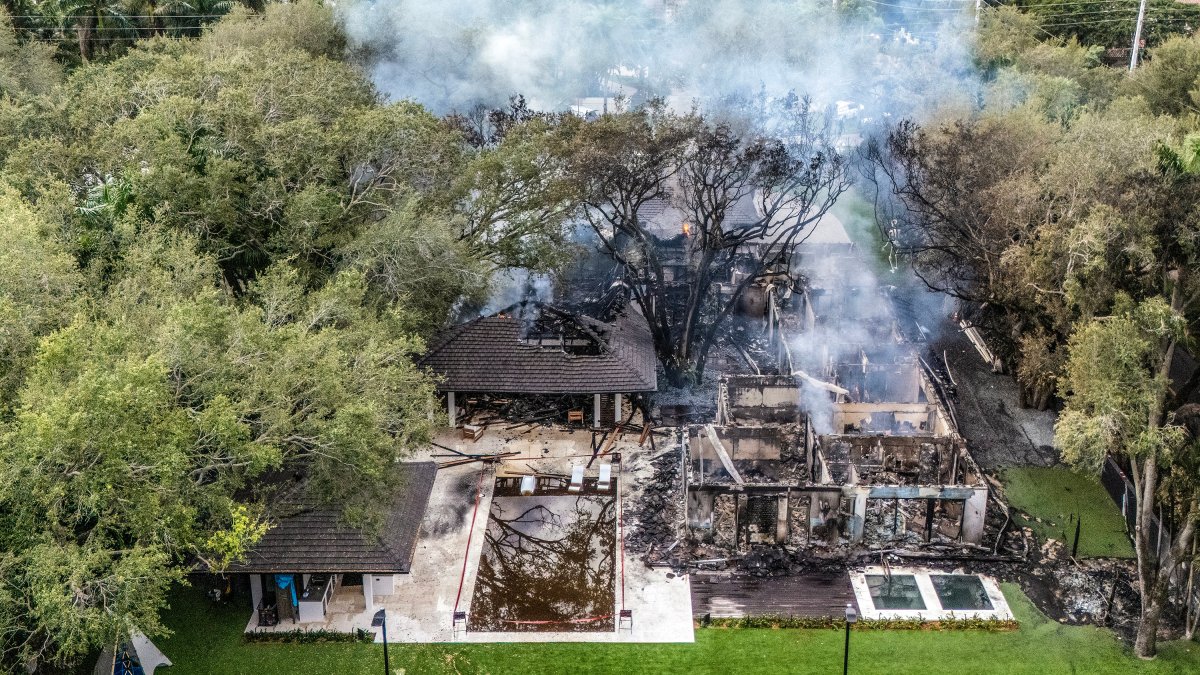
A day later, the charred remains of Miami Heat coach Erik Spoelstra’s house are still smoldering. Now, fire investigators will begin the work of determining what caused the blaze and whether firefighters faced any unexpected hurdles at the scene.
“Be advised we have a water supply, and I’m maxed out on water,” one firefighter is heard saying in the dispatch recording.
“I copy, you have a water supply, and you’re maxed out, I’m gonna have another incoming suppression catch another hydrant on another grid,” came the response from the incident commander.
Judging from the dispatch chatter, firefighters had to struggle against a massive blaze and a lack of easily available water to fight the flames. With 20 units on scene, they eventually succeeded, but not before most of Coach Spo’s home was destroyed.
With near-total destruction, can fire investigators tell where the fire started?
“Absolutely, the fire has some very telltale signs,” said Gerardo Escobedo, a retired City of Miami fire investigator. “For the trained eye, when you walk into a house, even as large as this and as devastated as that, the burned patterns, you always work from least burnt to most burnt and that usually pinpoints the area where it started.”
Escobedo is not involved with the Spoelstra fire investigation, but he has the expertise to explain how the process works.
“Physical evidence is paramount, residues, flammable liquids, or tampered utilities or failed utilities, so if they’ve had renovations recently, whether it’s electrical or gas, those are things to be considered,” Escobedo said.
“Copy, you’ve secured the utilities, yet we have a broken gas line,” another firefighter is heard saying in the dispatch recordings.
A broken gas line, Escobedo says, may or may not be a valuable clue as to the cause of the fire. He says chemical analysis will be done on samples taken from the scene.
“Sometimes, it’s obvious, you know, your sense of smell will tell you, oh, this smells like gas or some sort of accelerant,” Escobedo explained.
From his years of experience working on arson cases, Escobedo knows most house fires in South Florida are accidents, often caused by human error. Coach Spo was on a road trip with the Heat when the fire started. He came home to a disaster. I asked Escobedo if a fire breaking out while no one is home makes it suspicious.
“Absolutely, that throws up some red flags,” he said.
As Escobedo explains it, if there’s no one home, there’s no one to blame for the usual causes, such as leaving the stove on.
He also said investigators will interview the first firefighters who arrived, because they saw how the fire behaved, how it reacted to water, and other details that are important to the investigation.
Miami-Dade Fire Rescue has not released any updates Friday about its investigation.