
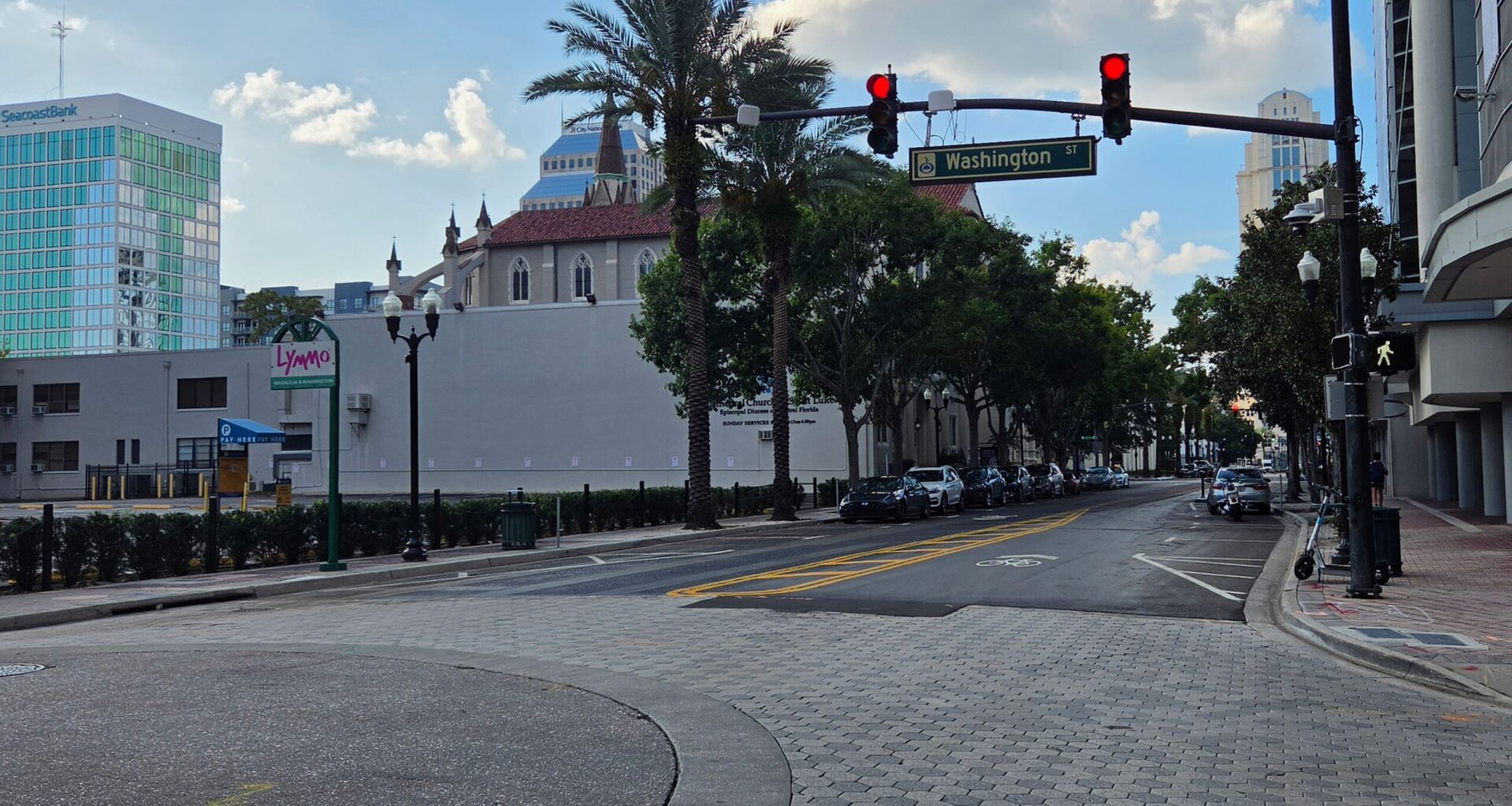
Construction on the first major downtown Orlando street to convert to two-way traffic is complete. Work on Magnolia Avenue, from South Street to Livingston Avenue, started in February and wrapped up in August.
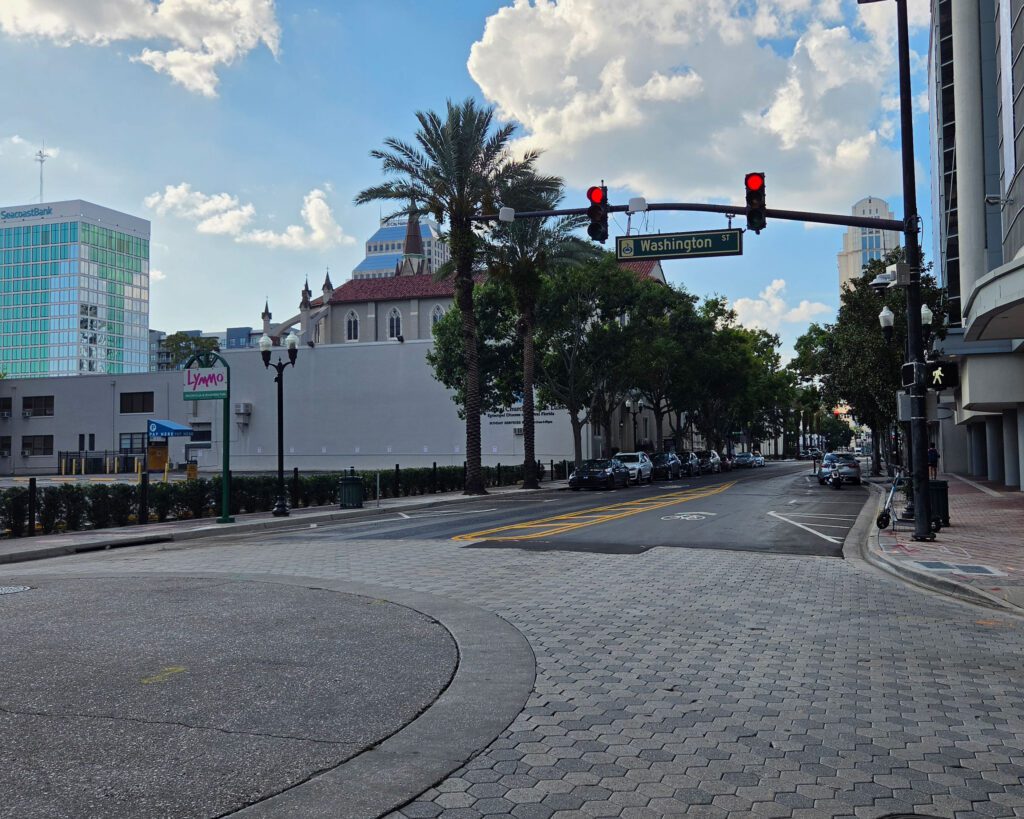
The Magnolia Avenue and Washington Street intersection looks a lot different with two-way traffic and no dedicated Lymmo lane. (NICK GEORGOUDIOU)
The project converted the stretch of road between the Orange County Courthouse and Dr. Phillips Center for the Performing Arts, removing the dedicated Lymmo bus lanes and medians. Along with two-way traffic, the project added nearly 100 street parking spaces, according to Jason Eason, assistant director of the Downtown Development Board and Community Redevelopment Agency.
“The first time somebody drives on it, I think it’s a bit of a shock,” Eason said. “You’re used to going one direction. It takes a little bit used to.”
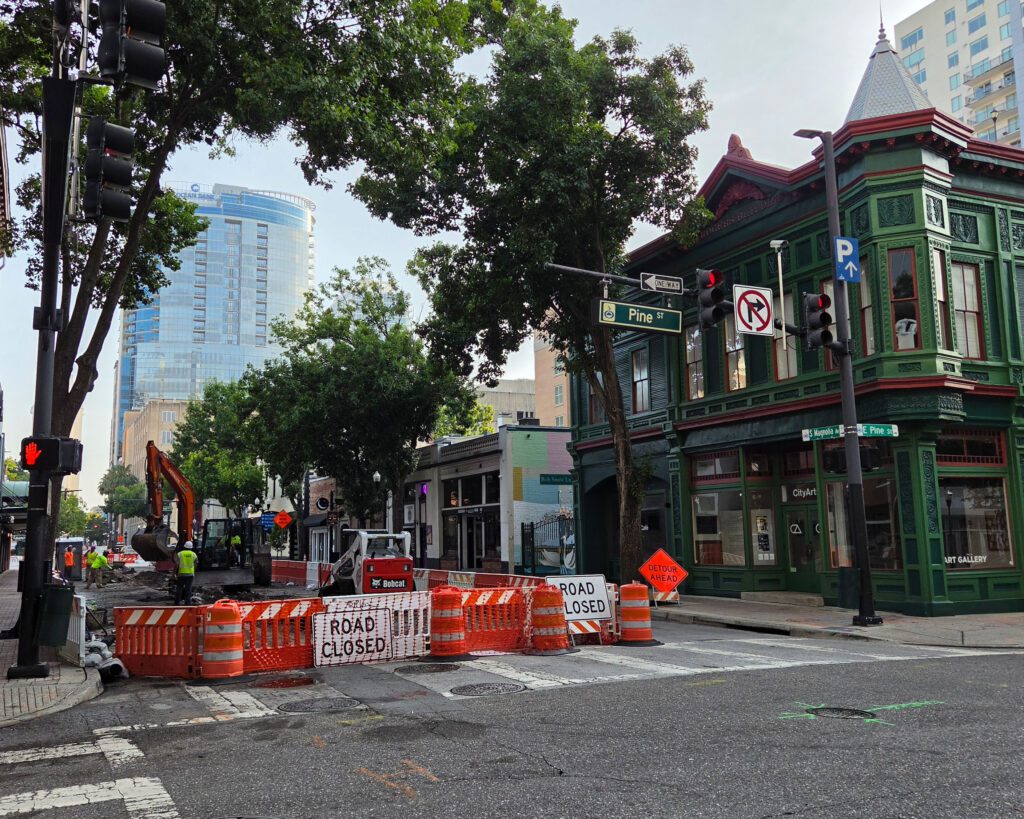
The Magnolia Avenue road work was done in two-block increments, starting at Livingston Street in February 2026 and finishing at South Street in August. (NICK GEORGOUDIOU)
Eason said that the format of the project, going block by block over six months, helped minimize inconveniences to businesses and maintained sidewalk access. This approach could apply to future projects such as the planned two-way conversion for Orange and Rosalind avenues.
While there is no firm date for those projects to start, Eason added that one of the drivers for the change is public safety. He said that studies show the perceived friction of oncoming traffic forces drivers to pay closer attention to the road, which helps keep everyone on the road safer, including pedestrians and cyclists.
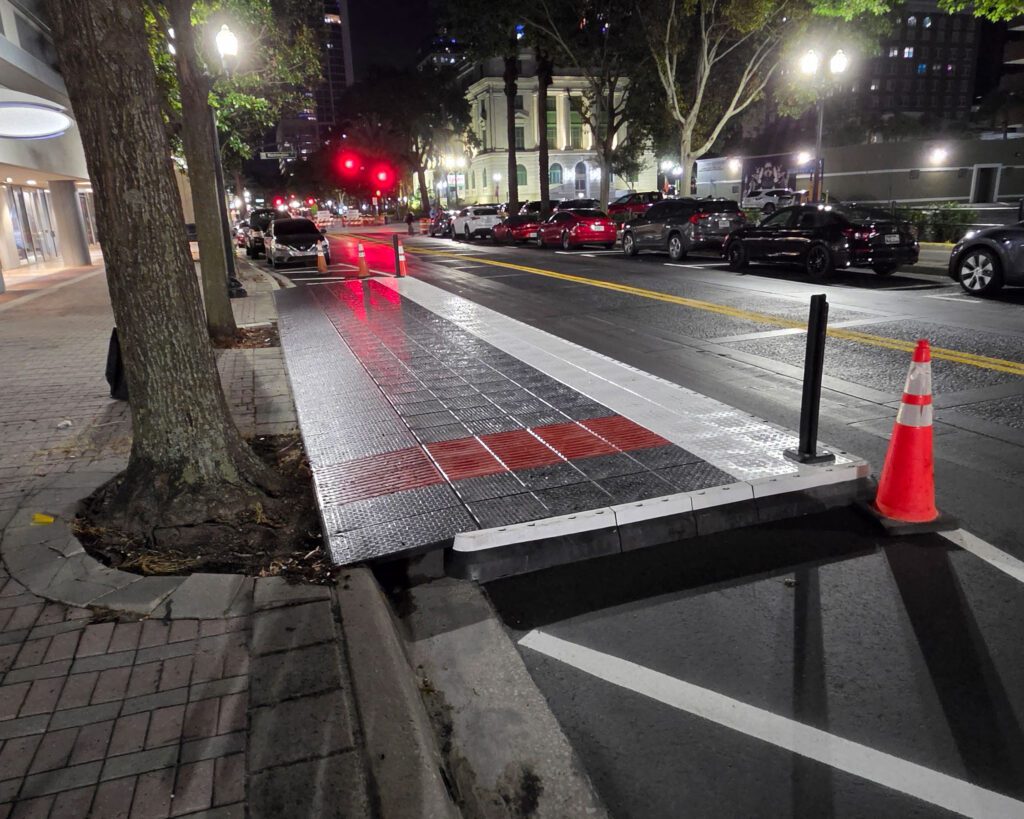
There is no dedicated lane for the downtown Lymmo buses on the new two-way Magnolia Avenue. Lymmo is now incorporated in regular traffic, and temporary platforms like this one have been installed to help keep riders safe. (NICK GEORGOUDIOU)
“It eliminates passing opportunities, which are often conflict points for drivers,” Eason said. “One-way streets can really make drivers feel sort of complacent at intersections because traffic approaches from only one direction, so in these two-way systems, drivers anticipate pedestrians, turning vehicles, oncoming traffic from multiple directions. It just leads to more cautious driving.”
There are more changes to come to Magnolia Avenue, but not until next year. Phase 2 of the project will include widening sidewalks and improving streetscaping. That will start in 2027, with a completion date of late 2028.
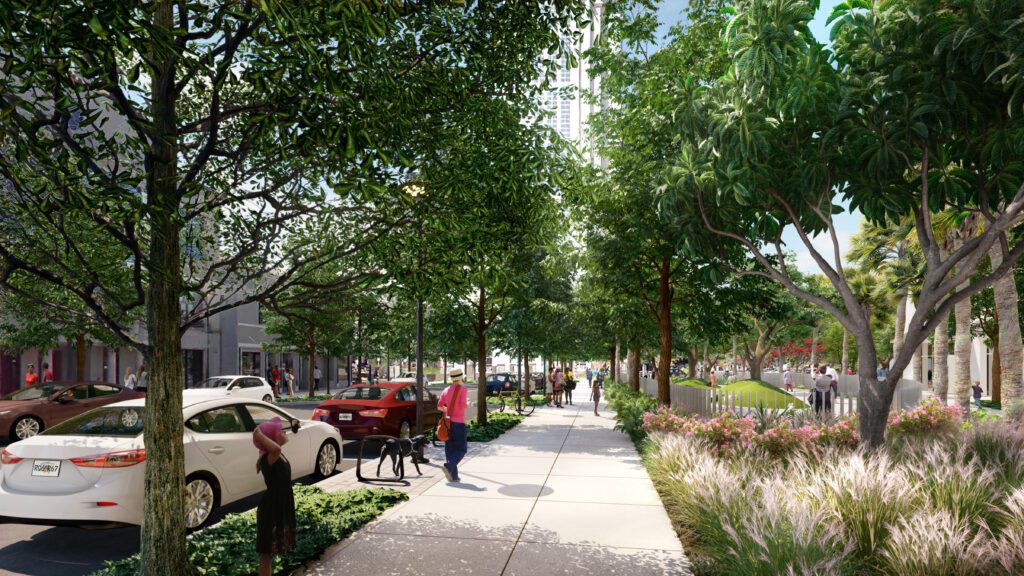
Renderings of the Magnolia Avenue Phase 2 project show more space for pedestrians and upgraded streetscaping. (COURTESY OF CITY OF ORLANDO)