
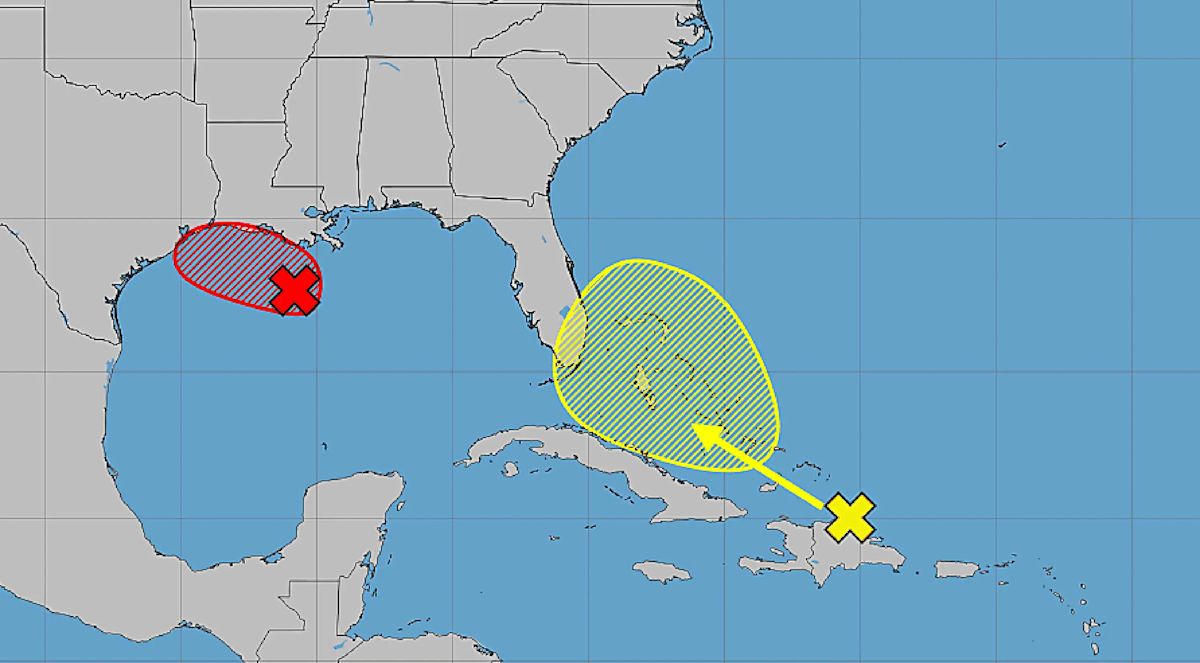
The National Hurricane Center on Monday said a short-lived tropical storm could form in the Gulf while the remnants of Tropical Storm Dolly will douse Florida, but have no chance to reform.
By 5 p.m. EDT, the NHC said Tropical Depression Five had formed, but was expected to become Tropical Storm Edouard and threaten the Louisiana and Texas coasts. It was located about 105 miles south of Morgan City, Louisiana, and 185 miles southeast of Port Arthur, Texas, moving west-northwest at 6 mph with maximum sustained winds of 35 mph.
A tropical storm warning was in effect for Port Bolivar, Texas, to the Vermilion/Iberia Parish line in Louisiana while a storm surge warning was in place from High Island, Texas, to the Vermilion/Cameron Parish line.
The NHC is forecasting it to become Tropical Storm Edouard by Monday night and its center to move into the warning area on Tuesday.
While that system was no threat to Florida, the remnants of what had been Dolly could dump significant rain on the Sunshine State later this week.
Dolly’s remnants are now just a surface trough of low pressure producing a disorganized area of showers and thunderstorms stretching from over portions of Hispaniola, the Turks and Caicos and southeastern Bahamas.
“Significant development of this system is no longer expected while it moves west-northwestward at 15 to 20 mph over the southwestern Atlantic,” forecasters said. “Regardless, the system could bring locally heavy rains and gusty winds to portions of these areas during the next couple of days.”
The forecast models then bring it across the Florida peninsula and into the Gulf, although it would just be a heavy rain event.
“There is potential for a tropical wave currently near Puerto Rico (the remnants of Tropical Storm Dolly) to pass near Central Florida, which combined with the onshore flow and high moisture, could increase the potential for heavy rainfall impacts,” said the National Weather Service in Melbourne.
Local rainfall totals could top 4 inches and the Weather Prediction Center says all of Florida would have a marginal risk for excessive rainfall on Thursday.
“Models continue to show swell from back when Dolly was a tropical storm arriving midweek, which could increase the rip current risk at the beaches,” the NWS stated.
Dolly had become the fourth named storm after tropical storms Arthur, Bertha and Cristobal.
Hurricane season began June 1 and runs through Nov. 30, but the height of hurricane season runs from mid-August through mid-October.
The National Oceanic and Atmospheric Administration earlier this month updated its seasonal forecast and now expects between seven and 13 named storms this year. Of those, two to six would become hurricanes. It also predicted that there might not be any major hurricanes this year, or at most two.
Already, 2026 was forecast to have lower-than-average storm generation, and that has been reduced even further with the latest forecasts from the NOAA and other weather groups.
An average year would see 14 named storms and seven hurricanes, with three of those growing to Category 3 strength or higher.
_____