
A week after helping reshape a Tampa Bay Rays stadium deal that had appeared politically stuck, Tampa City Council Member Bill Carlson is taking on another long-running City Hall fight over how to address flooding in the neighborhoods around South Howard Avenue.
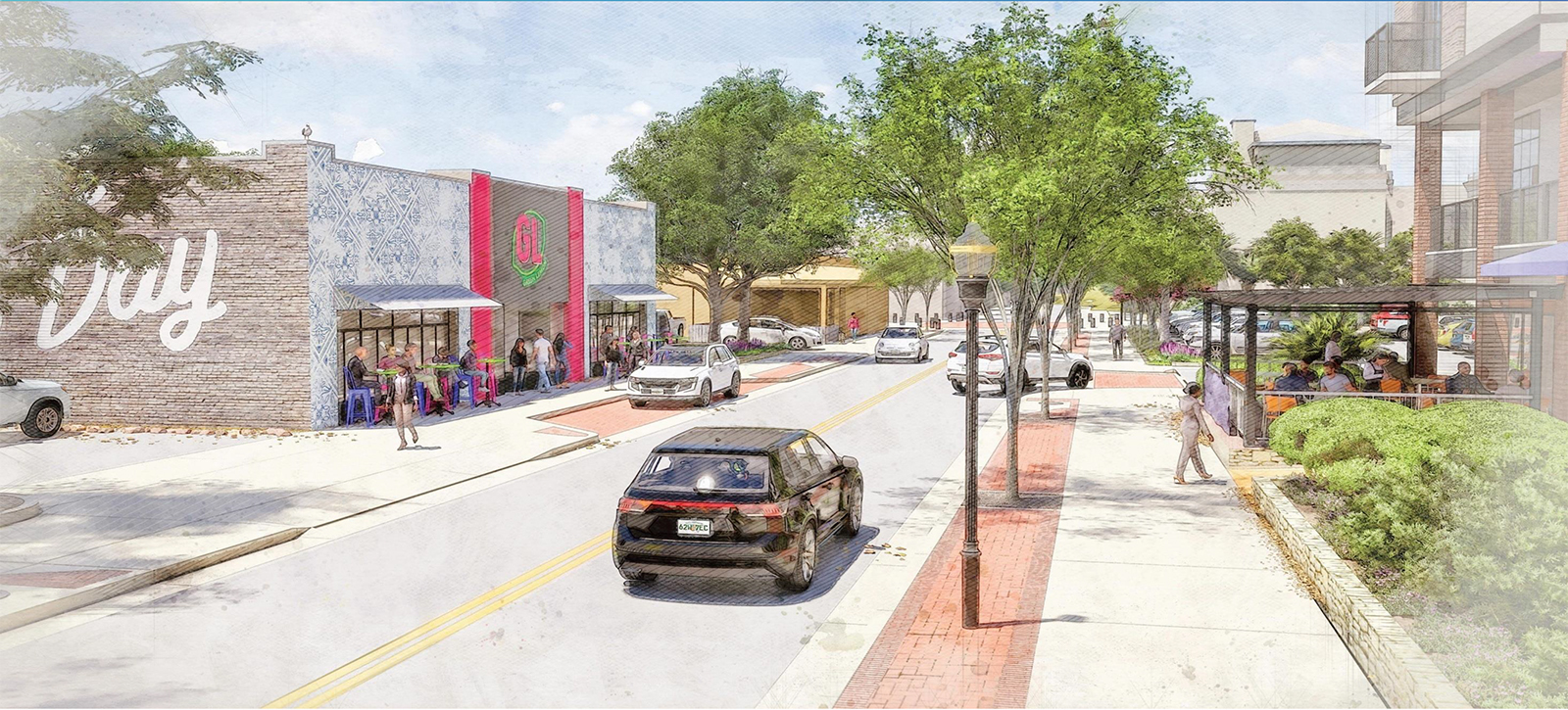
The Council is set to consider a $92.7 million contract Thursday for the South Howard Flood Relief Project, advancing a yearslong effort to rebuild underground infrastructure along a busy dining and nightlife corridor to relieve chronic flooding in Parkland Estates, Palma Ceia Pines and surrounding areas.
Carlson believes Tampa should rethink the project before committing that money. He is pushing the city to conduct an alternatives analysis comparing the South Howard design against other ways to relieve flooding, arguing another approach could prove faster and less expensive while avoiding years of disruptive construction for businesses along the corridor.
Carlson said he does not dispute that the area has a serious flooding problem. His concern is whether the current project goes far enough, particularly in Palma Ceia Pines. The project is designed to reduce inland flooding caused by heavy rainfall, including hurricane rainfall, but would not prevent coastal flooding caused by storm surge. Carlson also worries that committing so much money to South Howard would leave fewer dollars for other flood-prone areas.
“When we see a solution that’s going to cost $100 million or $130 million, and they’re still going to flood, I don’t think that’s acceptable,” Carlson told Florida Politics. “Especially when it’s taking all the stormwater money for the whole city for 10 years. The city is not going to be able to fix any of the other neighborhoods that were flooded in South Tampa because there’s no money.”

City officials offered a direct response to some of those concerns Monday afternoon, releasing new modeling showing how much flooding they expect the project to prevent.
Tampa Mobility Director Brandon Campbell said during a news conference that the project would eliminate structural flooding for about 96 homes and businesses during the five-year, eight-hour storm it is designed around. The modeling also shows structural flooding eliminated in Palma Ceia Pines under those conditions, though some roadway flooding would remain.
The city also modeled what would happen during rainfall comparable to Hurricane Milton. Campbell said the project would not eliminate flooding during a hurricane of that magnitude but estimated it would reduce structural flooding by about 70%.
“We modeled an event similar to Hurricane Milton, not because we are designing the project to eliminate flooding in a hurricane. That’s beyond our capabilities, generally speaking city-wide for our stormwater system,” Campbell said. “However, we wanted to understand if this project was completed and in place and a Hurricane Milton-like event came through again … what would the impact be?”
Campbell said additional improvements could eventually address remaining roadway flooding in Palma Ceia Pines, but those projects would depend on first creating the route to Hillsborough Bay included in the South Howard project.

Thursday’s vote would approve a $92.7 million construction agreement with Kimmins Contracting Corp. The project would install a major new drainage system beneath South Howard and nearby streets while replacing water lines, relocating sewer lines and rebuilding portions of the roadway and streetscape.
In all, Tampa plans to add about 7,000 feet of stormwater infrastructure, upgrade nearly 12,000 feet of water mains and move another 3,200 feet of sewer lines.
The catch? The work is expected to take nearly four years.
That has raised concerns among businesses that would have to operate through years of construction along South Howard.
Steve Michellini, who represents the SoHo Business Alliance, told Florida Politics that businesses were initially told the work would be less disruptive, but opposition has grown as the project evolved. He said business owners worry about how customers, employees and suppliers would reach properties during construction.
“Some of these businesses will not survive,” Michellini said. “There are no parallel streets, so if you shut down Howard, you have the cross town and the railroad tracks on one side and neighborhoods on the other. So you won’t be able to get anywhere.”
With regard to business concern, Campbell said the city plans to build the project in shorter sections beginning near Bayshore and moving north rather than disrupting the entire corridor at once. He said the contractor will also have staff dedicated to working with businesses on access, while the city plans marketing efforts intended to keep customers coming to South Howard during construction.
Still, the SoHo Business Alliance plans to hold a briefing Tuesday morning at the Epicurean Hotel, where Michellini said the group will release an analysis from its own consulting engineer outlining alternatives it believes would be less expensive and disruptive.
But the project also serves a low-lying area with a long history of flooding.
Council Chair Alan Clendenin said the basin struggles to shed stormwater, flooding homes and at times restricting access around the hospital on Swann Avenue.
“Anybody that lives in the area knows that if you drive down Swann Avenue during heavy thunderstorms, the water accumulates there in terms of feet — not inches, but feet,” Clendenin told Florida Politics. “It’s problematic not just for the neighborhoods, but also for the old Memorial Hospital there on Swan Avenue.”
Clendenin said he is more confident that the engineering will address neighborhood flooding than Carlson, but said Monday he has not yet decided whether the benefit justifies the cost.
“It’s well engineered. It’s well thought out. It’s well planned,” Clendenin said. “But can we afford it? That’s where I’m at.”
Mayor Jane Castor, who does not vote on the contract, has supported the project. During her State of the City address in May, Castor argued that additional study would only prolong the risk for residents already dealing with flooding.
“This project will protect future generations of Tampanians. It would be far easier to shelve that project for years of additional study and delay. But floodwaters don’t wait for consensus; any delay is a decision to stay vulnerable,” Castor said.
The Council math could still shift before Thursday.
Carlson and Guido Maniscalco have been vocal opponents, while Charlie Miranda, Luis Viera and Lynn Hurtak have generally supported moving the project forward. Naya Young has previously sided with skeptics and raised concerns of her own, and Clendenin said Monday he remains “on the fence.”
Carlson was in a similar position during last week’s Rays fight, when negotiations reshaped a politically shaky deal before he ultimately joined the four-member majority that approved it.
On South Howard, he is again arguing Tampa should change the proposal rather than abandon the goal.
This time, he may not have the votes to do it.