
For years, residents of Parkland Estates and Palma Ceia Pines have watched water rise into homes, businesses and streets.
Now, Tampa City Council must decide whether the solution is worth more than $100 million — and whether the relief promised to flooded neighborhoods outweighs the disruption construction could bring to one of South Tampa’s busiest commercial corridors.
The council is scheduled to take its first vote Thursday on the guaranteed maximum price for the South Howard Flood Relief Project, a long-planned effort to move stormwater through a new drainage system to Bayshore Boulevard outfalls.
The construction contract is capped at $92.7 million. Additional items tied to the project, including an $11 million interlocal agreement with the Tampa-Hillsborough County Expressway Authority, push the overall cost beyond $100 million.
A second council vote is expected Sept. 17.
The vote comes after a week of dueling presentations over a project that has become one of the city’s most contentious infrastructure debates.
City officials this week released a new animation illustrating what they say the project could do during a major rain event. Using a modeled five-year, eight-hour storm, the city says the project would reduce structural flooding affecting about 96 homes and businesses.
In the animation, flooding across Parkland Estates and Palma Ceia Pines reaches its worst point around the sixth hour. By the seventh hour, city officials say, much of the flooding shown in the existing conditions has disappeared after construction of the proposed system.
The city has also modeled a storm similar to Hurricane Milton and says the project could reduce structural flooding by about 70%, benefiting more than 220 homes and businesses.
For David Adams, a Parkland Estates resident who has spent years pushing for the project, the numbers represent something more immediate.
During Hurricane Milton, more than 333 homes were inundated, he said. And flooding has continued.
“This project will move millions of gallons of water through a gravity-fed system,” Adams said. “We’re up at 18, 20 feet above sea level. It’ll flow right down the hill without any power, without any problems, and it’ll save these neighborhoods.”
Maegen Luka, another supporter of the project, said opponents should look beyond the number of homes directly threatened by floodwater.
“This isn’t just a few homes,” Luka said, pointing to flooding that has affected a preschool, hospital, medical offices, senior housing, bus routes and businesses.
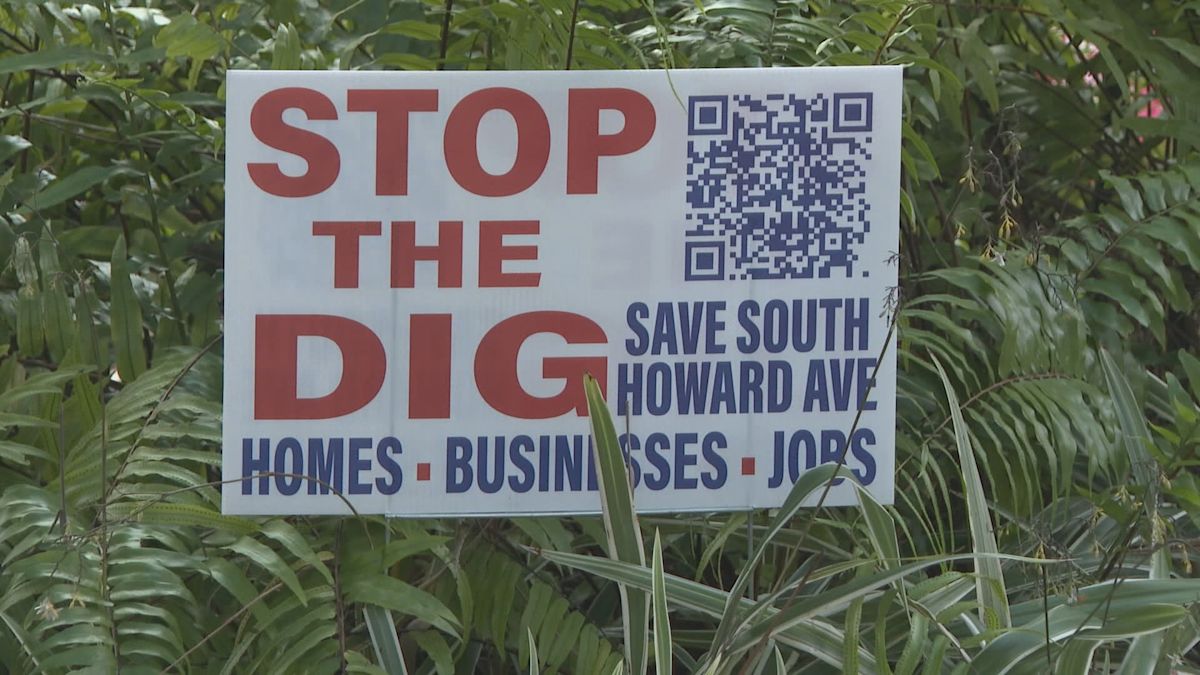
But while residents press council members to act, the SoHo Business Alliance is mounting its own campaign to stop or substantially change the project.
The alliance represents businesses along South Howard Avenue, where construction could close sections of the roadway as crews excavate and install the new stormwater system.
Alliance attorney Edward de la Parte said the group will unveil an alternative developed by a private engineer using city modeling and engineering records the alliance obtained after filing a public-records lawsuit against Tampa.
“The city’s been saying for a long time there is no option B,” de la Parte said. “But we’re going to present an option that is actually what we’re going to call option A.”
The alliance also plans to present an economic analysis of the project’s potential impact on businesses and question whether the guaranteed maximum price will actually cover the project’s costs.
De la Parte said the group’s review raised concerns about limestone and groundwater conditions along the proposed excavation route and whether additional engineering work could substantially increase costs.
“We believe there are a lot of flaws and issues that have not been disclosed to the public,” he said.
City officials say they considered 24 alternatives before selecting the current route and design, concluding it would provide the greatest flood-reduction benefit for the least cost. They also say construction will move in stages and that the city and its contractors will work to keep South Howard businesses accessible.