
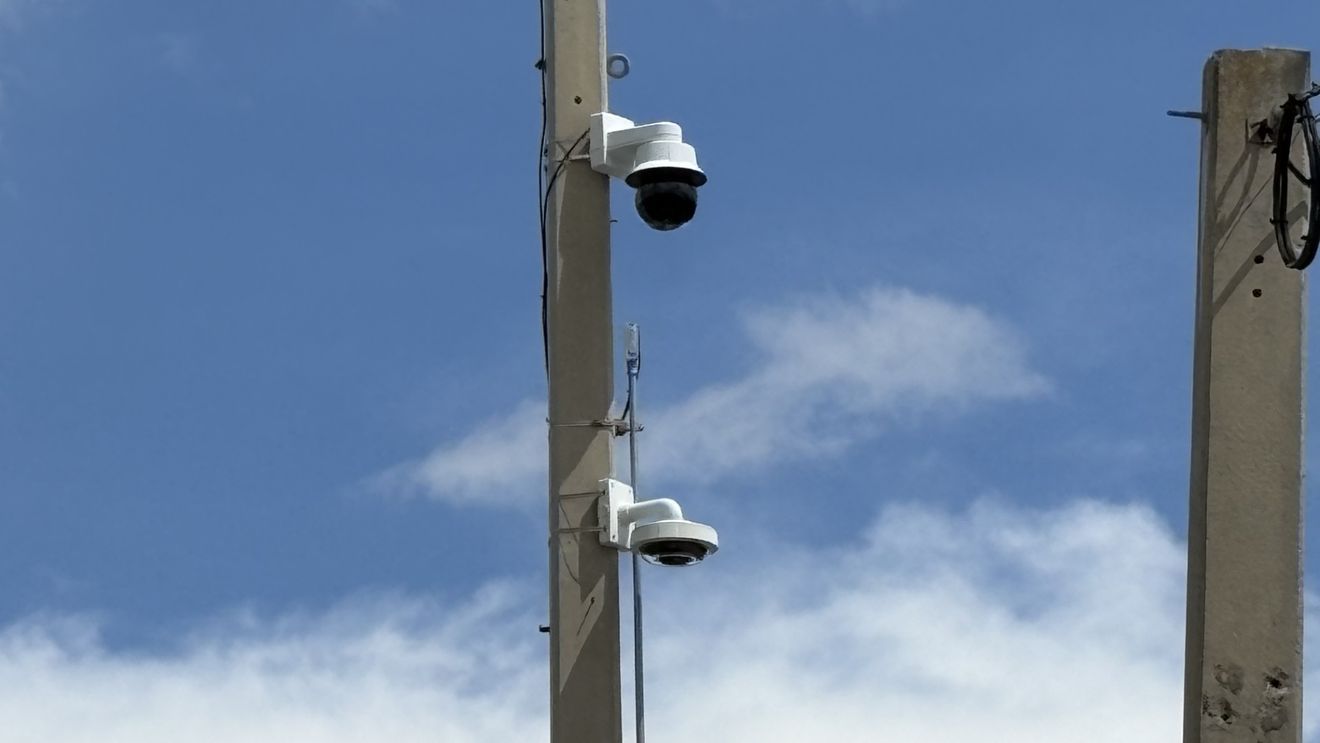
WEST PALM BEACH, Fla. (CBS12) — West Palm Beach’s network of police surveillance cameras will not be affected by the state’s order requiring agencies to remove Flock cameras and similar license-plate reader technology from state roads.
The Florida Department of Transportation has given agencies 30 days to remove the systems from roads under its jurisdiction, revoked existing permits and said it will no longer approve future license-plate-reader requests on state roads.
But the order does not appear to apply to West Palm Beach Police’s closed-circuit television cameras, which monitor activity in locations around the city.
The city in May expanded its crime-prevention efforts by launching a Closed-Circuit Television Grant Program for eligible commercial and non-residential properties. The West Palm Beach City Commission approved $120,000 for cameras at businesses in targeted neighborhoods.
One longtime West Palm Beach resident said cameras can help police extend their reach and deter crime.
“If we are having more cameras, more eyes on the streets and we don’t have enough uniforms, why not have the cameras there? This is gonna help out our public safety,” said Denise Smith-Barnes, a resident since 1992 and president of the Pinewood Park Neighborhood Association.
“I think they help. I think they help a lot, you know, in case somebody get hit, hit and run, and see if they can catch up with the guys that do it, you know?” said Ivory Robinson, a retiree who lives near 5th and Tamarind, two blocks away from a camera at the intersection of 7th and Tamarind Avenue in West Palm Beach.
The state order centers on Flock cameras and other automated license-plate readers, often known as ALPRs. Those systems photograph passing vehicles and collect information including license plate numbers, vehicle make, model, color, location and time. Law enforcement agencies can later search the data for vehicles tied to investigations.
Flock is one company that provides the technology. The systems have been used by Florida agencies to help develop leads in violent-crime and theft investigations, including the recent Indian River County homicide case in which authorities tracked a murder suspect who had fled to West Virginia.
Supporters say license-plate readers can rapidly help locate wanted suspects, stolen vehicles and vehicles connected to crimes. Palm Beach County Sheriff Ric Bradshaw has described the technology as an important public-safety tool, while saying safeguards are necessary to prevent misuse.
Critics, however, say the devices log the travel of everyone who drives past them, not only people suspected of crimes. That has raised questions about privacy, how long data is retained and whether agencies can share the information across jurisdictions.
“I do think these things were overly broadly used. They were all over the country in many communities and neighborhoods and I think that goes too far. I’ve always been very opposed to over-the-top surveillance,” said James Uthmeier, Florida Attorney General.
Flock has said it plans to cut its standard data-retention period from 30 days to seven days and require a case number before an officer searches the system.
“We always have to assume the worst in government and protect our individuals from unlawful government encroachment,” Uthmeier said.
Gov. Ron DeSantis recently called the growing use of license-plate reader cameras “out of control,” saying law enforcement needs effective tools but Florida should not become a surveillance state.
“There needs to be balance. We need to put bad guys away. But we also need to make sure these things are not all over communities. That is wrong,” Uthmeier said.