
St. Petersburg could spend as much as $4.1 billion and nearly a decade trying to leave Duke Energy, only to discover that buying the utility’s poles and wires is the easy part.
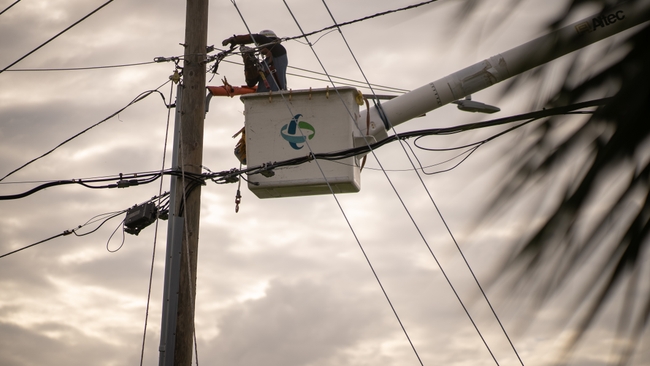
A new analysis commissioned by Duke concludes that the harder — and potentially even more expensive — challenge would be physically untangling the city from an electric grid woven throughout Pinellas County, a process that could require 150 miles of new distribution lines, four substations and two underwater transmission crossings.
Duke’s estimated maximum $4.1 billion price tag arrived before City Hall could produce one of its own. St. Petersburg is still waiting on a municipalization feasibility study commissioned by the City Council from NewGen Strategies and Solutions.
Meanwhile, activists behind Dump Duke have already started down a separate track. The group filed paperwork for a charter amendment proposed for a future election that would require St. Petersburg to create a city-owned electric utility if voters approve it.
The proposal would direct the city to acquire the assets needed to serve customers, first through negotiations with Duke and potentially through eminent domain if no agreement is reached. Organizers still have to gather enough signatures to get the measure before voters. Duke previously told leaders in the city of Clearwater that its assets weren’t for sale.

The company is now citing the latest findings to make its case against municipalization. Duke Energy Florida spokesperson Ana Gibbs argues residents could ultimately shoulder the costs through higher taxes, increased fees or reductions in city services.
“This study makes clear a government takeover of St. Petersburg’s electric service is unaffordable and irresponsible. Our residents deserve a clear understanding of the costs, risks, and long-term implications of this unprecedented proposal,” Gibbs said.
“A government takeover could cost as much as $4 billion and our customers would ultimately be asked to shoulder the burden through higher taxes and increased fees or worse, a reduction in public services. Duke Energy Florida and its predecessors have delivered cost-effective, reliable, electric service for decades and we are committed to continue providing the same level of service as the city learns more about the risks of this proposal.”
Concentric Energy Advisors, working on behalf of Duke, estimates municipalization could cost between $2.75 billion and $3.8 billion if a takeover were completed in 2033. If the process stretches until 2036, the price range rises to $2.94 billion to $4.1 billion.
Those estimates are expressed in future dollars, with Concentric accounting for inflation and other cost increases through the projected takeover dates.

Concentric estimates separating the systems could take seven to 10 years.
The sheer size of the estimate has less to do with what Duke’s existing infrastructure is worth and more to do with how difficult Concentric believes it would be to carve St. Petersburg out of a regional electric network that was never designed around municipal borders.
The portion of Duke’s electric system allocated to St. Petersburg currently carries a book value of about $693 million. Concentric estimates those assets could be valued at roughly $1.25 billion to $1.65 billion by the time a takeover occurs.
Then comes the expensive part.
Concentric estimates another $1.18 billion to $1.88 billion could be required to physically separate and rebuild portions of a grid that now operate as one interconnected system across St. Petersburg and surrounding Pinellas County.
The work would require roughly 150 miles of new distribution facilities and 16 miles of new transmission facilities, four new substations, two subaqueous transmission crossings, underground duct banks and more. Concentric identifies some of the most complicated areas around Bayway and Maximo, Pasadena and Gulfport, Kenneth City and Disston, and the Gateway area.
Breaking St. Petersburg away could also require rebuilding portions of Duke’s network to preserve service for surrounding customers in places like St. Pete Beach, Treasure Island, Gulfport and Tierra Verde.
Even after the wires are untangled, St. Petersburg would still have to build an electric company of its own.
Concentric estimates startup costs of between $185 million and $330 million to establish the workforce, vehicle fleet, billing platform, cybersecurity systems, outage management technology, communications infrastructure and utility control operations needed to run an independent system.
Legal, transaction and financing expenses could add as much as $57 million. Concentric estimates another $103 million to $183 million could be needed in initial reserves to keep the fledgling utility financially stable.
Even Concentric’s $4.1 billion ceiling may not capture every possible expense.
The firm warns that separating St. Petersburg from Duke could interfere with portions of the company’s automated “self-optimizing grid,” which uses interconnected equipment and technology to isolate outages and reroute power.
There is another potentially large bill if St. Petersburg decides to stop relying on Duke for power generation. Concentric separately estimates that “stranded generation” costs could reach $300 million to $550 million, depending on how a transition was structured. Concentric did not bake those costs into its overall estimate.
City officials have not committed to municipalization. The city is paying NewGen as much as $590,000 to determine whether creating a municipal utility is realistic and whether the potential benefits could justify the costs. Its conclusions could look very different from the analysis Duke commissioned.
That tees up the next phase of the fight. Dump Duke is trying to put municipalization before voters, City Hall is studying whether it makes sense and Duke has given both a number they will have to contend with.