
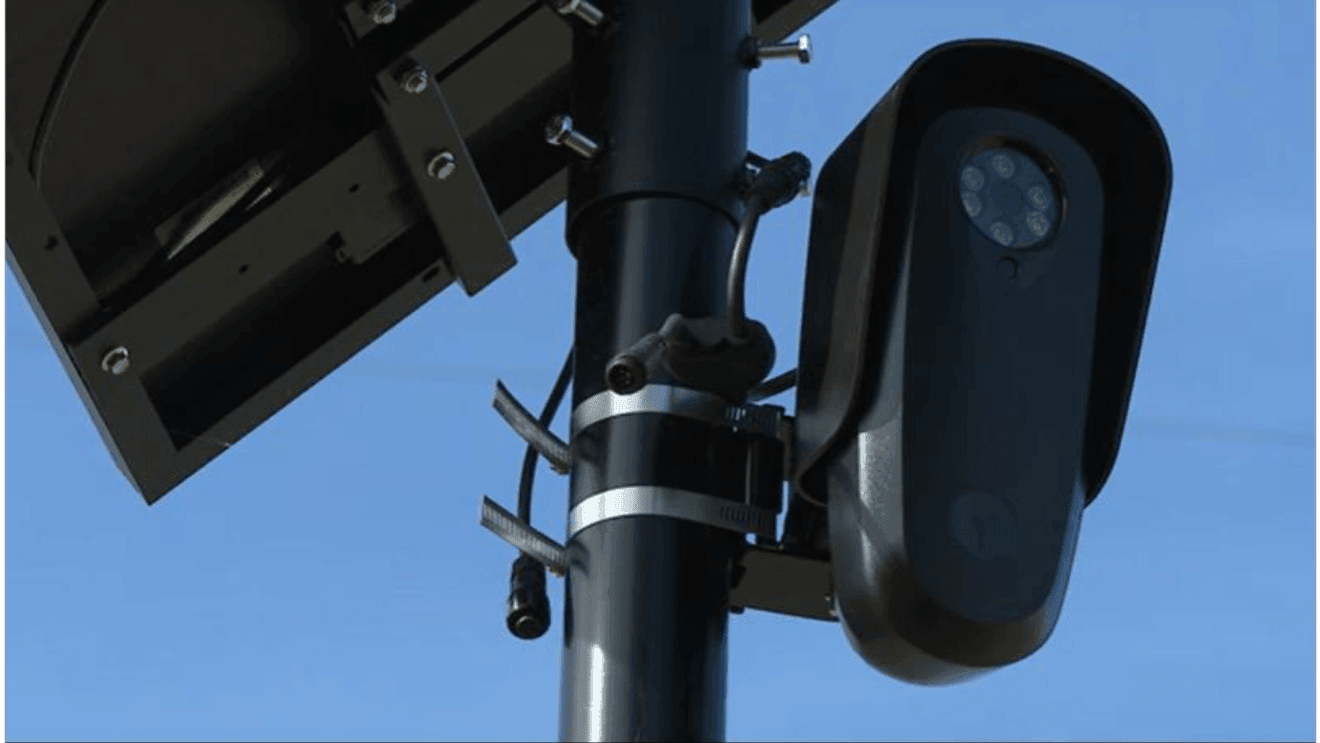
ST. LUCIE COUNTY, Fla. (CBS12) — St. Lucie County commissioners voted 3-2 Tuesday night to remove Flock cameras and other automated license plate readers from county-controlled rights-of-way, going beyond a state order that applies only to state highways.
Commissioner James Clasby added the issue to the agenda on the day of the meeting and made the motion. Commissioners Lee, Lowry and Clasby voted yes; Chair Jamie Fowler and Commissioner Cathy Townsend voted no.
The approved direction stops the county from issuing new permits or approvals for Flock cameras, automated license plate readers, and other vehicle-tracking systems on county-owned or county-controlled property.
It also directs staff to review and potentially revoke existing permits, issue 30-day removal notices to known owners or operators, and complete an inventory of the devices. Staff is expected to provide the board with an update Sept. 15.
The action does not apply to license plate readers mounted in law enforcement vehicles or cameras installed on private property.
Clasby said the move was about protecting residents’ privacy and uncertainty about who can access or use data collected by the camera systems. He said the county should not allow the technology in its rights-of-way until state or federal lawmakers establish stronger safeguards.
Fowler and Townsend opposed the motion in part because they said the issue had not received adequate public notice after being added to the agenda that day. Both commissioners also said they wanted to hear directly from Sheriff Richard Del Toro and local police chiefs before taking action on existing cameras.
Townsend said the cameras can be a valuable investigative tool, particularly when law enforcement is trying to quickly identify or locate suspects. She said privacy concerns surrounding the technology still need to be addressed.
Fowler said she supported stopping new permits but was not comfortable ordering existing cameras removed without a broader public discussion.
The Florida Department of Transportation on Aug. 31 revoked approvals for license plate readers on state highway rights-of-way and gave permit holders 30 days to remove them. The FDOT order does not cover county roads.
The county commission’s action therefore goes further than the state directive by targeting cameras located in county-controlled rights-of-way.
St. Lucie County Sheriff Richard Del Toro issued a statement about an hour before the commission meeting, saying his office would comply with the FDOT directive. Del Toro also announced tighter internal rules: limiting license plate reader use to forcible felony investigations and missing-person cases, requiring undersheriff approval and restricting access to personnel ranked lieutenant and above.
“Every search should have a legitimate public safety purpose, a defined approval process, and appropriate accountability,” Del Toro said.
But Del Toro did not call for cameras to be removed from county roads.
See also: Tiger Woods enters no-contest plea in DUI crash, license suspended 5 years
His announcement instead focused on how deputies can use the technology, including requiring prior approval from the undersheriff and limiting system access to lieutenants and higher-ranking personnel.
Port St. Lucie police announced a separate response Tuesday, saying the department would remove seven cameras located within FDOT rights-of-way and place an “operational pause” on its remaining Flock and Axon systems.
During that pause, access will be limited to cases involving an immediate threat to life, including missing or endangered persons, and will require authorization from Police Chief Leo Niemczyk.
“We are committed to finding that balance and doing what is right for the people we serve,” Niemczyk said.
The police department’s pause is separate from the county commission’s action. The county vote addresses permits and camera installations in county-controlled rights-of-way, while Port St. Lucie police is restricting its own operational use of the technology.
The county attorney told commissioners each existing permit would need to be reviewed individually. She also said the county has a process under existing law to revoke permits, while a permanent ban on the technology would require an ordinance.
The commission is scheduled to receive a status update Sept. 15 on the camera inventory and removal notices.
The decision also puts St. Lucie County at odds with neighboring Martin County. Sheriff John Budensiek said Tuesday his agency would comply with the FDOT directive but would keep cameras outside state rights-of-way in place while pursuing statewide privacy protections.
Budensiek has proposed limiting searches to criminal investigations and missing-person cases, requiring case documentation and supervisory approval, along with audits and shorter data-retention periods.