
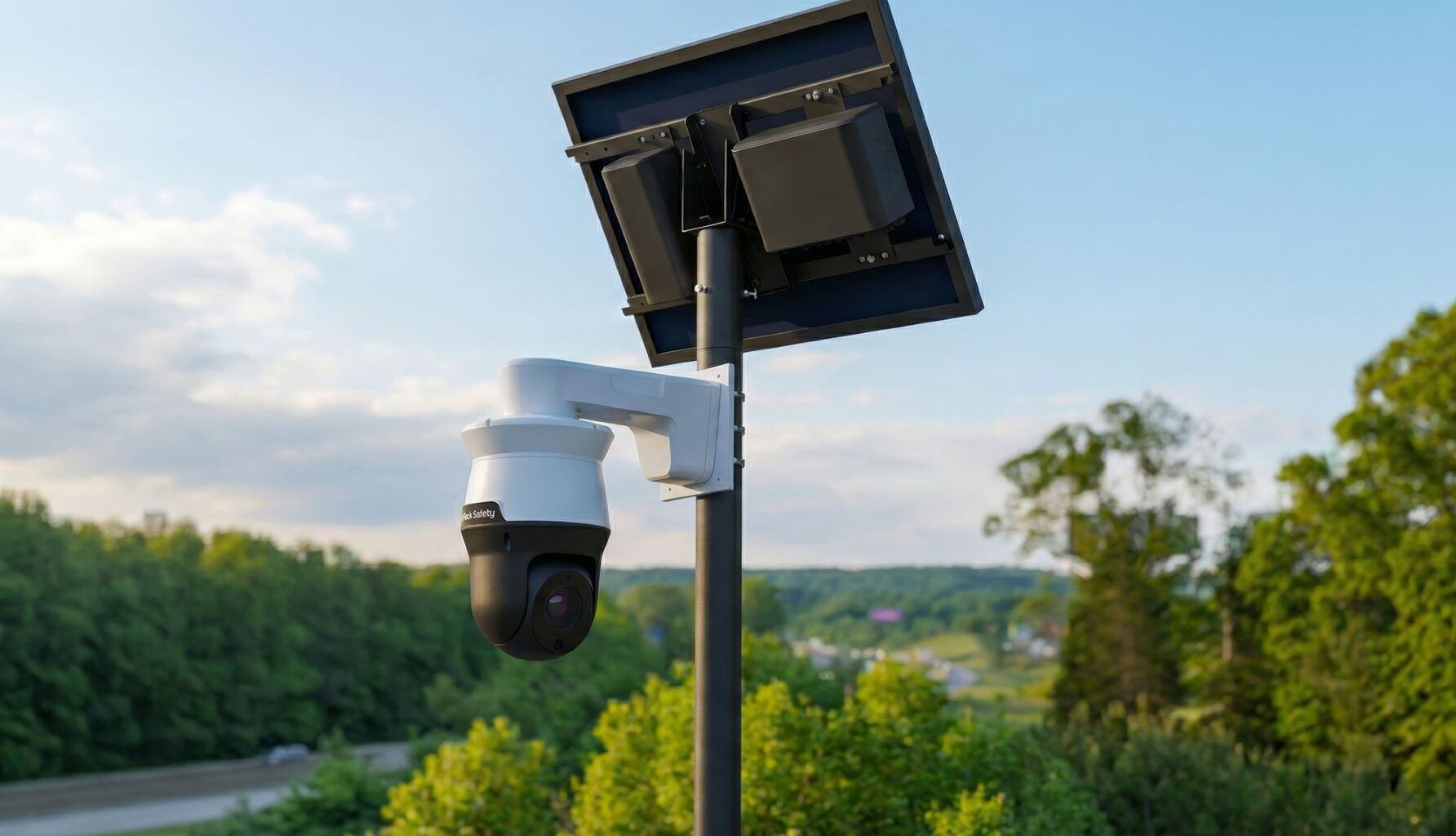
Florida’s crackdown on automated license plate readers (ALPRs) will force at least 29 fixed cameras off state roads in Pinellas County, but it will leave a much larger law enforcement network largely intact — including license plate readers mounted on every one of the Sheriff’s Office’s 560 patrol vehicles.
Pinellas County Sheriff Bob Gualtieri said 23 of his agency’s 73 fixed readers were installed under Florida Department of Transportation permits. The St. Petersburg Police Department, meanwhile, says six of the 50 Flock cameras available to officers must come down.
Neither agency plans to stop using the technology otherwise.
The removals follow an FDOT directive giving local governments and law enforcement agencies 30 days to clear ALPRs from state rights-of-way after Gov. Ron DeSantis raised concerns about sprawling camera networks.
Both local agencies are complying, but they are forcefully defending a technology they say helps solve crimes, find missing people and catch dangerous suspects.

Gualtieri defended the technology during a news conference Wednesday, arguing that the debate has blurred the distinction between ALPRs and continuous surveillance.
The Sheriff’s Office has used ALPR technology since 2006. Along with its 73 fixed readers, it deploys mobile readers on trailers and has ALPR capability built into dash-camera systems on all 560 patrol vehicles. Gualtieri said the agency uses systems from Flock Safety, Motorola and Axon.
“We live in a technological age, which means we cannot fight crime in the Stone Age,” Gualtieri said. “As we cannot defund the police, we can also not detool the police either.”
Gualtieri stressed that fixed readers take motion-activated photographs of license plates and vehicles, recording where and when a vehicle passed a camera. They do not continuously record video or identify the person behind the wheel.
“There’s no continuous photographing, no continuous recording, no continuous surveillance,” Gualtieri said. “Why do people keep saying that? It’s not true.”

He acknowledged legitimate concerns about officers improperly searching ALPR databases, but said those concerns call for stronger safeguards rather than eliminating the technology. Gualtieri supports written agency policies, training, case numbers and documented law enforcement purposes for searches, regular audits and serious discipline for misuse.
He also disputed claims that law enforcement ALPR data is being sold commercially, saying Florida law treats captured information as confidential and restricts its release.
Gualtieri pointed to an armed robbery Sunday near U.S. 19 and Ulmerton Road to illustrate the technology’s value. Two masked men threatened a business owner at gunpoint and fled in a black Kia. Investigators connected them to two Tampa robberies, and ALPR records helped identify the vehicle’s tag.
An officer later stopped the Kia in Daytona Beach, where authorities recovered an AR-15, other firearms and property belonging to the victim. He noted that several cameras used were on Interstate 4.
Gualtieri also credited ALPRs as one tool contributing to declining crime in the Sheriff’s Office service area. He said serious crime has fallen more than 64% over the past decade, while stolen vehicles dropped 56%, from 529 in 2015 to 230 in 2025.
“This reduction in crime is not by accident,” Gualtieri said. “It’s by design and by using technology such as ALPR.”
Gualtieri expects to discuss the technology with Pinellas County Commissioners at a public work session, potentially in October. He said he is open to tighter safeguards, but made clear he favors regulation over elimination.
“I’m confident they won’t have any concern about ALPR’s being on county right-of-way. I think we’ve got to clear up a lot of this. There’s always room to be better. There’s room to tighten this up,” Gualtieri said. “I’m very open to that.”
St. Petersburg Police will remove six readers located along state roadways, including one used this week to track down a missing elderly man.
Spokesperson Yolanda Fernandez said much of the criticism surrounding Flock stems from “a basic misunderstanding on how the system works.”
“It’s a real-time tool,” she said.
Fernandez said Flock cameras capture still images of license plates and basic vehicle information, such as make and model, rather than continuous video. Officers can use those snapshots to determine where a vehicle was seen, but Fernandez pushed back on the idea that police routinely survey drivers through the network.
“It’s not like people think that it’s following people around or something,” Fernandez said. “It requires some detective work to take the list and then narrow it down and see if the location fits.”
Police Chief Anthony Holloway remains open to additional guardrails if needed to address privacy concerns, Fernandez said, but the Department already requires officers to enter a criminal report number and reason before accessing Flock. Searches are subject to audits, and misuse can lead to termination or possible criminal charges.
Fernandez highlighted a case Tuesday involving a 99-year-old man who became lost while driving roughly 2 miles to his daughter’s home.
Police searched for him for several hours using patrol officers, a drone and a Pinellas County Sheriff’s Office helicopter. Shortly after 5:30 p.m., a Flock camera recorded his red Toyota Corolla in the Tyrone area. Officers located him about four minutes later and reunited him with his family.
The camera that produced the hit is one of the six now slated for removal from a state roadway, Fernandez said.
She said Flock can also help police narrow investigations or rule people out. In a recent homicide involving a city employee, Fernandez said the system helped officers determine within minutes that a suspect had traveled south across the Sunshine Skyway Bridge before he was eventually stopped in Lee County.
“It helps us to narrow our focus and direct officers in the right way,” Fernandez said.
Fernandez characterized Flock as one of several sensitive investigative databases available to police. She noted that vehicle-mounted license plate readers can automatically alert officers to wanted vehicles or other law enforcement flags, while Flock requires officers to actively search for information tied to an investigation.
She also pointed to other confidential databases carrying similar risks of abuse. St. Petersburg Police fired two employees last year for improperly sharing information from systems unrelated to Flock, she said, arguing that misuse should be addressed through controls and consequences rather than abandoning the technology.
Fernandez noted that license plate readers are already built into St. Petersburg patrol vehicles, where they can automatically alert officers to vehicles associated with warrants or drivers without valid licenses. Flock, by comparison, requires officers to actively search the database for information tied to an investigation.
In other words, the six cameras coming down are only one piece of a much larger network already embedded in day-to-day policing.
The state action arrives as St. Petersburg is already reconsidering its relationship with Flock.
The City Council voted unanimously last week to send the city’s contract and Police Department use of the cameras to the Public Services and Infrastructure Committee.
The city began using Flock in 2022 through a 25-camera Police Department pilot that never went before elected officials for a vote. In 2024, the Council approved a five-year, $730,250 contract expanding the network on its consent agenda without questions or public discussion.
Council Vice Chair Richie Floyd pushed for the review after months of conversations with residents, activists and Holloway. He has questioned how much control the city retains over Flock data and whether the public-safety benefits justify the privacy tradeoff.
His concerns extend to Flock itself. He pointed to a Police Department memo acknowledging that the city cannot control how the company uses the data once it enters Flock’s system, raising questions about privacy, data security and whether Flock remains the right partner for the city.
St. Petersburg also continues to retain Flock data for 30 days, even as the company now recommends a seven-day default retention period.
Fernandez said the Department has not changed that policy.