
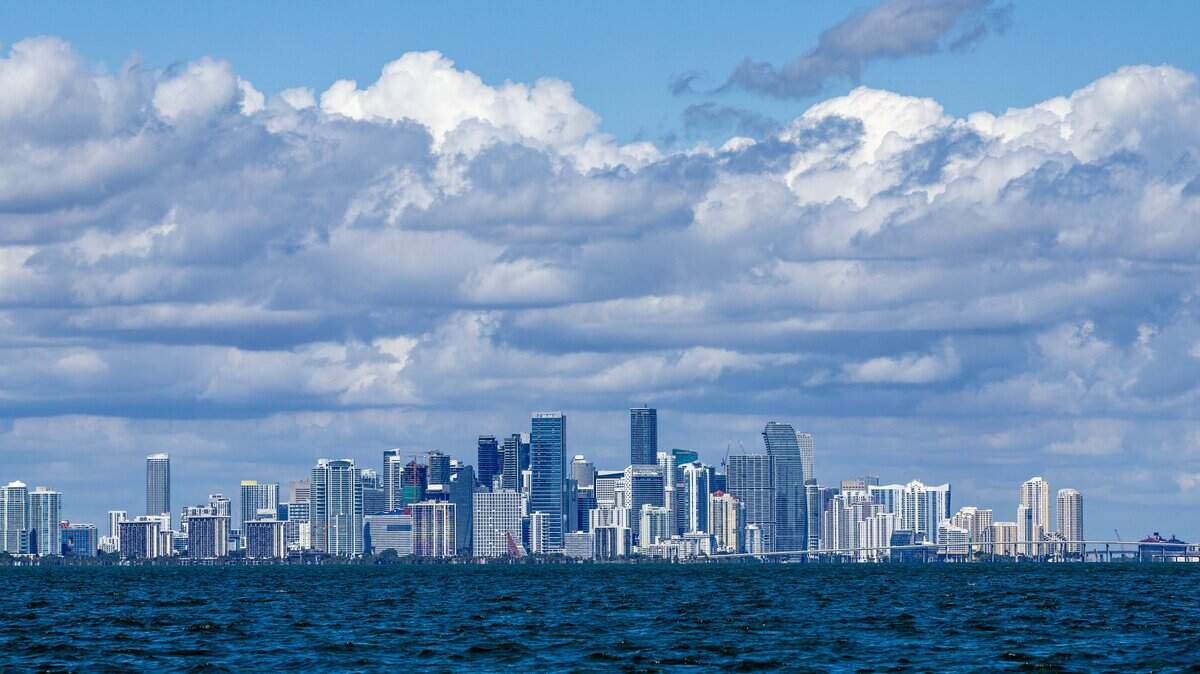
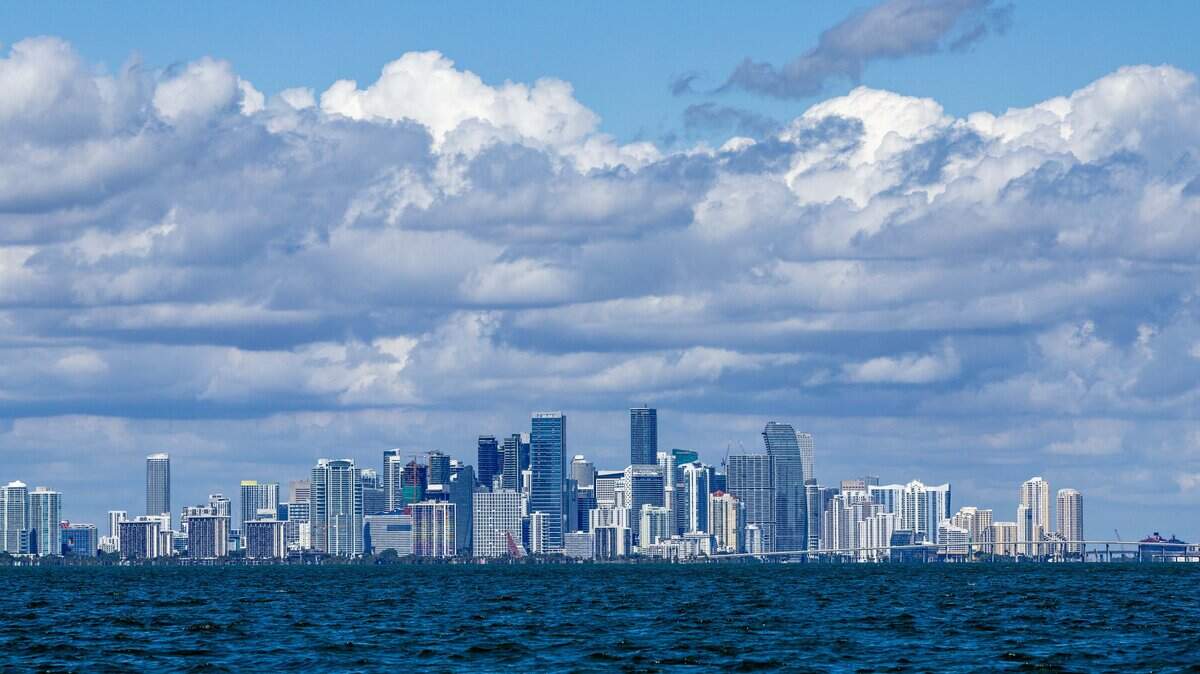
A view the Miami skyline from Biscayne Bay on Wednesday, October 15, 2025, in Miami, Fla.
D.A. Varela
dvarela@miamiherald.com
As the students say, “Miami is having a moment.” Capital, companies and talent that once flowed to other major cities now call South Florida home, and the region’s growth shows no sign of slowing. For new graduates, the opportunities seem attainable; employers are hiring, salaries are climbing and industries that barely had a Miami footprint a decade ago are now competing for local talent.
However, a second story is unfolding beneath the headlines. The same prosperity that sparks excitement and accelerates opportunity for graduates is creating financial pressure for prospective students and families who’ve called South Florida home for generations.
The latest federal price data show Miami area’s overall cost of living has climbed above New York’s. According to the 2026 United For ALICE report, 41% of Miami-Dade County households are ALICE (Asset Limited, Income Constrained, Employed), meaning they earn above the federal poverty line but not enough to cover the basic cost of living, compared with 34% of households statewide. The survival budgets those families fight to meet do not set aside a single dollar for education. For many first-generation students seeking to pursue a degree, money once used for tuition is now needed to live.
At Barry University, we see this tension every day, and we see our responsibility to serve as a bridge connecting students to myriad local opportunities. Our work starts with making education affordable. By offering one of the lowest private net tuition rates in the state coupled with millions of dollars in institutional financial aid throughout the year, we can help bridge the gap to affordability for families and students who choose Miami. Meanwhile, the financial firms, health systems, technology companies and growing enterprises that have planted roots here can lead the effort to build South Florida’s talent pipeline with smart, strategic investments in students and local universities.
Concretely, that means more hands-on learning tied to real work. That includes paid internships, apprenticeships, co-op placements and industry-designed coursework enabling students to earn while they learn and to be career-ready the day they graduate. It means employers at the table helping shape curricula and learning spaces, so a university degree maps directly onto the skills Miami’s growth industries need.
Partnerships can be more than long-term investments in future talent and can provide immediate and profound value. College students can offer fresh strategy, current market insight and working solutions delivered now. For example, Barry’s Ad Agency students ideate campaigns for local businesses, and who better to advise brands on reaching Gen Z than Gen Z itself?
Pathways alone are not enough if students cannot afford to reach the finish line. Too many leave college without a degree because one more semester becomes financially impossible. The single most powerful thing an employer can do is help close that gap — fund scholarships, sponsor tuition for students already working in the field and back completion grants that keep promising students enrolled through unexpected hardships.
This is what a workforce strategy looks like. Students who receive employer support to earn their college degree become skilled, loyal professionals. In a city where competition for top talent is fierce, homegrown graduates are Miami’s most durable pipeline. Investing in higher education is investing in a company’s own future.
It’s important to redesign how we connect classroom and career, build partnerships and reinvent how we think about learning, and integrate AI and experiential opportunities into curricula across disciplines.
Miami’s boom will be measured not only by the towers that rise, but by whether we invest in higher education with the same vigor as other major metropolitan cities. Help us keep our talent here in Miami and build a future that lifts everyone together.
Mike Allen is the president of Barry University in Miami Shores.