
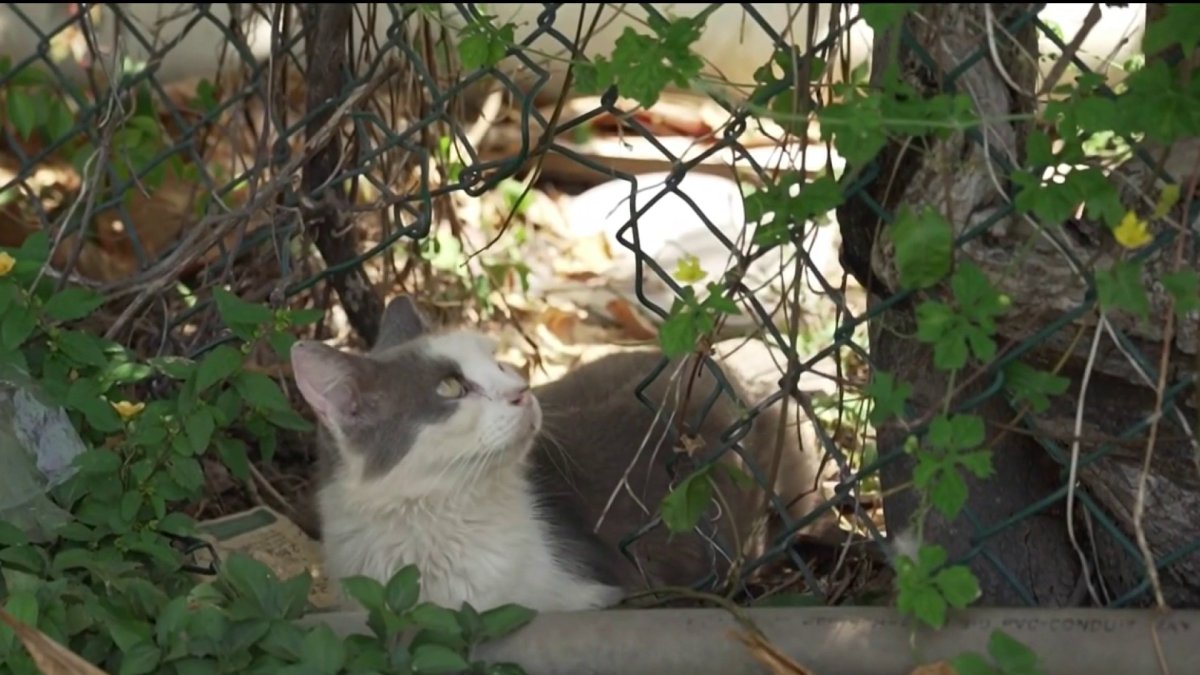
Chichi. Cuca. Domino.
Those are just a few of the names volunteers have given to the more than 100 cats that call the area behind a Publix in Hialeah home.
Known by the community as the “Publi-Cats,” the animals have become a familiar sight for shoppers and residents. But behind the nicknames and social media posts is a growing problem that a group of volunteers says continues to get worse.
For years, members of the community have taken turns feeding the cats, bringing them water and caring for their medical needs. Yet despite their efforts, new animals continue showing up.
“The community has taken turns for years feeding these cats. But unfortunately, it’s not enough,” said Lily Rodriguez, one of the volunteers who helps care for the colony.
According to volunteers, many of the cats were once someone’s pets.
“Most of the cats here belong to somebody, and they moved, and then the person usually abandoned them here,” said Brett, Lily’s husband, who helped create a website dedicated to the cats.
A Community That Refuses to Give Up on Them
Rodriguez is part of a group of six women who help care for the animals, often spending their own time and money to do so.
She says many of the animals end up there after elderly owners move into rehabilitation centers or assisted living facilities where pets are not allowed.
“Unfortunately, it’s a lot of the elder community here in Hialeah that they have to leave their home to go to one of those rehab locations that they have to stay,” Rodriguez said. “They’re not allowed to bring pets. You can see that they’re broken.”
The volunteers don’t just feed the cats. They also work to make sure they receive veterinary care when needed.
“So every time we see a new cat, we assess whether it needs to be treated with a veterinarian,” Brett explained. “And then it’s caught and returned here.”
Rodriguez says caring for so many animals can quickly become expensive, but community members often step in to help.
“There’s always somebody that says, ‘Listen, this shelter or this clinic is going to be open. I already called for you,’” she said. “So I come and normally, thank God, they will be like $30, $40, $45.50, sometimes a little bit more. We take responsibility.”
Giving Every Cat a Name and a Chance
In hopes of increasing adoptions, volunteers created a website called Publi-Cats, where they feature photos and information about each animal.
The goal is simple: give every cat an identity and, hopefully, a path to a permanent home.
“We have about 100 of them listed there,” Brett said. “We try to give a little description of their personality, and we give them names. They’re all free.”
The site includes details about each cat’s temperament and adoption status, making it easier for potential adopters to find a good match.
Why Not Take Them to a Shelter?
It’s one of the most common questions volunteers hear.
But according to those caring for the colony, local shelters are already overwhelmed.
“We don’t know of any shelters that would be capable of handling such an influx,” Brett said. “There’s so many cats here. And as I said, there’s more dropped off every few days.”
Because of that, volunteers say adoption remains the best long-term solution.
Rodriguez says about 20 cats have been adopted over the past two years. That is encouraging progress, but as new cats continue to be abandoned at the location, the colony keeps growing.
NBC6 reached out to Publix for comment on the colony of cats, but the company has not responded.