
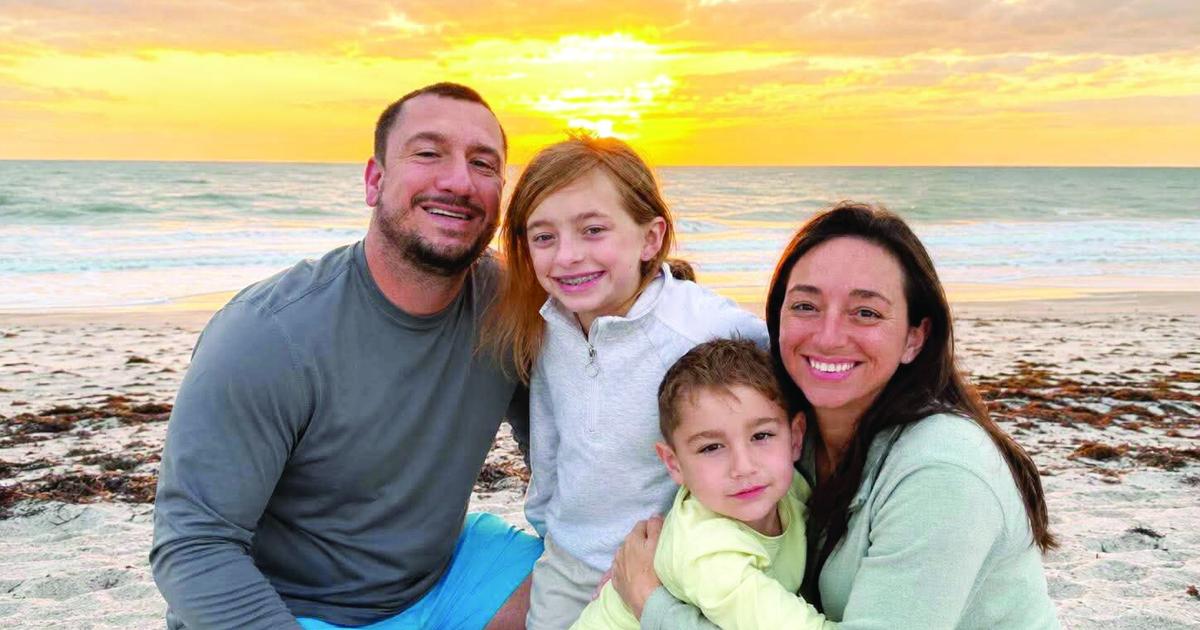
TREASURE COAST — Michael Digman knows how much addiction can take.
“I gave away everything I’ve ever had to continue my addiction,” he said. “I sacrificed relationships, anything material, most forms of morality, any kind of spiritual connection.”
For nearly six years, Digman moved in and out of rehabilitation programs, finding periods of sobriety before losing them again.
“It just didn’t stick,” he said. “But this one time it has.”
Today, Digman is approaching 10 years of sobriety and works as a project coordinator for a large industrial air-conditioning company. He has a wife, children, a home and a life he once could not imagine.
His story reflects the hope behind a growing effort across the Treasure Coast to prevent opioid deaths and make a lifesaving medication easier to access.
Naloxone, commonly known by the brand name Narcan, is a medication that can reverse an opioid overdose.
Jennifer Harris, director of communications and strategic initiatives for the Florida Department of Health in St. Lucie and Okeechobee counties, said the medication can restore normal breathing within minutes and will not harm someone if opioids are not present.
“Naloxone is safe, easy to use, and saves lives,” Harris said.
In St. Lucie County, 54 opioid overdose deaths were reported in 2024, down from 74 in 2023.
In that same year, Narcan was reported as administered 277 times.
Harris said illicit fentanyl and other synthetic opioids remain the greatest local concern and continue to drive many fatal overdoses.
For families, recognizing an overdose can be critical. Warning signs include slow or stopped breathing, an unresponsive body, blue or gray lips or fingernails, pinpoint pupils and choking or gurgling sounds.
After administering Narcan, Harris said residents should call 911, place the person in a recovery position and remain with them until emergency responders arrive.
St. Lucie County’s Opioid Abatement Program is also working through prevention, overdose-response training, improved access to care and coordination among local agencies.
In neighboring Indian River County, Carrie Lester, LMHC, CAP, chief executive officer of Thrive IRC Inc., said opioid use and the dangers associated with fentanyl remain a serious concern.
Indian River County had the highest age-adjusted drug overdose death rate among the four counties in its region in 2024, at 21 deaths per 100,000 residents.
“Even though opioids aren’t necessarily the most commonly used substance in our community, they are among the substances we worry about most because they carry great risk of overdose,” Lester said.
Provisional 2025 data showed Indian River County EMS responded to 168 suspected opioid-involved overdoses, with Narcan administered 234 times. Fifty-five of those administrations occurred before EMS arrived.
“We would like to see Narcan become the CPR/AED of overdose,” Lester said, “meaning everyone knows what it is, how to use it and has access to it in a medical emergency.”
But surviving an overdose is only the beginning.
Lester said cost, lack of insurance, transportation, waitlists, stigma, fear and shame can all make treatment harder to reach.
“When a person reaches that moment where they say, ‘I’m ready,’ we need to seize the moment and make it as easy as possible for them to access help,” she said.
Michael understands that moment.
He credits the recovery community, his mentor and Camp Haven with helping him rebuild his life.
“I was encouraged to consider myself a sick person trying to get well as opposed to a bad person trying to get right,” he said. “That perspective has helped me to change my life and help others.”
Today, he keeps Narcan in his home.
“I know many people whose lives it saved,” he said.
His wife, Falen Ryan Digman, has her own story of long-term recovery.
“I disconnected myself from the entire world,” she said. “I ruined friendships, job opportunities and, most importantly, my relationship with myself.”
Her turning point came after her daughter turned one.
“I came to a point where I had to choose,” she said, “and I chose my daughter.”
Now 12 years into her recovery, Falen works in business development for a mental health and substance-use treatment center in Fort Lauderdale.
Her message to someone still struggling is simple.
“You are not alone,” she said. “You don’t have to suffer and you do not have to live the way you are living.”
For Michael and Falen, recovery was possible because another chance was still there.
That is also what Narcan can provide.
It does not treat addiction. It keeps someone alive long enough to have the chance to recover.
“Even if you tried it 100 times,” Michael said, “try one more time.”
Where to find free Narcan on the Treasure Coast
Free Narcan is available at locations throughout St. Lucie and Indian River counties.
In St. Lucie County, residents can obtain free Narcan through the Florida Department of Health at 5150 NW Milner Drive in Port St. Lucie; 3855 U.S. Highway 1, Suite A in Fort Pierce; and 1701 S. 23rd St. in Fort Pierce.
Additional providers include Rite Life Services and the Yaya Por Vida Foundation. Residents can also visit iSaveFlorida.com to locate additional Narcan and recovery resources.
In Indian River County, Thrive IRC provides free Narcan through 24 community access sites:
United Against Poverty Indian River State College – Mueller Campus, Brackett Library, Indian River, InkworX, Indian River County Main Library, North Indian River County Library, Red Roof Inn Vero Beach, New Port Club, Vero Christian Church, Cafe Latte Da, Sunoco, Snappy Food Store, E-Z Stop Food Mart, Unity Spiritual Center of Vero Beach, Thrive IRC Inc., Bay Street Pharmacy, Gifford Food Mart Inc., PUR Health & Wellness, Our Father’s Table Soup Kitchen, iMind Mental Health Solutions, Wabasso Foods, Kilted Mermaid, Care Plus Pharmacy, Thrive IRC’s Sebastian office in Bay Street Plaza
Thrive has distributed nearly 13,000 boxes of Narcan since the program began, according to Lester.