
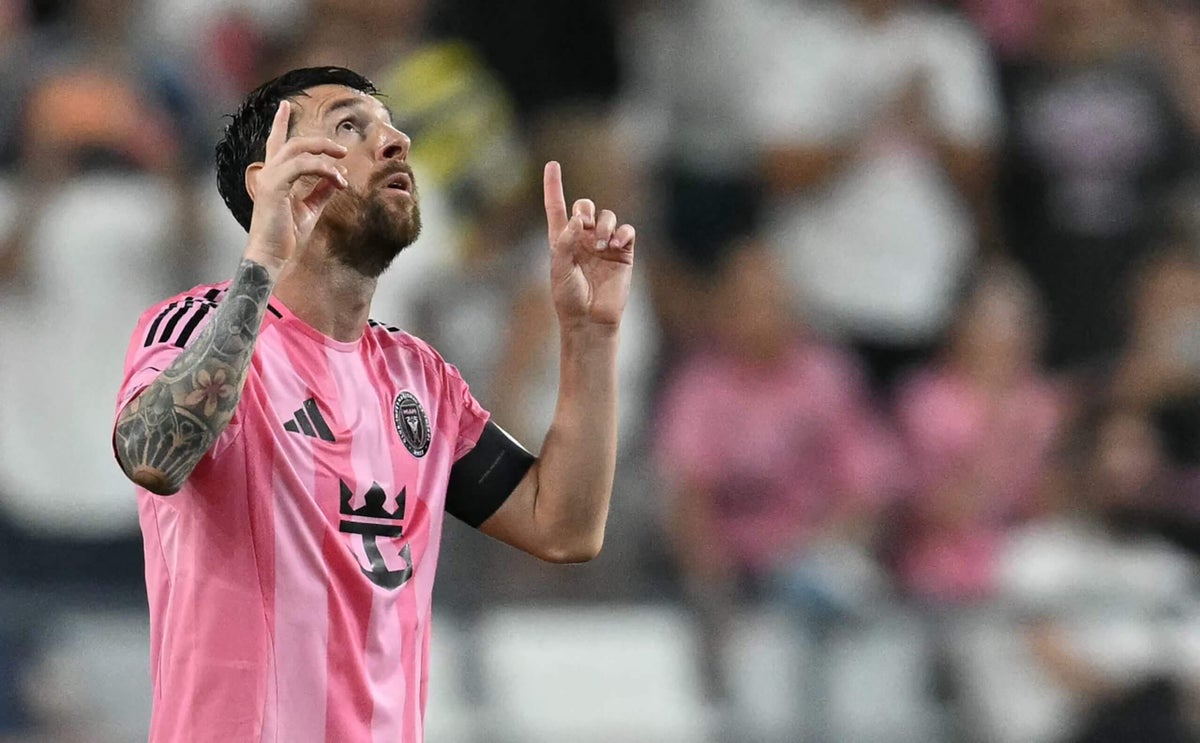
Fifteen hours after his plane landed back in Florida from his father’s funeral in Argentina, Lionel Messi stood at Nu Stadium in Miami, his hands on his hips, the crowd on their feet.
Earlier that day, August 12, Messi posted a message on Instagram that reflected how unmooring grief can be.
“All I ever did was play football,” he wrote. “And now I have serious doubts about whether I’ll keep doing it for much longer.”
For years, the prospect of life without football had manifested its own fears and anxieties within the great Argentinian No. 10. A few years earlier, ahead of the 2024 Copa América, Messi said in an interview with ESPN Argentina that he was “a bit scared of it all ending”. But with the 2026 World Cup now over, the finish line felt closer than ever. His father’s passing undoubtedly only higlighted how life and time continues unchecked, even if you are not ready for it.
With those realities swirling in his head, Messi found solace where he always had: on the football pitch. Only this time, as he prepared to enter Inter Miami’s Leagues Cup game against León as a substitute, he looked out at the field and saw his own name lit up on the concourse in front of him: Leo Messi Stand.
It was a sign of how much more he still had awaiting him when he does step away.
The field he would jog onto in Miami was one he owned — not as he had controlled so many pitches before with his extraterrestrial abilities, but as part-owner of Inter Miami. The key clause of the contract with the Major League Soccer team that lured him stateside in 2023 gave Messi a minority percentage in the club when he retired. Around 10 percent was linked in his first contract, and an undisclosed further amount baked into the extension he signed in 2025.
A few weeks after that Leagues Cup return, and two days after scoring four goals in an Inter Miami win, Messi announced he was retiring from Argentina’s national team. It meant that his final days on the field will almost certainly come in Miami. How long he lasts remains to be seen. He is contracted through the end of the 2027-28 season, but really, the exact date matters less.
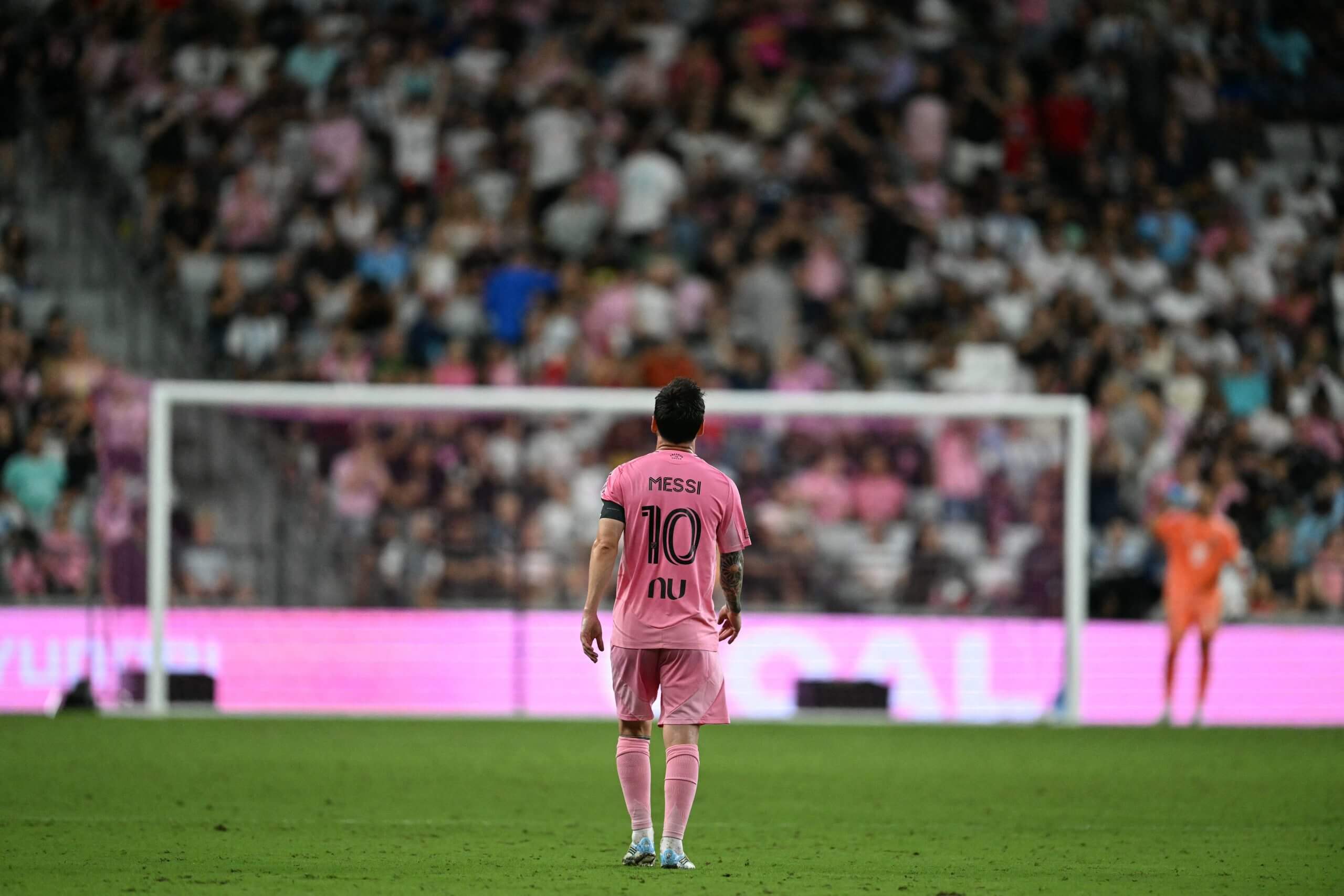
Lionel Messi has been an Inter Miami player since 2023 (Chandan Khanna / AFP / Getty Images)
The inevitability of the end — the prospect of football without Messi — felt omnipresent since he first arrived in the United States. Messi pondered how he might fill the hole that the sport filled for as long as he could remember in his life.
“I know these are my last years, and I know that when I don’t have this, I’m going to miss it dearly,” Messi said in the Apple TV documentary Messi Meets America. “Because no matter how many things I find to do, nothing is going to be like this, which I did all my life.”
Inter Miami hoped he found the answer over his last few years in South Florida — for as long as he liked while wearing the No. 10 jersey, but for years after that, too.
It’s what the ownership clause was about. Many thought of it as a financial incentive for Messi. And it was. Miami was valued at around $650 million when Messi signed. Its valuation has since shot up north of $1.3 billion. As long as Messi plays, the valuation of Inter Miami will continue to go up, and that means the value of Messi’s stake goes up, too.
But there is an enormous benefit for MLS and Inter Miami, too.
It is an analogous construct as David Beckham’s expansion team clause from when he signed with the LA Galaxy back in 2007. That deal, which gave Beckham rights to buy an MLS expansion team for $25 million — well below the fees that were being paid by the time he triggered it — was seen as one of the best contracts in sports history because of the enormous value the former England winger got out of it. But it was also a hugely successful play for MLS. Thirteen years after he stopped playing, Beckham, one of the biggest global brands in sport, is still linked to and remains a flag-bearer for MLS.
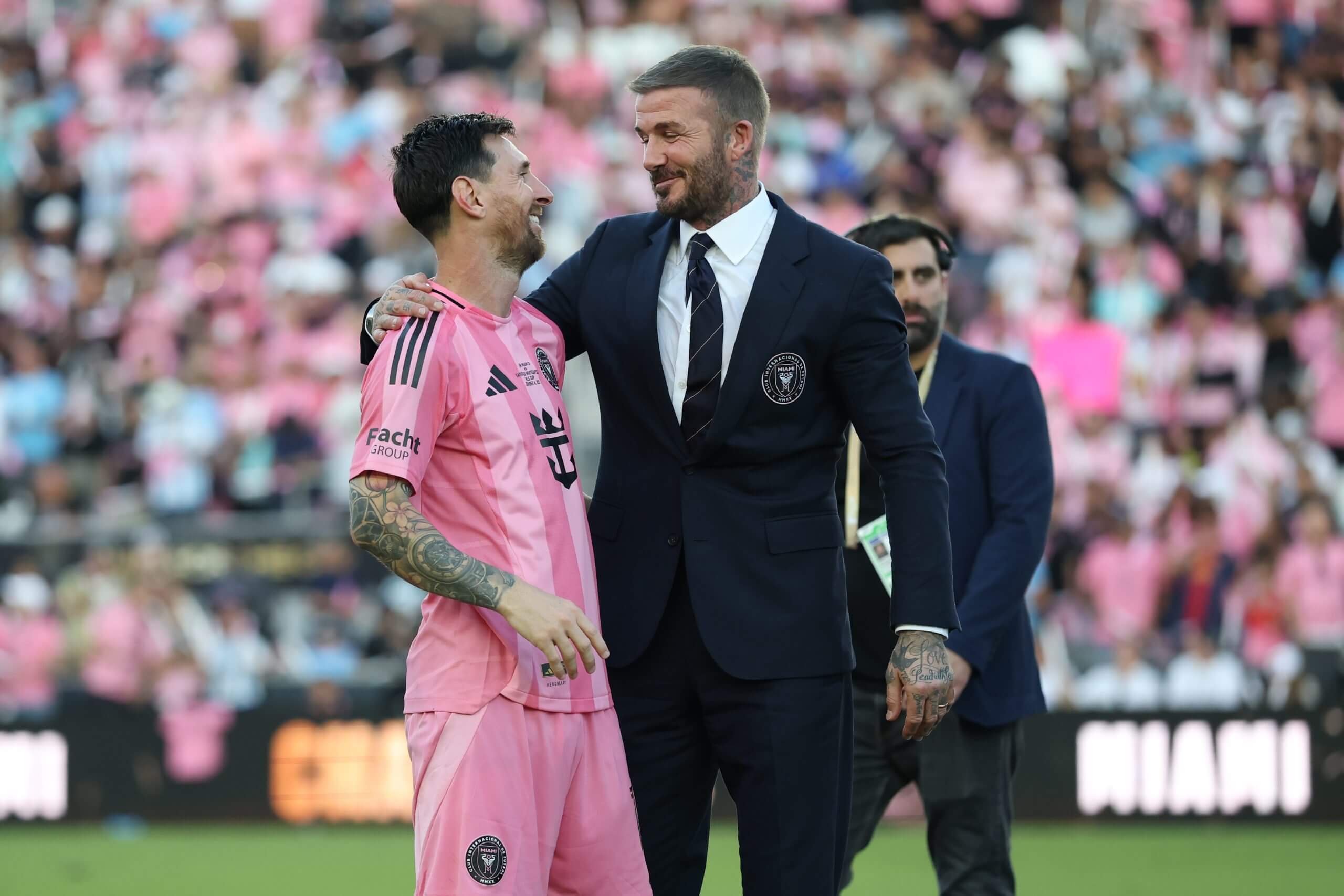
Lionel Messi will join David Beckham among Inter Miami’s ownership group following the conclusion of his playing days (Elsa / Getty Images)
The goal of Miami’s ownership group was always to turn Inter Miami into Leo Messi’s Inter Miami. It is why, when he signed his extension, they shot the accompanying announcement video inside the still-under-construction stadium. A venue that Messi helped build, and one that signified he was a part of the very bones of the organization, linked for as long as they could manage. That day, the entire ownership group brought family members down to the stadium and toured it together as partners.
“When you think of Lionel Messi, I’m thinking 10 or 15 years from now, the greatest that ever played, no doubt, what’s the first thing that comes to your mind?” Inter Miami owner Jorge Mas asked during an interview for my book, The Messi Effect. “It’s probably one of two images: Argentina lifting the World Cup and Barça. How do I get Inter Miami and the pink into that mix?
“Ultimately, it’s going to be defined by the amount of these that we lift.”
Mas, sitting at his desk in Coral Gables, Fla., raised his arms skyward, lifting an imaginary trophy over his head.
“When it’s over, [the hope] is that it’s going to be discussed as not the end of his career, but part of his career,” Mas continued. “My goal is that the Messi legacy, the Messi image, is tied to Inter Miami, and that Inter Miami is tied to Messi. . . . He’s going to be an integral part of everything that we’re building.”
What that will look like in practice remains up in the air, but Inter Miami is betting that people will want to play for Messi’s Miami, even if it does not mean getting to step on the field with him.
That is not outlandish. Messi sent a video message to Beckham when Miami was officially announced as an MLS expansion club saying that maybe he would see him down the line. And he did. There will be a draw to Messi recruiting players to Miami — if he chooses to take on that role.
“I see Messi having a significant impact on the sporting side,” Mas said. “I think having him as part of this project will continue to keep Inter Miami at the forefront of people’s minds. . . . If you look at what we’re building economically and everything we’re doing commercially, we’re a big team. If we’re allowed to take the shackles off, we’ll be bigger. And that’ll come.”
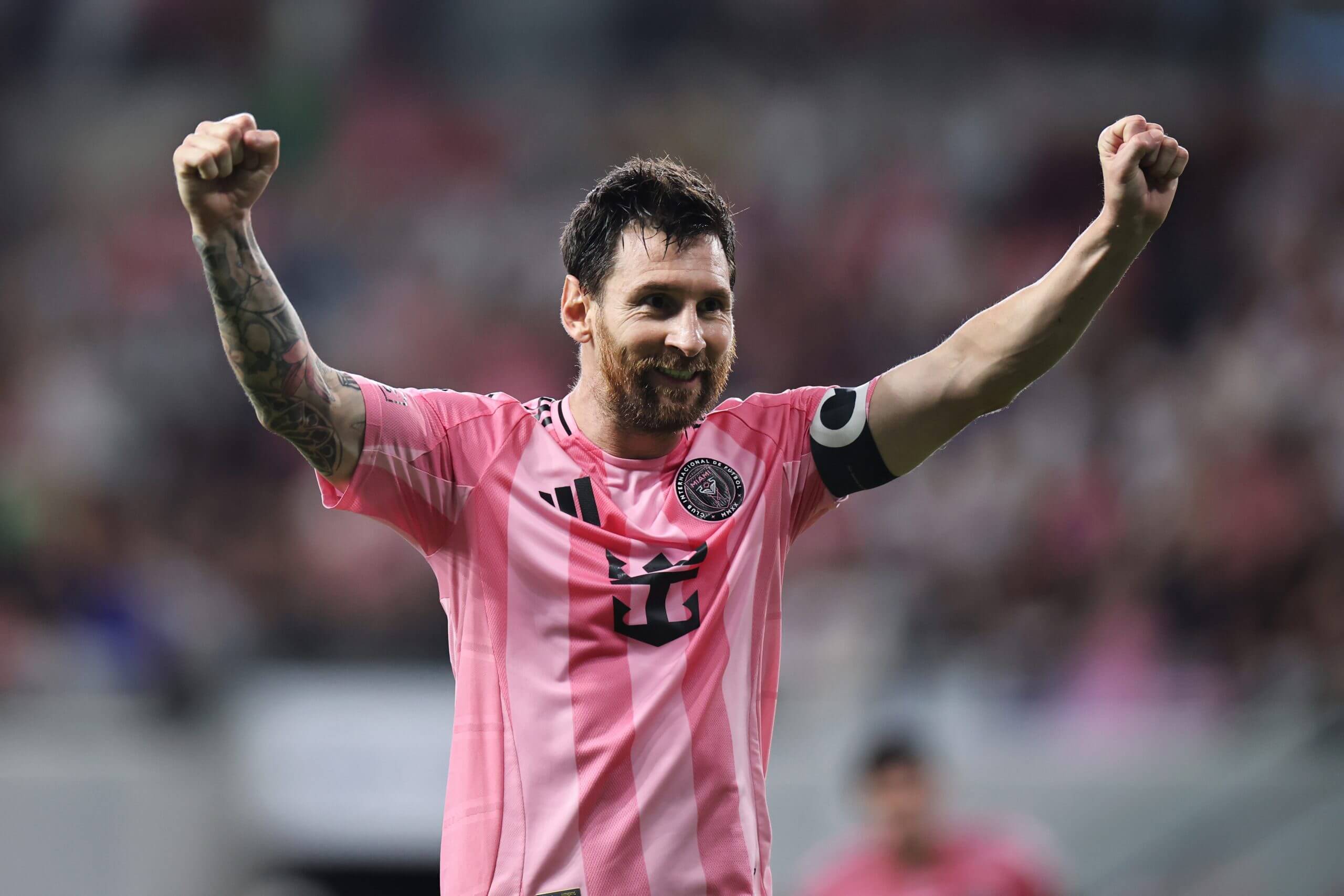
Lionel Messi celebrates one of his four goals against CF Montreal (Carmen Mandato / Getty Images)
MLS is still debating how much it will take the shackles off to allow teams to build rosters that can actually compete globally. But Miami has shown it will maximize whatever it can as it chases titles — whether it is Concacaf Champions Cup, which it has yet to win, or the Club World Cup.
Mas said he believed that the competitiveness that has always defined Messi, that made him one of the best at this summer’s World Cup, despite so many people who doubted he could maintain that level after going to MLS, would carry forward after his playing days.
“All he wants to do is win,” Mas said. “I 100 percent guarantee you that once his boots are hung up and he’s in a different role, his competitiveness isn’t going to want to leave.”
It was part of the bet when Mas brought Messi to MLS. It was never about just his on-field impact. The vision always had to be bigger than that.
So, as Messi enters the final 22 months of his contract with Miami, and as fans flock at their last chances to see him play, Messi and Inter Miami will focus on planning how to make the most of what comes next.