
Home » Latest Travel News » Miami Joins Orlando, Tampa, Fort Lauderdale, and Key West to Face Surging Tourist Trap Crisis That’s Ruining Vacations with Skyrocketing Prices and Hidden Fees Across Disney in US: Are You Getting Duped as New Reports Unveil Shocking Truths?
Published on
November 8, 2025

Florida’s tourism sector in 2024‑2025 has been marked by record-breaking visitor numbers—143 million tourists in 2024, a 1.7% increase over the previous year, and 41.2 million tourists in Q1 2025. However, rising ticket prices and hidden fees at attractions like Disney World are sparking backlash. Orlando, the heart of Florida tourism, has seen escalating costs, with single-day tickets reaching $159, a sharp increase from previous years, and hotel prices averaging $227 per night. Similarly, Miami, Tampa, and Key West are witnessing higher accommodation rates, exacerbating the strain on family vacations. Florida’s tourist traps, like inflated food costs at popular spots, and hidden charges at theme parks are eroding the once-affordable vacation experience. Even localities like Fort Lauderdale are grappling with price gouging concerns. As local businesses struggle with the tourism boom, families are forced to reconsider their Florida vacations, questioning whether the cost is worth the experience.
The Disney Resort Dilemma – Why Orlando Illustrates Florida’s Affordability Crisis
Soaring Ticket and Resort Costs
Orlando, home to Walt Disney World, Universal Orlando Resort and SeaWorld Orlando, is the epicenter of Florida’s tourism industry. However, visitors are finding it harder to justify the cost of the “Most Magical Place on Earth.” A 2025 Newsweek report notes that a basic one‑day ticket to a Disney park ranged from $119 to $199[3]. For a family of four, a standard five‑night vacation (airfare, hotel, park tickets and meals) costs around $7,093 (about $355 per person per night)[4]. Upscale packages can surpass $10,770[5], while budget packages still cost nearly $5,000[6]. Florida resident Craig Stowell went viral in May 2025 after reporting that his family’s one‑day trip cost $1,400—including tickets, parking, meals and souvenirs[7]. For many middle‑income families, these costs are comparable to a mortgage payment.
Disney has continued raising prices. WDW News Today’s fall 2025 price‑increase list shows that standard 1‑day tickets can now reach $209 (Magic Kingdom), $199 (EPCOT) and $204 (Hollywood Studios)[8], while the Park Hopper ticket peaks at $284[9]. Annual passes were hiked by $20‑$80, with the top-tier Incredi‑Pass now costing $1,629[10]. Add‑ons such as the Lightning Lane Multi Pass increased from $39 to $45[11], and regular self‑parking rose to $35, with preferred parking at $55[12]. Even small snacks saw price bumps: a Mickey pretzel increased from $7.99 to $8.49, DOLE Whip pineapple cups from $5.49 to $5.79, and bottled soda from $5.29 to $5.50[13]. These incremental increases compound to hundreds of dollars over a multi‑day visit.
Beyond Disney, other Orlando attractions follow similar patterns. Explore.com notes that water‑park entrance fees at Disney’s Typhoon Lagoon are $74, and Universal’s Volcano Bay is $70[14]. Visitors must then purchase food, drinks and sometimes even towels, driving the total cost far beyond the ticket price[14]. For many families, the result is a feeling of being trapped in an expensive, pay‑to‑play environment.
High costs are not the only issue; hidden fees and deceptive sales tactics have triggered legal challenges. In October 2025, a class‑action lawsuit was filed against United Parks & Resorts (parent company of SeaWorld and Busch Gardens) alleging “bait‑and‑switch” ticket pricing. The complaint says the company added nearly $40 in extra charges to four tickets, with fees starting at $11.99 per transaction and appearing only at the end of checkout[15]. Consumer‑protection experts call this “drip pricing,” where the advertised price excludes mandatory fees until the customer is deep into the purchase flow[16]. Plaintiffs argue the practice violates Virginia’s all‑in pricing law and note that similar tactics occur at SeaWorld Orlando[17].
This is not the first allegation of deceptive pricing. An earlier 2024 lawsuit by a Florida guest accused SeaWorld of adding an undisclosed 5 % fee[18]. In addition to lawsuits, guests complain about paying to store belongings in lockers at Busch Gardens Tampa Bay[19]. These grievances reflect a growing perception that Orlando’s major attractions nickel‑and‑dime visitors beyond the already steep ticket prices.
Impact on Families and the Central Florida Economy
The rising cost of visiting Orlando has broader economic implications. Washington State University professor Dogan Gursoy told Newsweek that escalating ticket prices and convenience fees “marginalize” lower‑income families and may reshape the broader Central Florida tourism economy[20]. Gursoy notes that Disney’s pricing strategy is pushing the experience from a family tradition toward a luxury purchase[21]. The reference price effect—guests comparing current prices to what they paid in the past—fuels online backlash[22]. Although some visitors still view the expense as worthwhile, others say they must cut trips shorter or stay off property.[23] This shift could reduce the spending that flows into local hotels, restaurants and small businesses that rely on theme‑park visitors.
The Busch Gardens Lawsuit and Rising Costs
Tampa’s tourism identity is anchored by Busch Gardens Tampa Bay, the Florida Aquarium and an emerging culinary scene. But families hoping for a budget‑friendly alternative to Disney are often disappointed. The class‑action lawsuit against United Parks & Resorts (SeaWorld and Busch Gardens) emphasises that fees for Busch Gardens tickets can start at $11.99 per transaction and rise with additional tickets[17]. Plaintiffs say the checkout process displayed “taxes and fees” even though the charges were purely service fees[24]. Such dark‑pattern pricing undermines trust and contributes to perceptions of price gouging.
Beyond ticket fees, guests criticize Busch Gardens for charging mandatory locker fees before riding major coasters[19] and for increasing food prices while quality declines[25]. These frustrations echo those at SeaWorld and highlight a pattern of theme‑park pricing across Tampa and Orlando.
Tampa Bay’s Tourism Boom Masks Local Struggles
On the surface, Tampa Bay tourism is thriving. Florida politics reports that the first quarter of 2025 saw an increase in hotel rooms sold and a 2.2 % rise in average daily rate to $227.22[2]. However, a 2025 Medium article notes that despite 34.4 million visitors statewide in Q2 2025[26], small businesses across Florida, including Tampa Bay, are suffering: many have seen sales drop by up to 30 %[27]. Rising costs of rent, fuel and labor coupled with inflation are squeezing profit margins[28]. Visitors increasingly book package deals with big hotel chains or spend at major attractions, leaving less money for independent restaurants and shops[29]. In some regions such as Pensacola (and by extension Gulf Coast markets like Tampa), tourist tax collections have fallen even with strong visitation[30]. Tampa therefore embodies a broader economic duality: booming tourism statistics can hide declining revenue and the struggle of local entrepreneurs.
South Beach’s High Costs and Aggressive Vendors
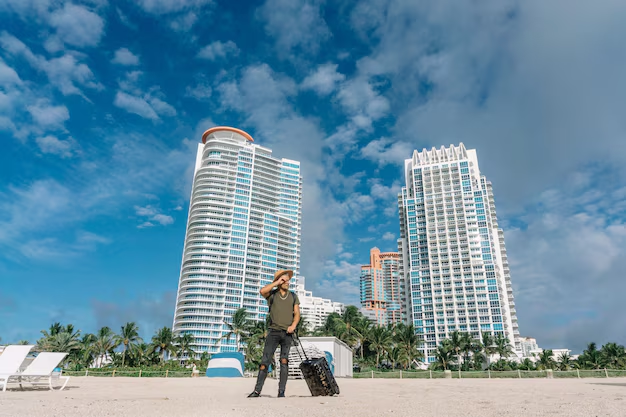
Miami’s global reputation as a party capital draws millions, but visitors often find the experience more expensive and stressful than expected. Explore.com warns travelers that South Beach, while iconic, is “one of the more expensive places to vacation”[31]. The area is known for high prices at restaurants and bars, large crowds, and aggressive street vendors who push travelers into paying for things they may not want[32]. These pushy tactics, combined with inflated prices, earn South Beach the label of a tourist trap.
A separate travel article (hosted on Yahoo/Islands) notes that Bayside Marketplace—base for Miami’s popular Millionaire’s Row cruise—is often considered a tourist trap by locals, though visitors appreciate its scenic waterfront dining and entertainment[33]. The cruise allows guests to view celebrities’ mansions from a boat starting at $35, while cocktails and snacks can be purchased onboard[34]. Although not outrageously expensive, the attraction underscores a trend in Miami: experiences marketed as “exclusive” or “VIP” often layer multiple add‑on costs (food, drinks, rental upgrades) that can quickly inflate the bill. Meanwhile, street vendors on South Beach aggressively sell services like chair rentals and photos, sometimes harassing passers‑by.
Alternative Destinations and the Search for Value
To avoid overpriced tourist traps, travel experts recommend exploring lesser‑known parts of Miami. Explore.com suggests visiting North Miami Beach, which offers a laid‑back atmosphere, less crowding and more affordable dining options[35]. Travelers seeking authentic experiences can also explore Little Havana or the Design District, where local food and art scenes thrive without the premium price tag. The advice demonstrates a broader shift: rather than pay top dollar for over‑commercialized spots, tourists are looking to local neighborhoods, natural areas and cultural experiences that offer better value.
Declining Spending Amid Record Visitation
Fort Lauderdale and the greater Broward County region recorded strong visitation in 2024 and early 2025; however, local businesses and residents see a different picture. The Medium article notes that while visitors fill hotels and beaches, independent businesses—particularly in Fort Lauderdale—report fewer customers and shrinking margins[36]. Bankruptcy filings among restaurants, contractors and retail shops have spiked in South Florida[37]. The article attributes the decline to inflation (raising rent, fuel and food costs), persistent labor shortages and high interest rates, all of which hinder small businesses[28]. Tourists are spending less on local experiences, often opting for package deals with large companies[29].
Price‑Gouging Hotline and Consumer Protection
Although not limited to Fort Lauderdale, Florida’s law enforcement agencies have heightened vigilance against price gouging during emergencies. Ahead of Hurricane Milton in October 2024, Florida’s attorney general extended the Price Gouging Hotline—a service that allows residents to report steep price hikes on essential goods and hotel rooms[38]. Violators can face fines of up to $1,000 per infraction and $25,000 for multiple violations within 24 hours[39]. Miami‑Dade and Broward state attorneys pledged to investigate and prosecute offenders[40]. While this crackdown primarily targets price abuses during hurricanes, it underscores Florida’s efforts to curb exploitative pricing across industries—including tourism. Nonetheless, the hotline may offer limited relief for travelers facing high resort fees or mandatory service charges because such charges are often legal under existing regulations.
Over‑Tourism and a Cooling Market
Key West is synonymous with laid‑back tropical charm, but residents are increasingly frustrated by overcrowding, high lodging rates and declining affordability. Key West Island News editor Linda Grist Cunningham observed in March 2025 that repaving projects and an influx of spring‑break visitors snarled traffic around the island[41]. She noted that locals spend considerable time navigating congestion while visitors clog Duval, Simonton and Whitehead streets[42]. The article reflects a common sentiment: Key West’s infrastructure struggles to accommodate peak tourist periods.
Yet occupancy rates have begun to slip. Cunningham points out that hotel rooms and vacation rentals are now available at the last minute—a stark contrast to the early 2020s when hotels were full and nightly stays could top $1,500[43]. She was able to book a room at the Casa Marina for $436, something impossible in 2021[44]. She predicts that final 2025 numbers will show measurably lower tourist totals and notes that while Key West remains popular and there’s no such thing as budget‑friendly rates, the island has “way more rooms than we have visitors to fill them”[45]. The shift suggests over‑capacity and potential downward pressure on prices.
Canadian Decline and Changing Visitor Mix
The same article cites a poll by Canadian researcher Leger, which found that 36 % of Canadians who had planned U.S. trips had canceled them[46]. Data from aviation analytics firm OAG show passenger bookings on Canada‑U.S. routes down over 70 %[46]. The U.S. Travel Association warns that a 10 % reduction in Canadian inbound travel could cost $2.1 billion and 140,000 hospitality jobs[46]. This decline, combined with an oversupply of rooms and high prices, creates uncertainty for Key West’s tourism businesses. Some property owners who invested in vacation rentals during the pandemic boom are selling because returns are diminishing[47].
Price Gouging vs. Standard Pricing Strategies
The term “price gouging” evokes images of merchants taking advantage of desperate consumers during crises. Under Florida law, it refers to “steep price hikes on essential goods” during a state of emergency, punishable by hefty fines[39]. By that definition, the resort and theme‑park price increases described above are generally legal. Disney’s incremental hikes and SeaWorld’s service fees do not violate price‑gouging statutes; however, they do represent a trend of monopolistic pricing power in the tourism sector. With limited competition and a strong brand, corporations can set high prices and introduce add‑on charges. Consumers feel “gouged” even if the practice is lawful.
Tourist Traps and Visitor Experiences
Florida is peppered with attractions labeled “tourist traps.” Many are not fraudulent but deliver an underwhelming return on investment. The Explore.com article lists water parks (Typhoon Lagoon at $74 and Volcano Bay at $70) and aquariums as overpriced experiences[48]. It also advises travelers to skip South Beach because of aggressive vendors and high prices[32], and to avoid Gatorland and other alligator farms that charge extra for feeding or photos[49]. Overcrowded beaches like Siesta Key have inflated restaurant and lodging prices[50]. Even long‑standing cultural venues such as Ripley’s Believe It or Not! are criticized for high admission fees relative to their value[51]. These examples show that Florida’s tourism economy sometimes prioritizes profit over experience, leading travelers to feel trapped into paying high prices for low value.
Economic and Social Consequences
High costs and tourist traps have ripple effects. First, they discourage repeat visits. When middle‑income families can no longer afford a Disney vacation, they may choose alternatives like Universal’s upcoming Epic Universe or travel outside Florida. Second, high prices concentrate spending in large corporations (Disney, Universal, hotel chains), leaving independent businesses—restaurants, shops and tour operators—with less revenue[29]. Third, inflation and housing costs raise the expense of living and operating businesses, reducing locals’ quality of life. Fort Lauderdale’s small businesses face bankruptcy filings and layoffs[37], while Key West property owners who invested in rentals during the pandemic are now selling or lowering rates[45]. Finally, persistent price hikes risk tarnishing Florida’s reputation as an accessible family destination.
Transparent Pricing and Regulation
Policymakers could require all‑in pricing for theme‑park and attraction tickets, similar to airline ticket regulations. The SeaWorld lawsuit highlights consumer frustration with hidden fees[17]. Mandating disclosure of all mandatory charges up front would build trust. Florida’s attorney general could also expand price‑gouging regulations to address unfair practices outside emergencies—such as huge mark‑ups on event tickets or last‑minute resort fees. Strengthening enforcement could deter deceptive pricing.
Diversification of Attractions
To reduce reliance on expensive theme parks, tourism boards could promote natural and cultural attractions. For example, Explore.com recommends visiting Florida’s natural springs—accessible for a vehicle entrance fee of around $6[52]—instead of water parks. North Miami Beach offers the same coastal beauty as South Beach but with fewer crowds and lower prices[35]. Lake Jesup provides free opportunities to see alligators in the wild[53]. Encouraging travelers to explore state parks, historic districts and local festivals could distribute spending more widely and support small businesses.
Support for Local Businesses and Residents
Economic strategies could include grants or low‑interest loans for small tourism‑dependent businesses facing inflation and labor shortages. Local governments might also regulate short‑term vacation rentals to prevent oversupply and housing inflation—issues evident in Key West. Finally, tourism marketing should highlight off‑peak travel and midweek discounts to smooth demand and avoid crowding.
Florida’s tourism industry in 2024‑2025 reflects both success and fragility. Record visitor numbers and high hotel occupancy rates contrast with stories of families feeling priced out, hidden fees prompting lawsuits and local businesses struggling despite bustling streets. The Disney Resort Dilemma encapsulates this tension: while Walt Disney World continues to raise prices—tickets up to $209 for a single day[8] and premium packages exceeding $10,770[5]—many visitors question whether the experience justifies the cost. Tampa’s Busch Gardens faces legal scrutiny over hidden fees[17]; Miami’s South Beach is criticized for high prices and aggressive vendors[32]; Fort Lauderdale businesses see empty tables despite record tourism[36]; and Key West grapples with oversupply and declining Canadian visitors[54].
For Florida to sustain its tourism prosperity without alienating families and residents, stakeholders must balance revenue with value. Transparent pricing, diversified attractions, and support for local businesses are essential to prevent the Sunshine State from becoming a cautionary tale of tourist traps and price‑gouging. The challenge is to ensure that Florida remains a place where magic and memories are accessible—not just to those willing to pay a premium, but to all who dream of sunny beaches, theme‑park thrills and cultural adventures.
