
Published: September 4, 2026 at 10:38 AM
Updated: September 4, 2026 at 12:17 PM
DORAL, Fla. — Miami-Dade Sheriff’s Office deputies who were at HCA Florida Kendall Hospital on Friday morning said a colleague remained hospitalized after lightning struck a car in Doral.
The sergeant, whom MDSO hasn’t publicly identified, was injured at about 5:15 p.m. on Thursday outside the Miami-Dade Fire Rescue headquarters, at 9300 NW 41st St., in Doral.
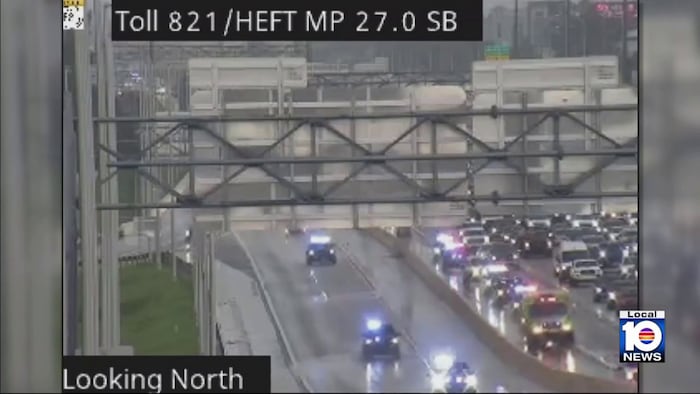
Deputies escorted MDFR personnel, who used an ambulance to rush the sergeant southbound on the Florida Turnpike to the hospital at 11750 SW 40th St.
Lightning typically strikes a car’s antenna or roofline, passes through the vehicle’s outer metal shell, over the tires, and to the ground, according to the National Lightning Safety Council.
The lightning strike’s heat can partially melt the antenna of a vehicle and can cause an explosion of sparks as tiny fragments of metal melt and burn, according to the National Weather Service.
The sergeant’s condition was stable on Friday, according to MDSO deputies. He was off duty when he was injured, according to MDSO.
NWS facts about lightning safety
Over the last three decades, the U.S. has averaged 51 lightning fatalities per yearOnly about 10% of people struck by lightning are actually killed. The other 90% must cope with varying degrees of disability, sometimes for the rest of their lives.If in a car, avoid contact with any conducting paths leading to the outside of the vehicle, such as portable electronic devices plugged in for charging.Seeking shelter under a tree is one of the leading causes of lightning-related fatalities.Seek shelter at the first indication of a thunderstorm and stay there until 30 minutes after the last clap of thunder.A sturdy, enclosed structure with plumbing and electrical wiring is safest during a storm. Buildings with exposed sides are not safe. Stay away from windows and doors. Remember that lightning can travel through the metal wires or bars in concrete walls and flooring.Don’t touch electrical equipment or cords during storms, and avoid metal plumbing. Do not wash your hands, do dishes, do laundry, or take a shower or a bath during a thunderstorm.
Source: The National Weather Service
Location
Copyright 2026 by WPLG Local10.com – All rights reserved.
 Jackie Pascale
 Andrea Torres