
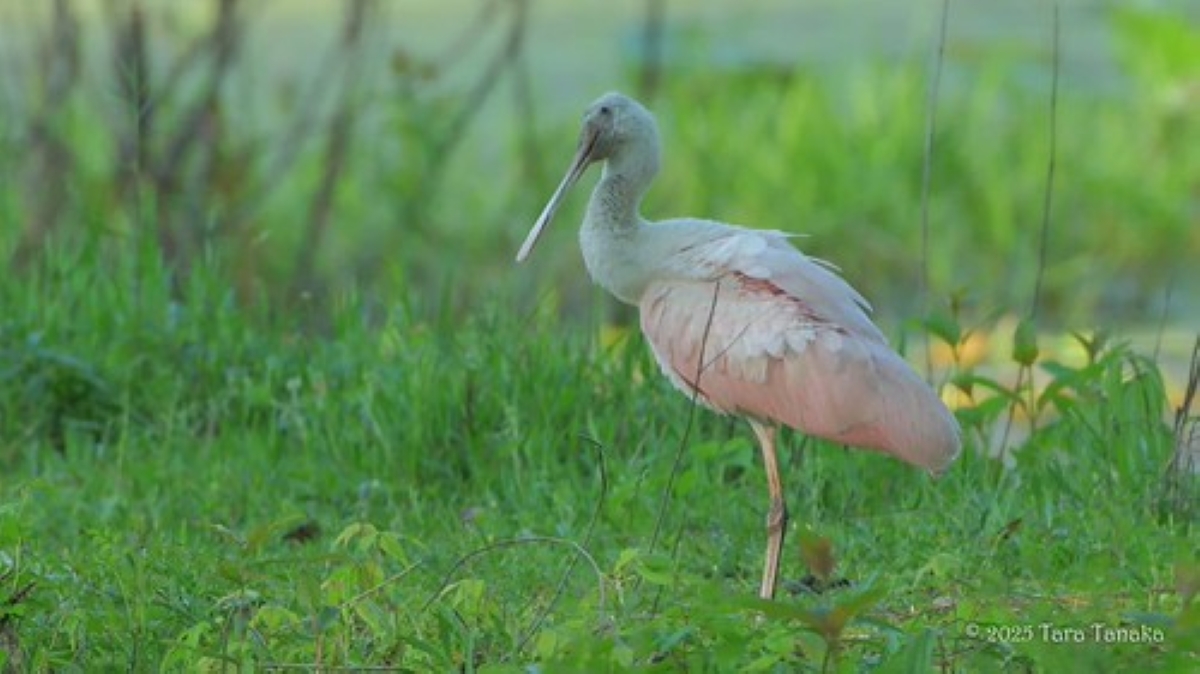
What began as a home surrounded by one hectare of land in Tallahassee, Florida, ended up transforming into a private reserve of 17 hectares aimed at conserving a wetland and protecting local biodiversity.
The initiative was driven by Stevenson and Tara Tanaka, a couple whose relationship with the ecosystems of Florida strengthened over decades. Stevenson was educated at the University of South Florida and worked as a park ranger before holding various positions related to conservation.
Later, he went on to lead the Florida Public Lands Administration until his retirement in 2003. His experience allowed him to closely understand the effects of urbanization, the deterioration of natural environments, and the need to conserve spaces capable of sustaining native species.
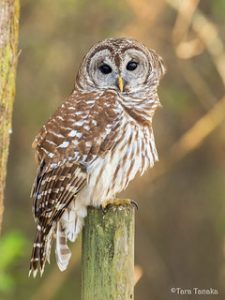 From one hectare to a reserve: a couple from the United States turned their Tallahassee property into a bird sanctuary. Photo: Flickr.
A life marked by the deterioration of Florida’s natural environments
Tanaka also developed a deep relationship with aquatic ecosystems. Before marrying Stevenson in 1992, she had completed more than 400 cave dives, while later both completed more than 50 such experiences.
However, over time they abandoned diving due to the deterioration they observed in the springs. The proliferation of algae and other environmental changes evidenced the growing pressure on these environments.
From then on, the couple decided to focus their efforts on land conservation. In 2007, they acquired approximately 16 hectares of wetland adjacent to the property where they lived, creating a private ecological reserve of about 17 hectares.
A wetland turned into a refuge for local biodiversity
The property offered favorable conditions for birds, reptiles, small mammals, and native plants. Therefore, Stevenson and Tanaka began to document through photographs the species that used the place and the changes recorded in the ecosystem.
Additionally, the reserve allowed for the observation of the recovery of the wood stork, a protected species in the United States. The increasing presence of these birds turned the land into a space of special importance for reproduction.
In 2021, the couple received the Guardians of the Earth award and managed to certify the property as a wildlife habitat. Furthermore, the government of Florida provided park rangers to contribute to the permanent protection of the property.
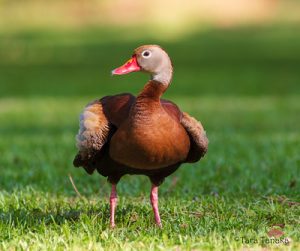 From one hectare to a reserve: a couple from the United States turned their Tallahassee property into a bird sanctuary. Photo: Flickr.
A colony of hundreds of storks grew within the private reserve
The magnitude of the recovery was reflected in the colony of wood storks that uses the wetland. The site came to concentrate up to 275 nests, equivalent to about 700 birds during the periods of greatest presence.
Along with them, the space serves as a refuge for coyotes, bobcats, raccoons, foxes, otters, beavers, and marsh rabbits. It also hosts Canadian geese, wood ducks, spoonbills, herons, egrets, anhingas, and common gallinules.
In turn, the reserve began to receive guided tours and became a reference point for neighbors interested in finding ways to build homes reducing pressure on natural habitats.
Why wetlands are essential for environmental balance
Wetlands perform fundamental ecological functions because they store water, help reduce flooding, and contribute to improving the quality of water resources. Additionally, they serve as areas for reproduction, feeding, and refuge for numerous species.
On the other hand, these environments can store carbon in their soils and vegetation, so their conservation is also part of strategies aimed at facing climate change. When they are drained or degraded, some of that carbon can be released.
The case of Tallahassee also demonstrates that conservation does not depend exclusively on large public parks. In United States, about 70% of the land belongs to private owners, so their decisions can be crucial for restoring habitats.
Since 2005, private landowners in the southeastern United States have restored 2,530 hectares through 179 projects aimed at benefiting the wood stork and other species. Thus, a private property can become, when managed with ecological criteria, a part of a much broader conservation network.