
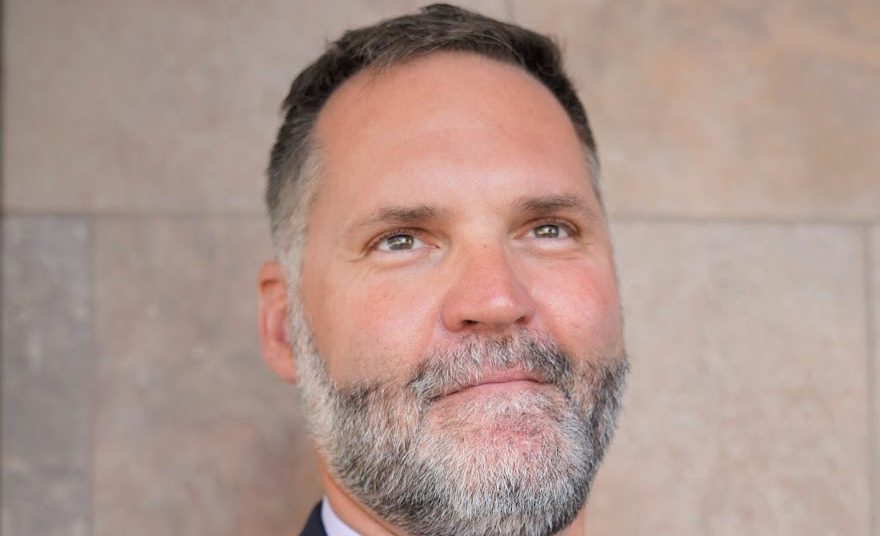
I’ve had migraines for 45 years, since I was just 5 years old. My earliest memories are of my parents helping me cope with severe attacks in kindergarten. Medicine had little to offer a child in that much pain back then, so doctors prescribed seizure medication and the associated bloodwork. More than 20 of those years since have been chronic, and the pain is daily now. The swing between bad days and better days is the only life I’ve known.
I dropped out of high school at 16 for construction, earned a Florida contractor’s license, and started my own company for the flexibility migraine demands. On every job site, the unspoken rule was the same: you don’t sit out for a migraine.
Nobody wants to be the guy who can’t finish the day over a “headache.” So you sit in the truck with the AC running and push through. You go home hurting, miss family time, and show up the next morning like nothing happened. There are plenty of quiet ways to lose a job over migraine, and a safety cost too if a worker stays on the roof or the machinery impaired.
It took until my late 40s to finish my doctorate behind that instinct: a dissertation in industrial-organizational psychology interviewing construction workers with chronic migraines. Twelve of 14 were afraid to tell anyone at work. The people suffering most are usually the ones saying least. Migraine is invisible, and when nobody talks about a condition that can’t be seen, skepticism and doubt fill the silence.
These aren’t workers looking for a handout. They’re providing for their families, with no room to take a day off or explain an invisible disease to a boss. They want access and understanding to keep doing right by the people counting on them. I didn’t do much better: even studying migraine stigma, I didn’t request my own accommodations until my final semesters.
This isn’t only a construction problem. More than 40 million Americans live with a headache disorder, including 3.3 million Floridians. There are fewer than 900 certified headache specialists nationwide, or about one per 44,000 patients. Florida has just 52 certified headache specialists, so for a worker in rural Florida, a diagnosis can mean a lost day’s wages and a long drive.
Headache disorders drain an estimated $78 billion a year from the U.S. economy in lost productivity and healthcare expenditures, yet receive roughly 0.2% of NIH research funding. Kids carry this burden too. My 13-year-old son had his first migraine at 5, the same age I did, and the answers still haven’t caught up.
Congress has a practical way to change that math. The bipartisan HEADACHE Act (H.R. 5536) would direct HHS to coordinate research and care programs the federal government already funds, set a national strategy, expand the clinical workforce, and report to Congress annually. This follows the model that worked for Alzheimer’s and Parkinson’s. No new agency, just a requirement that Washington take this disease as seriously as its cost demands.
I humbly encourage our Florida senators, Rick Scott and Ashley Moody, to carry that momentum forward as lead or original sponsors of the HEADACHE Act in the Senate. This is a jobs bill as much as a health bill.
September is Pain Awareness Month, and it’s also when Congress returns from recess, a fitting moment for the House Energy and Commerce Committee to schedule a hearing.
I’ve lived with this long enough that I don’t know another way to live. I’ve made peace with the pain, even the silence around it, but not with my son inheriting both.
This bill may come too late for me. It can still come in time for him, and for the men on Florida’s roofs and scaffolds pushing through in silence, hoping somebody sees them. They shouldn’t have to wait.
Brian T. Bailey of Ave Maria is a Florida-certified building contractor, an industrial-organizational psychologist and a Florida patient advocate with the Alliance for Headache Disorders Advocacy.