
Aviation expert examines factors in Miami cargo plane crash
An aviation expert has highlighted possible causes, including weather and mechanical issues, behind a cargo plane overrunning the runway at Miami International Airport, resulting in five deaths and three injuries.
 MIAMI —
An aviation expert has shared insights into potential factors that may have caused an Amazon cargo plane to overrun the runway at Miami International Airport, leaving five people dead and others injured.
Michael Arizzi, an aviation professional, observed unusual details about the plane’s landing.
“One thing I did notice is when the aircraft landed, it seemed to have set on its nose landing gear and its right-wing landing gear, with its left main landing gear off the ground,” Arizzi said.
Experts also noted the plane’s unusual landing angle, how far down the runway it touched down, and the weather conditions visible in the crash video.
“Really, the only thing we know at this point amidst a lot of clues is the fact that an airplane traveling about 150 miles an hour and weighing about 300,000 pounds could not stop before it got to the end of the runway. There are many different possible factors in that,” said John Nance, ABC News contributor and aviation analyst.
Stay up-to-date: The latest headlines and weather from WPBF 25
Getty ImagesCHANDAN KHANNA
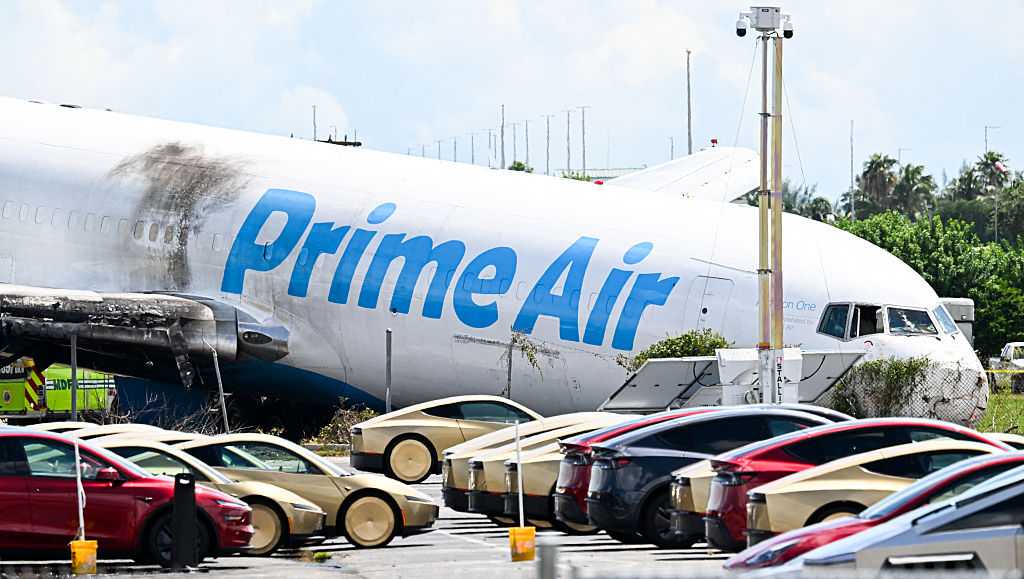
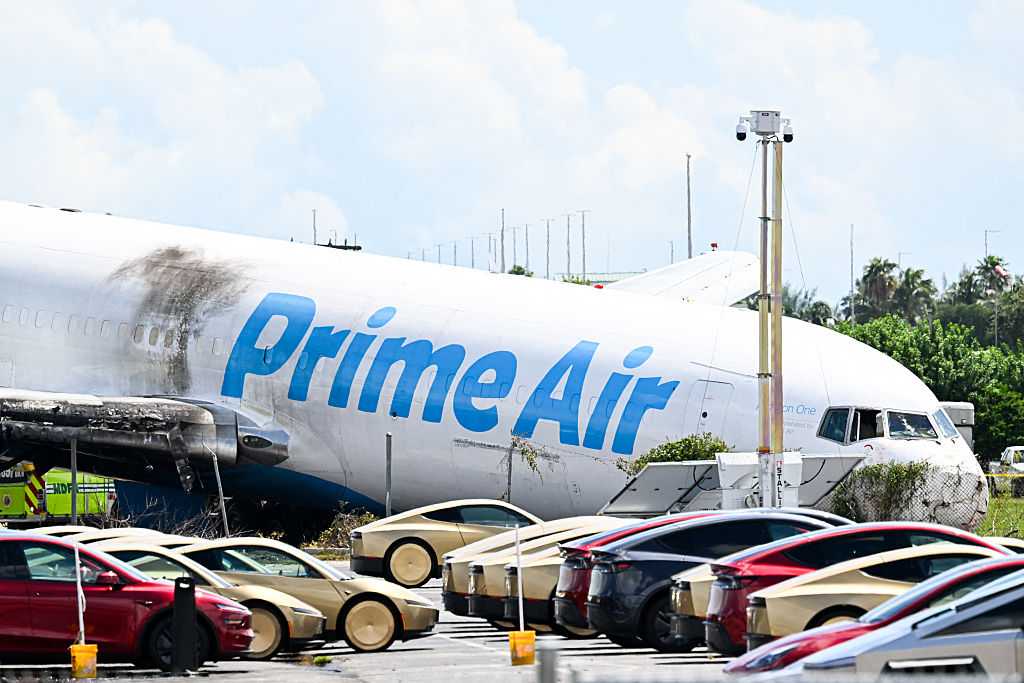
A parking lot filled with Tesla Cybercabs is seen in the foreground as the nose of a Prime Air cargo plane rests on the ground after the aircraft overran the runway and struck cars the previous day at Miami International Airport in Miami, Florida, on September 7, 2026. At least five people were killed when an Amazon cargo plane overshot a runway after it landed September 6 at Miami International Airport, crashed into vehicles and caught fire, officials said. Miami-Dade County fire chief Ray Jadallah told reporters that in addition to five fatalities, three people were transported to trauma centers “in critical condition” and two more were treated at a local hospital. “The airplane did strike a couple of vehicles,” which left “a couple of victims that were actually trapped in the vehicles,” Jadallah said. (Photo by CHANDAN KHANNA / AFP via Getty Images)
On Sunday afternoon, scattered showers and gusty winds were reported across South Florida, including Miami, around the time of the crash.
Arizzi explained how weather conditions, such as a tailwind or strong crosswind, could have affected the landing.
Get the latest news updates with the WPBF 25 News app. You can download it here.
“If there was a tailwind or a strong crosswind that could have caused it to kick off to the side a little bit, or a tailwind will actually delay its landing, and then you’ll have to glide a lot further because airspeed is a lot slower than your actual ground speed since the wind is pushing it,” he said.
Research shows that commercial planes typically land within the first 3,000 feet of a runway. Arizzi noted that larger aircraft require longer distances to stop due to their weight, and pilots generally aim to land at the beginning of the runway.
“It’s a larger aircraft, and it’s going to need a longer distance to actually stop. And that goes off of the weight of the aircraft for the amount of runway that they’re going to need. So typically, pilots try to put the aircraft down at the beginning of the runway,” Arizzi said.
He added that once the plane surpassed the typical landing zone threshold, the pilot should have considered aborting the landing and attempting another approach.
“In other words, it’s an aborted landing. So full throttles get back up in the air, go around the pattern and try to land again. If they were low on fuel and there was adverse weather in the area, that might have been the driving decision to actually land at that time, Arizzi said.
While speculation continues about what may have contributed to the crash, federal investigators are expected to take months to release a final report.