
Home
»
AIRLINE NEWS
»
Detroit Metropolitan Wayne County Joins Honolulu, Orlando, Portland, Chicago Midway, Atlanta, Anchorage in Facing Massive Cancellation, Delays and Cuts Amid US Government Shutdown, New Update is Here
Published on
November 8, 2025
By: Tuhin Sarkar

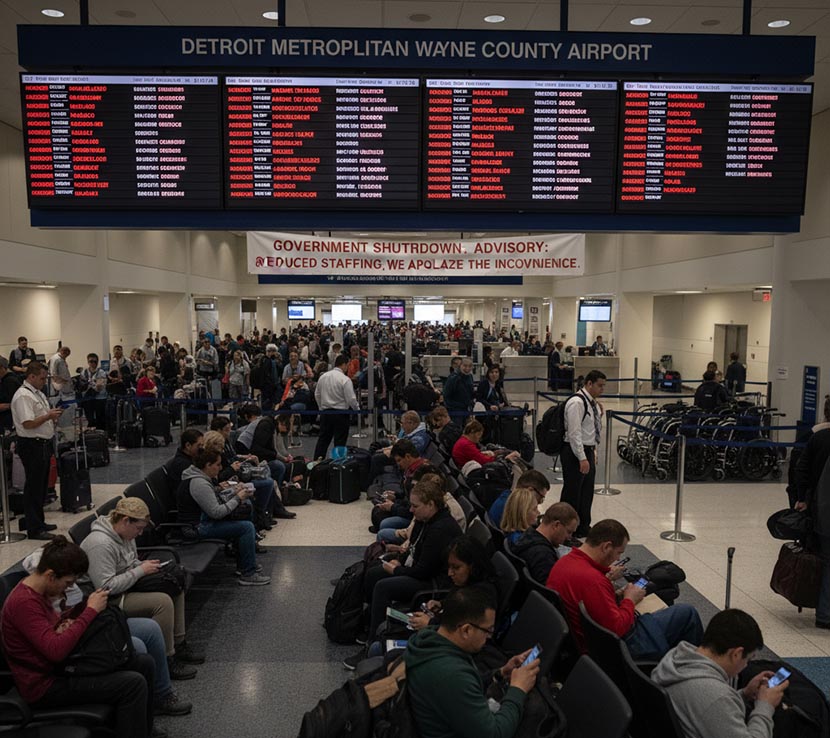
Detroit Metropolitan Wayne County Joins Honolulu, Orlando, Portland, Chicago Midway, Atlanta, Anchorage in facing massive cancellation, delays and cuts amid US government shutdown, new update is here and this is headline will make you think. As the US government shutdown continues, Detroit Metropolitan Wayne County Airport has joined the ranks of major hubs like Honolulu, Orlando, Portland, Chicago Midway, Atlanta, and Anchorage in facing severe disruptions.
This includes massive flight cancellations, delays, and significant cuts to air traffic. The FAA’s emergency measures, resulting from staffing shortages and increasing pressure on the air traffic control system, are now impacting these airports.
Travelers through these key hubs are already experiencing the fallout, with hundreds of flights being affected. Whether you’re planning to fly from Detroit, Honolulu, or Orlando, the ripple effects are clear. Major reductions in flights at Chicago Midway, Atlanta, and Anchorage signal a worrying trend for air travel. Keep reading to uncover how the US government shutdown is shaking up travel plans and what you need to know to prepare.
The U.S. Government Shutdown: What Does it Mean for Your Flights?
The U.S. government shutdown is wreaking havoc across the nation, and airports are bearing the brunt of this financial disaster. Detroit, Honolulu, Orlando, Portland, Chicago, Atlanta, Cincinnati, Newark, and Anchorage are facing major flight reductions due to the shutdown.
Thousands of passengers are already feeling the consequences, and the worst is yet to come. In this article, we will expose the cold truth about how this government shutdown is directly impacting these key U.S. airports. If you’re flying soon, especially from these hubs, keep reading to uncover the devastating effects and how they will affect your plans.
US AirportStatus of impactKey notesDetroit (DTW)~4% flight cancellations already reported; ramp up expected.Local story gives concrete number.Honolulu (HNL)Listed among 40; specific numbers still emerging.Monitor flights; included in directive.Orlando (MCO)4% currently; 10% possible later (~100 flights if full).Local article highlights next step.Portland (PDX)Local article confirms reductions at PDX.Same rate scheme expected.Chicago Midway (MDW)Included in list; fewer local numbers.Be cautious.Atlanta (ATL)Included; major hub.Larger scale risk.Cincinnati/Northern Kentucky (CVG)Included in list; impact likely.Smaller airport but affected.Newark (EWR)Included; high‐volume gateway.Monitor.Anchorage (ANC)Included; remote but same policy.Check flights.
Flight Cancellations Surge: What’s Behind the Chaos at Detroit Metropolitan Wayne County Airport?
Detroit Metropolitan Wayne County Airport (DTW), a major hub in Michigan, is one of the first to face drastic cuts as a result of the U.S. government shutdown. Over 4% of flights at DTW have already been cancelled, with more disruptions expected. Experts are warning that if the shutdown continues, flight cancellations could surge by as much as 10%.
DTW is struggling under the weight of unpaid air traffic controllers, and the FAA has ordered reductions at 40 of the busiest airports nationwide. For Detroit, this means heightened stress, delays, and frustration for travelers. Already, dozens of people are stranded or forced to reschedule their flights as the airport struggles to keep up with demand.
The impact of the shutdown on DTW should not be underestimated. The airport is experiencing a sharp decline in flight reliability, and travellers can expect much longer waiting times. If you’re flying from Detroit, it’s essential to check your flight status frequently. This shutdown is not only disrupting your travel plans but also creating an unpredictable environment where flight operations could change without warning. The financial implications are enormous.
Detroit Metropolitan Wayne County Airport Faces Flight Reductions Amid FAA Cuts
As of November 7, 2025, Detroit Metropolitan Wayne County Airport (DTW) is among the airports affected by the Federal Aviation Administration’s (FAA) flight reduction measures. This decision comes as the ongoing U.S. government shutdown continues to impact air traffic operations, leading to cancellations and delays at major airports across the country.
The FAA’s flight reduction initiative aims to alleviate strain on the air traffic control system, which is operating under reduced staffing due to the shutdown. As a result, travelers flying through DTW may experience disruptions, including flight cancellations, longer wait times, and delays in processing.
Stay Informed and Prepared
If you’re planning to travel through DTW in the coming days, it’s crucial to stay updated on your flight’s status. We recommend that passengers regularly check with their airline for real-time information on cancellations or changes to their flight schedule. With the FAA’s flight reductions in place, certain flights may be canceled, and the schedule could change unexpectedly.
To help you stay ahead of potential disruptions, here are some key tips for navigating these challenging conditions:
Download Your Airline’s App and Enable Notifications:
Most airlines offer apps that provide live updates and notifications. By enabling push notifications, you’ll receive the most accurate and immediate alerts about any changes to your flight, including cancellations, gate changes, and delays.
Check Your Flight Status Before Heading to the Airport:
Always verify your flight’s status with your airline before leaving for DTW. This simple step can save you time and ensure that you’re not caught off guard by last-minute cancellations or delays. Airline websites and mobile apps provide the most up-to-date information regarding your flight.
Ensure Your Contact Information is Current:
Make sure your airline has your correct and up-to-date contact information. Airlines often rely on this data to send crucial updates, such as schedule changes or flight cancellations. If you’ve changed your phone number or email address since booking, take a moment to update your details with the airline to ensure you don’t miss any important notifications.
Pack Your Patience:
Given the current situation, delays and cancellations are more likely, so it’s important to approach your travel with a sense of patience. With air traffic control and staffing issues at play, things may take longer than usual. Arriving early at the airport and allowing plenty of time for check-in and security is essential, especially if your flight is affected by the reduction measures.
The Impact on DTW and What It Means for Travelers
While DTW is a major hub for domestic and international flights, it is now facing the same challenges that other high-traffic airports are dealing with under the FAA’s flight reduction order. These cuts are necessary due to the reduced availability of air traffic controllers, many of whom are working without pay due to the ongoing government shutdown.
In light of these circumstances, the airport is urging travelers to be proactive and flexible with their plans. The Airport Authority, airlines, and federal partners are working diligently to manage the evolving situation, but the travel experience will inevitably be affected.
By staying informed and prepared, you can minimize the stress of these travel disruptions and ensure a smoother experience when flying through Detroit Metropolitan Wayne County Airport. We thank you for your patience and understanding as we all adapt to the challenges posed by the ongoing government shutdown.
Honolulu’s Travel Nightmare: Government Shutdown Forces Severe Flight Cuts
Honolulu International Airport (HNL), also known as Daniel K. Inouye International Airport, is another key player in the ongoing shutdown saga. The FAA has ordered drastic reductions here as well, even though Hawaii’s airports typically experience fewer disruptions.
HNL is a vital link between the U.S. mainland and the Pacific. For tourists and business travellers alike, this disruption is catastrophic. The government shutdown means less air traffic control staff, creating delays and increased risk of cancellations. Flights are being reduced by around 4%, and in the coming weeks, it’s likely this number will rise as more airports face strain.
Honolulu’s tourism industry, which is heavily reliant on smooth air travel, is feeling the pinch. The impact extends beyond just travellers — the entire Hawaiian economy will suffer unless swift action is taken. The government shutdown, at least for now, is casting a dark shadow over Hawaii’s bustling airport and further exacerbating the challenges for a destination already struggling with rising costs and visitor numbers.
Orlando International Airport: A Perfect Storm for Flight Disruptions
Orlando International Airport (MCO) is facing a perfect storm as the government shutdown escalates. With 4% of flights already being slashed, the pressure is mounting on the city’s busiest gateway. And that’s not the worst of it — experts are warning that the airport could experience up to a 10% reduction in flights, leaving hundreds of passengers stranded during the busy holiday season.
For those travelling to Orlando for family vacations or business, the situation is becoming more precarious. The city’s theme parks, conventions, and events depend heavily on uninterrupted flight schedules, but now that dream is shattering. Airports like MCO are the first to feel the impact, with delays and cancellations worsening by the day. Airlines are scrambling to accommodate passengers, but the reality is, there is only so much they can do when the very systems they rely on are compromised by the shutdown.
Expect your Orlando trip to be fraught with unexpected delays and longer-than-usual wait times. The longer the shutdown drags on, the worse it gets, and the 10% reduction forecast is just the beginning. If you have a flight booked from Orlando, the situation is only going to get worse.
Portland International Airport Faces Growing Strain from US Shutdown
Portland International Airport (PDX) is not immune to the ongoing chaos. With the FAA slashing air traffic at 40 airports, Portland has found itself caught in the crossfire. The growing strain on resources is evident as more cancellations are reported each day.
PDX is a smaller airport compared to some of the others on this list, but it’s still a crucial hub for those travelling across the Pacific Northwest. Unfortunately, the government shutdown means fewer staff, longer wait times, and a higher likelihood of flight delays.
Local reports indicate that delays could worsen in the coming weeks, with travellers facing an uncertain future. As air traffic control issues compound the challenges at PDX, passengers are urged to remain vigilant, prepared for longer waits, and ready to adjust their travel plans.
Chicago Midway International Airport Faces Major Flight Cancellations
Chicago Midway International Airport (MDW) is another major airport grappling with the fallout of the shutdown. Known for its high volume of Southwest Airlines flights, MDW is already experiencing delays, and with over 4% of flights cancelled, things aren’t looking good for passengers flying in and out of this key hub.
Midway’s status as a secondary airport in the Windy City doesn’t shield it from the chaos wreaking havoc on major airports. Flight cancellations and delays are inevitable as the FAA struggles to cope with the ongoing staffing shortages. For travellers, the message is clear: If you’re flying out of Chicago Midway, expect to encounter problems that could cause major disruptions to your schedule.
Hartsfield-Jackson Atlanta International Airport: A Disaster in the Making
Hartsfield-Jackson Atlanta International Airport (ATL) is one of the busiest airports in the world and certainly one of the most important for air travel in the U.S. With the government shutdown affecting air traffic control operations nationwide, ATL is struggling to keep up.
Already, passengers are seeing flight cancellations, delays, and unpredictable flight schedules. The 10% reduction forecast for high-traffic airports like ATL will cause significant issues. The airport’s size and volume mean the number of disruptions is far greater here than at many other airports.
For those planning to travel through ATL, expect long lines, increased stress, and potentially even flight rerouting. The FAA’s mandated reductions are taking a toll on all U.S. airports, and ATL is no exception. With the shutdown likely to continue, the pressure on air travel is set to mount even further.
Cincinnati/Northern Kentucky Airport: More Trouble Amid Shutdown
The impact of the government shutdown is not just confined to the major hubs. Cincinnati/Northern Kentucky International Airport (CVG) is also feeling the pinch. Although it doesn’t boast the same volume of traffic as some of the larger airports, CVG is still a critical airport for regional flights.
Passengers here are facing reduced services and higher chances of cancellations as the shutdown reduces FAA oversight. While the airport may not face the same sheer volume of disruption as larger airports, those flying from CVG should still prepare for significant delays and service reductions.
Newark Liberty International Airport Faces Worsening Travel Disruptions
Newark Liberty International Airport (EWR) is on the frontline of the ongoing shutdown. As one of the largest international airports in the country, Newark is bracing for an influx of cancellations. The 4% flight reduction initially forecast could escalate quickly, leading to delays, cancellations, and more passenger frustration.
For passengers trying to catch international flights or connecting through Newark, this means potential chaos. Already, major airlines are warning of potential disruptions as the shutdown continues, and Newark is at the centre of these changes.
Anchorage International Airport Struggles to Cope with Shutdown Chaos
Anchorage International Airport (ANC) may be remote, but that hasn’t shielded it from the fallout of the government shutdown. As the FAA reduces flight capacity across the country, even this less-busy airport is seeing the effects. Anchorage’s role as a key hub for Alaskan and international flights has made it vulnerable to disruptions.
For those travelling through ANC, the shutdown will likely create delays, especially on flights that rely on specific air traffic control staffing. While the shutdown might not have the same magnitude of impact here as in other cities, travellers should remain cautious and monitor their flight status closely.
FAA Announces Flight Reductions Amid U.S. Government Shutdown to Ensure Air Travel Safety
U.S. Transportation Secretary Sean P. Duffy and Federal Aviation Administration (FAA) Administrator Bryan Bedford outlined proactive measures to ensure the highest safety standards in the national airspace system during the ongoing government shutdown. These measures include a temporary 10 percent reduction in flights at 40 high-traffic airports across the country.
Since the shutdown began, air traffic controllers have been working without pay, leading to mounting staffing issues at air traffic facilities nationwide. This strain on the system has resulted in increased delays and concerns about safety, with 2,740 delays reported just this past weekend.
“This isn’t about politics – it’s about assessing the data and alleviating the risks as controllers continue to work without pay,” said Secretary Duffy. “It’s safe to fly today, and it will continue to be safe next week because of the proactive actions we are taking.”
FAA Administrator Bryan Bedford added, “We are seeing signs of stress in the system, so we are proactively reducing the number of flights to make sure the American people continue to fly safely.”
Flight Reductions Timeline and Key Actions
A 4 percent reduction in operations will take effect Friday, November 7, with gradual increases:
6 percent by November 11
8 percent by November 13
10 percent by November 14
Additionally, the FAA will impose restrictions on certain operations:
Prohibit some visual flight rule approaches (VFR) at affected facilities.
Commercial space launches and reentries will be restricted to 10:00 p.m. to 6:00 a.m. local time.
Parachute operations and photo missions near impacted facilities will be prohibited.
These actions are based on the FAA’s review of aviation safety data, including voluntary, confidential safety reports filed by pilots and air traffic controllers. The data points to increased stress, which heightens safety risks.
Refunds and International Flights
Airlines are required to issue full refunds for affected flights, though secondary costs, such as accommodations, will not be covered. Importantly, the FAA’s flight reduction measures do not extend to international flights. Carriers will have the discretion to decide which domestic flights to cancel to meet the required reductions.
The list of 40 impacted high-traffic airports includes major hubs like Detroit Metropolitan Wayne County Airport (DTW), Hartsfield-Jackson Atlanta International Airport (ATL), Honolulu International Airport (HNL), and Orlando International Airport (MCO), among others.
ANC – Ted Stevens Anchorage International Airport
ATL – Hartsfield-Jackson Atlanta International Airport
BOS – Boston Logan International Airport
BWI – Baltimore/Washington International Airport
CLT – Charlotte Douglas International Airport
CVG – Cincinnati/Northern Kentucky International Airport
DAL – Dallas Love Field
DCA – Ronald Reagan Washington National Airport
DEN – Denver International Airport
DFW – Dallas/Fort Worth International Airport
DTW – Detroit Metropolitan Wayne County Airport
EWR – Newark Liberty International Airport
FLL – Fort Lauderdale/Hollywood International Airport
HNL – Honolulu International Airport
HOU – William P. Hobby Airport
IAD – Washington Dulles International Airport
IAH – George Bush Houston Intercontinental Airport
IND – Indianapolis International Airport
JFK – New York John F. Kennedy International Airport
LAS – Las Vegas McCarran International Airport
LAX – Los Angeles International Airport
LGA – New York LaGuardia Airport
MCO – Orlando International Airport
MDW – Chicago Midway International Airport
MEM – Memphis International Airport
MIA – Miami International Airport
MSP – Minneapolis–St. Paul International Airport
OAK – Oakland International Airport
ONT – Ontario International Airport
ORD – Chicago O’Hare International Airport
PDX – Portland International Airport
PHL – Philadelphia International Airport
PHX – Phoenix Sky Harbor International Airport
SAN – San Diego International Airport
SDF – Louisville International Airport
SEA – Seattle–Tacoma International Airport
SFO – San Francisco International Airport
SLC – Salt Lake City International Airport
TEB – Teterboro Airport
TPA – Tampa International Airport
The FAA will continue to monitor the situation closely, and future decisions regarding flight reductions will be based on real-time safety data.
What You Need to Know About Travel During the US Government Shutdown
The government shutdown is not just a political crisis; it’s a full-blown travel disaster. Major airports like Detroit Metropolitan Wayne County, Honolulu, Orlando, Portland, Chicago Midway, Hartsfield-Jackson Atlanta, Cincinnati/Northern Kentucky, Newark Liberty, and Anchorage are facing serious disruptions. Flight reductions are already in place, and unless the government shutdown ends soon, more cuts are inevitable. Passengers are facing the possibility of long delays, cancellations, and a ripple effect that could cause travel chaos across the country.
If you’re planning to fly out of any of these airports, stay vigilant, check flight statuses regularly, and be prepared for longer-than-usual wait times. The government shutdown has created a perfect storm for flight disruptions, and only those who are well-prepared will manage to avoid the worst of the chaos.
