
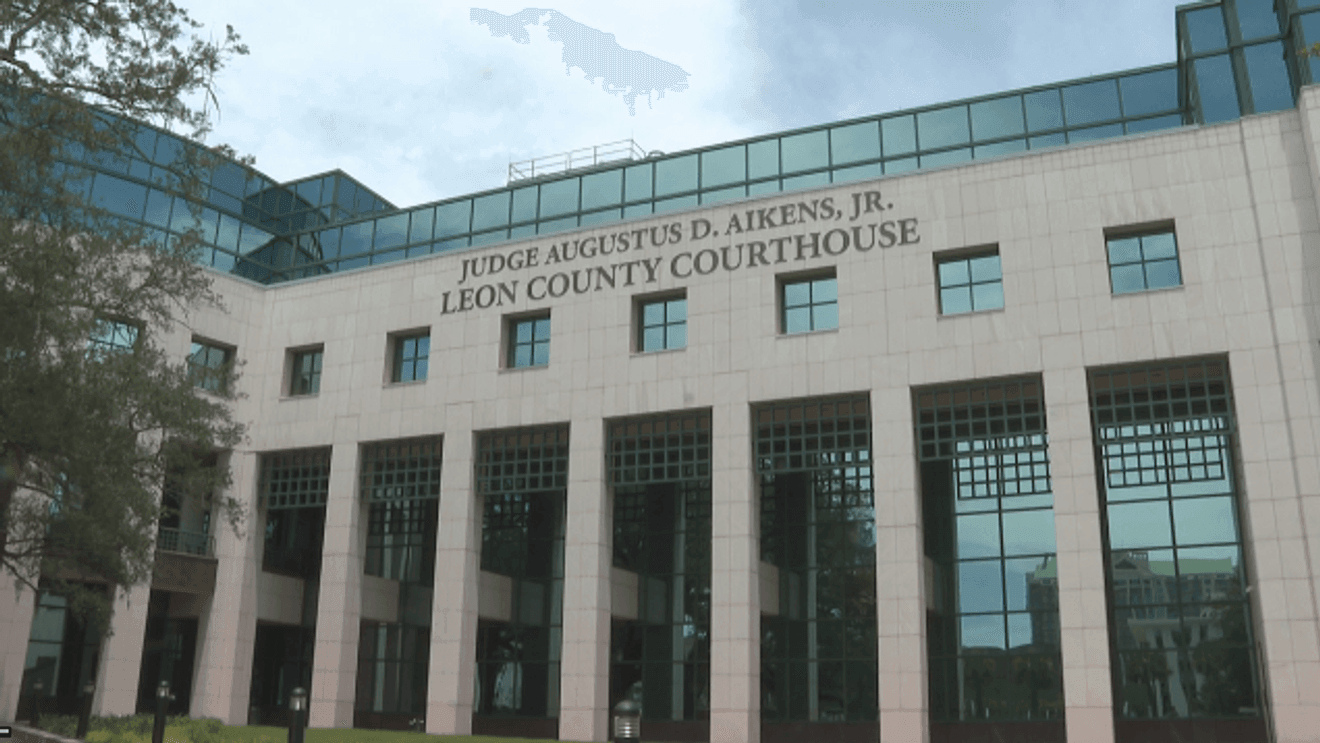
TALLAHASSEE, Fla. — A grand jury report says $10 million connected to a Medicaid settlement was misappropriated through the Hope Florida Foundation, but the same report did not result in criminal charges.
That has left a basic question at the center of the Hope Florida controversy.
How can both things be true?
Attorney General James Uthmeier put the focus on Tallahassee State Attorney Jack Campbell this week, accusing Campbell’s office of abusing the grand jury process.
“A Democrat state attorney in Tallahassee; he weaponized the judicial system to bring a politically motivated case against the DeSantis administration,” Uthmeier said. “He abused his office.”
Campbell’s office guided the grand jury process.
Under Florida law, the state attorney or an assistant state attorney attends grand jury sessions, examines witnesses, gives legal advice and drafts indictments for a grand jury.
But the grand jury decides whether to indict.
The leaked report, first obtained by CBS Miami, says settlement money went to the Hope Florida Foundation, which is connected to First Lady Casey DeSantis’ initiative to connect people in need with community help.
The report says that money later moved through outside groups involved in the 2024 fight against recreational marijuana.
The report identifies Uthmeier, then Gov. Ron DeSantis’ chief of staff, as involved in directing money after it reached Hope Florida. It also says former Attorney General Ashley Moody was aware of the plan to send money to Hope Florida and authorized her office to sign the settlement agreement.
DeSantis, Moody and Uthmeier have all denied wrongdoing.
The grand jury declined to bring charges because it did not have enough evidence identifying who was criminally responsible.
FOX49 asked Campbell whether his office is still investigating the Hope Florida transfer or whether the matter is closed.
“Sorry, no comment,” Campbell responded.
Former Miami-Dade prosecutor Mark Eiglarsh said the grand jury’s finding and the lack of charges are not the same legal question.
“Finding that money was publicly misused is one issue,” Eiglarsh said. “An entirely separate issue is whether there is any individual or individuals who committed a criminal offense by misusing that money.”
That distinction matters because criminal charges require evidence tied to a specific person and a specific crime.
Prosecutors would need to prove who did what, what they knew and whether they acted with criminal intent.
Eiglarsh said that is a higher burden than simply finding that something went wrong.
“Money was misappropriated, fraud might have been committed, but it’s another thing to have proof beyond a reasonable doubt that someone specifically committed a criminal offense,” Eiglarsh said.
He said prosecutors still have to be careful, even in cases that raise serious public questions.
“The fact that there’s possible guilt or probable guilt is insufficient,” Eiglarsh said. “The law requires proof beyond and to the exclusion of every reasonable doubt.”
The grand jury report says key witnesses could not remember important details. It also says no one accepted responsibility for the initial decision to direct money to Hope Florida.
Former Fourth Judicial Circuit Assistant State Attorney David Johnston said that can make a case harder, but it does not automatically end it.
“Just because a witness does not remember does not mean the criminal case cannot go forward,” Johnston said.
Johnston said cases can still be built through circumstantial evidence.
That could include emails, text messages, calendars, settlement records, payment approvals or testimony from other witnesses.
“Cases can be proven without eyewitness testimony,” Johnston said. “Cases are often proven by circumstantial evidence.”
But Johnston said prosecutors still need evidence that can fill in the blanks if witnesses cannot.
“If you have witnesses that don’t remember, it’s crucial to have that documentary evidence to support whatever the allegations are,” Johnston said.
Grand jury proceedings are secret under Florida law, which limits what Campbell may be able to say publicly about testimony, evidence or deliberations.
The report also recommended changes to how Florida handles future settlement money involving the state.
For now, the public record leaves two findings sitting side by side: the grand jury said the money was misappropriated, but it did not indict anyone.
Johnston said the reason may come down to what prosecutors could prove after witnesses failed to provide a clear answer.
“Without that and without eyewitness testimony, there’s not much the prosecutor can do.”