
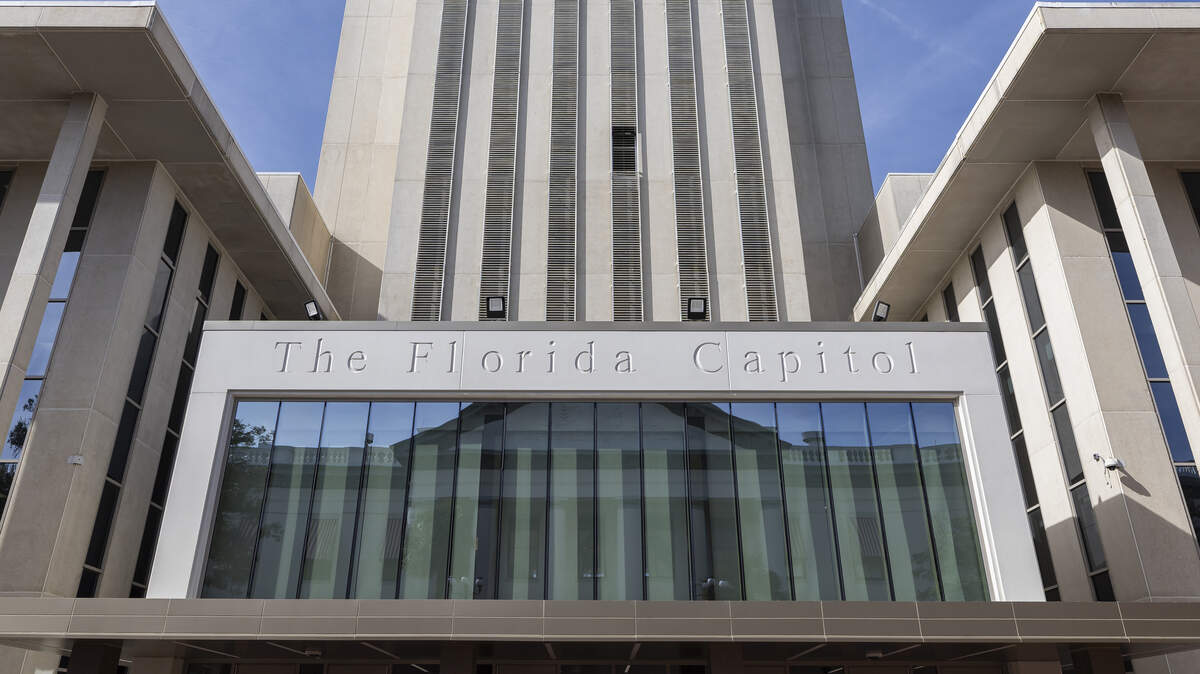
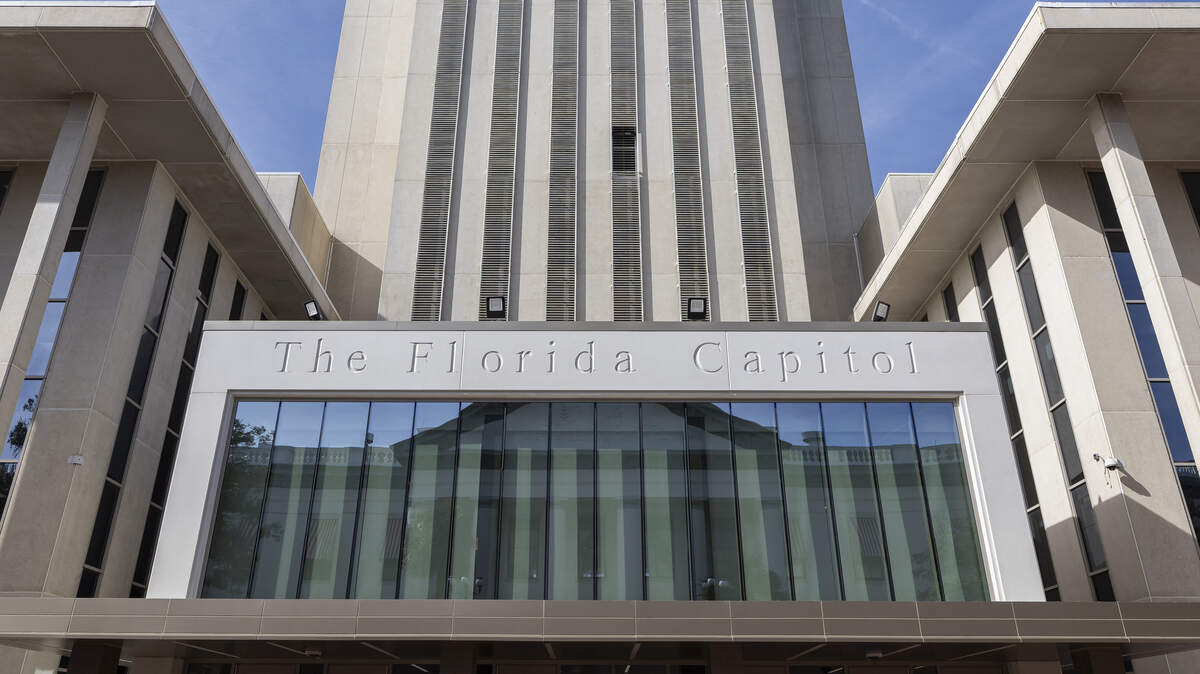
A view of the Florida Capitol on Jan. 12, 2026, in Tallahassee.
Photo by Matias J. Ocner
mocner@miamiherald.com
Almost 10 years ago, I was in Scotland, chilling in Edinburgh, enjoying Scotch at every pub in sight, when I bumped into this guy: Adam Smith. Well, technically, a 10-foot-tall bronze statue.
I entered college as an economics major before switching to social work my junior year. So I knew who he was. And I had read Smith’s “The Wealth of Nations” in high school. (Apparently, the Christian Brothers at Essex Catholic High School in East Orange, New Jersey, were preparing me to understand Florida politics 40 years later.)
To me, Smith’s ideas weren’t simply “government bad, business good.” He believed in markets and competition but warned about powerful commercial interests using government to protect themselves from competition.
“To widen the market and to narrow the competition, is always the interest of the dealers,” Smith wrote. Narrowing competition, he continued, “must always be against” the public interest.
Dealers. Now there’s a word. Everybody understands the market for drugs: A cartel doesn’t want a free market. It wants to control the product, territory and price. But when people become powerful enough to control a market, influence its rules and shape the government enforcing them, you don’t have much of a free market anymore.
Now, look at property insurance. Homeowners watched premiums soar while Tallahassee rewrote insurance rules. Some reforms were necessary. But insurance interests also spend substantial money helping elect the people writing those rules.
That doesn’t mean anybody bought a vote. But when the regulated are helping to choose the regulators, we ought to pay attention.
Then there’s Amendment 3, Tallahassee’s proposed property-tax “reform.”
I call it a shell game.
Homeowners need relief. But Amendment 3 would eliminate tens of billions of dollars in local-government revenue over five years. Miami-Dade estimates about $386 million could disappear from its general fund in the first year alone.
Police and fire rescue still have to show up. Roads, parks and libraries still cost money. Renters don’t get the expanded homestead exemption but can still pay through fees, reduced services or higher rents.
The bill doesn’t disappear. We’ll just be arguing about who gets handed the check.
Even Gov. Ron DeSantis, who pushed property-tax cuts, has been reluctant to lead the Amendment 3 campaign. He says he’ll vote for it but says the Legislature’s version “wasn’t my proposal.”
Even the governor doesn’t want his name on the bumper sticker for the version voters actually got.
Amendment 3 isn’t reform. It’s Tallahassee transferring the problem to Miami-Dade and calling it relief.
You cannot claim to believe in free markets while allowing the biggest players to control the game, the referees and the rulebook.
That’s not Adam Smith winning. That’s the people Adam Smith warned us about winning.
Look at Democrats Zohran Mamdani in New York and Abdul El-Sayed in Michigan. Different approaches, but neither seems afraid of big business or apologizes for challenging concentrated economic power.
That’s where the donkey needs to buck the trend. Democrats can be pro-entrepreneur, pro-small business and pro-competition while standing up to corporate bullies and political favoritism.
Both parties have indulged corporate power. From where I sit, the elephant seems considerably more comfortable with it than the donkey.
There is a difference between being pro-business and being pro-market. Government shouldn’t pick the winners. It should make sure there is actually a game.
Maybe that’s worth remembering during America’s 250th anniversary. “The Wealth of Nations” turns 250, too.
I became a social work major and moved on from Adam Smith to W.E.B. Du Bois. Turns out I never really left economics. I just became more interested in what economic systems do to people.
Christopher M. Norwood is a member of the Miami-Dade Democratic Executive Committee.