
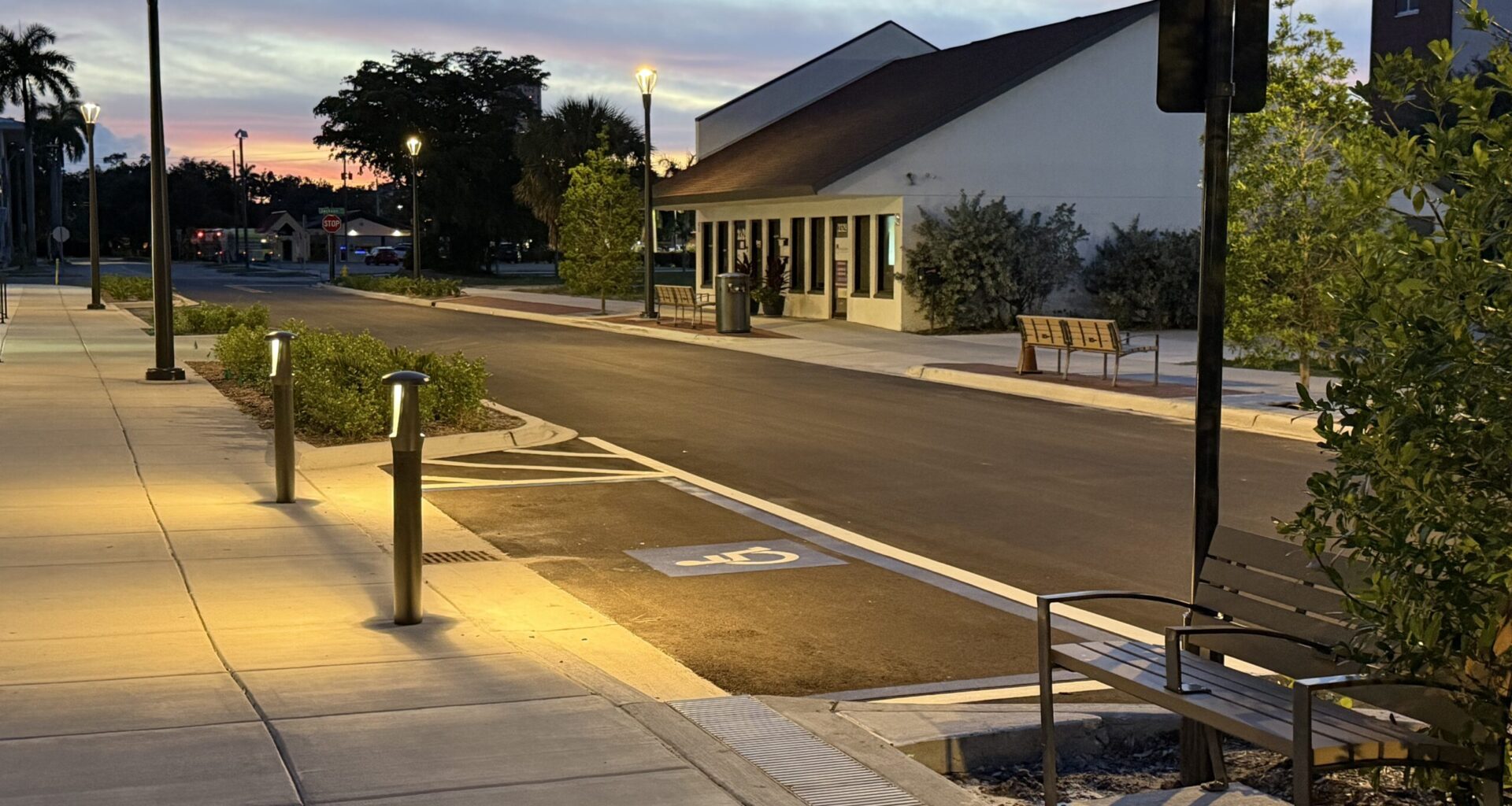
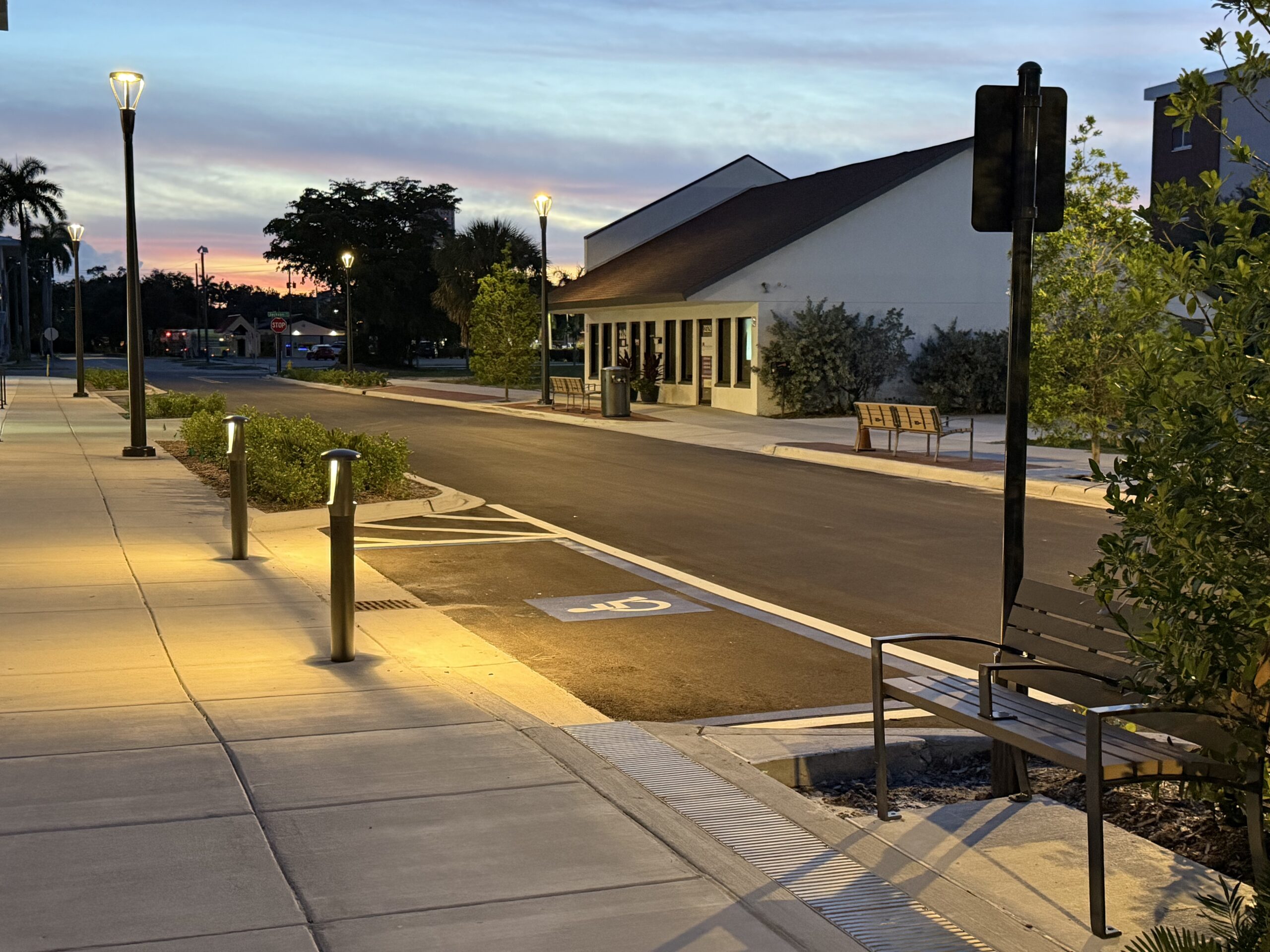
Accessible Parking Space Bollards. -COURTESY PHOTO
During the 47 years I’ve called Fort Myers home, I’ve watched the city grow and transform. I’ve seen neighborhoods evolve and witnessed ideas that once existed only on paper become part of the fabric of our community. This deep-rooted connection gives me a special appreciation for the vision the City of Fort Myers has for the district we call Midtown.
For years, city leaders have planned for the potential of this 243-acre section south of downtown. Our intent is to create a community district where people can live, work and gather in an inviting, walkable, connected neighborhood with an identity and character all its own.
Phase 1 of the Midtown Redevelopment Plan is bounded by Dr. Martin Luther King Jr. Boulevard, Broadway Avenue, Victoria Avenue and Central Avenue and takes a key step toward turning that vision into reality. And, perhaps fittingly as the city engineer, I can tell you that much of Midtown’s future begins with something most people will never see.
It starts underneath our feet.
As we looked at Midtown’s future, we recognized that its infrastructure wasn’t ready for the kind of redevelopment that could transform this city sector. Aging water and sewer lines needed to be replaced. We had to address roadway conditions. The stormwater system did not meet today’s standards in some areas. Sidewalks were narrow, inconsistent and sometimes disconnected and in disrepair.
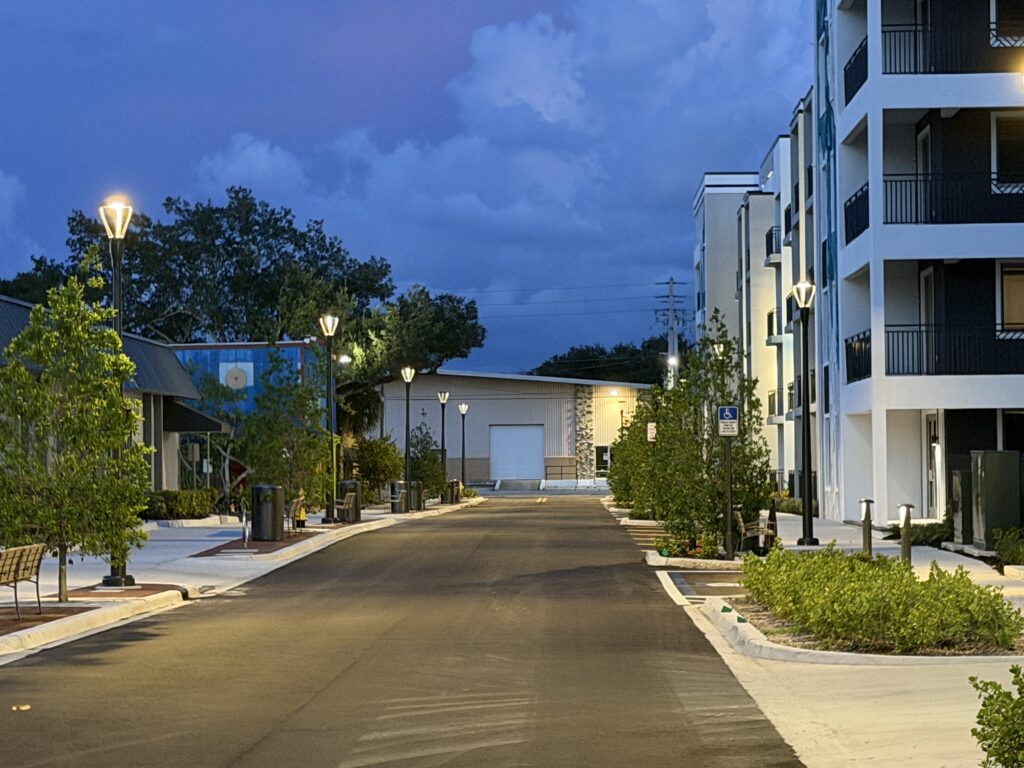
Union Street Road Lighting. -COURTESY PHOTO
While Midtown provides a tremendous opportunity to support a greater mix of residential, retail and commercial development, to realize that potential we first must install the foundational infrastructure to support it. That’s what Midtown Phase 1 is all about.
The nearly $29.5 million project will bring new water, sewer and stormwater infrastructure while rebuilding streets and sidewalks and adding lighting, landscaping, street furniture and signage. It is scheduled to be substantially complete by the end of 2027.
You can already get a glimpse of Midtown’s future on Union Street. We approached that project as something of a prototype — an opportunity to establish the streetscape concepts and to work through details before carrying the design throughout the larger redevelopment area.
Improving everyday quality of life has been a key focus. We envision a range of improvements that make an urban neighborhood inviting: wide sidewalks, attractive street trees, lighting, benches and spaces where people feel comfortable walking and spending time. This includes opportunities for “pocket parks,” green spaces that offer little oases within an urban neighborhood. They can provide a shaded place to eat lunch, meet a neighbor or walk the dog.
Improving residents’ lives also means thinking differently about how people move through Midtown. Along Edison Avenue and Jackson Street, for example, plans include a shared-use trail separate from the sidewalk and roadway that will give bicyclists and other users a more comfortable way to travel through the area while helping fill a missing link in a larger bicycle and pedestrian network throughout the city.
Those may sound like small details when we’re talking about redevelopment on the scale of Midtown. But they truly aren’t. A sidewalk connects people to businesses and neighbors. A trail provides a valuable recreational amenity. A bench beneath a shade tree creates an opportunity to stop and talk instead of simply passing through. Together, these improvements help create a sense of community.
Fostering that sense of community is why local input has been an important part of our planning process. We have held public meetings and engagement sessions because the decisions we make affect people who live and own property in Midtown today, as well as those in surrounding neighborhoods. Residents deserve to understand what’s happening, share their ideas and concerns and know they have been heard. But community engagement doesn’t just help us plan better; it gives residents a stake in what their neighborhood becomes.
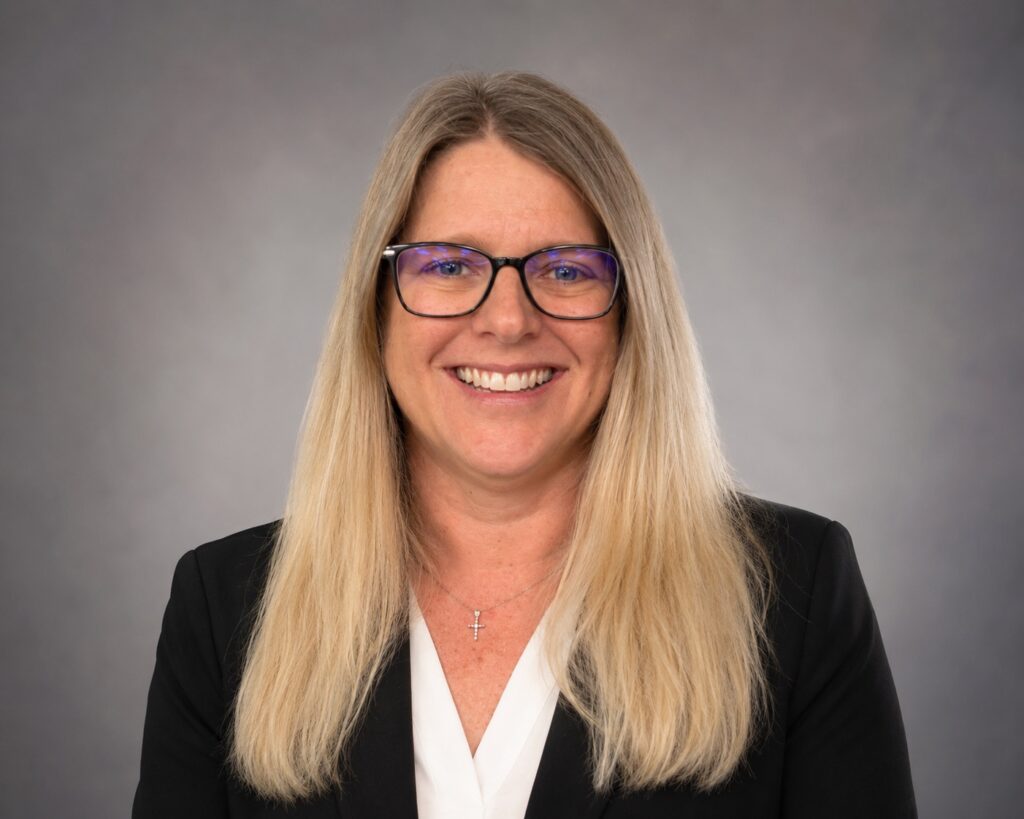
Nicole Setzer -COURTESY PHOTO
And let’s be honest: getting there will include some temporary inconveniences. That’s simply the nature of infrastructure construction. We will continue to work closely with residents and businesses to communicate potential impacts as the project progresses.
To that end, the City of Fort Myers will host a public information meeting on Sept. 17 from 4 to 6 p.m. at Collaboratory on Jackson Street in Midtown. All are invited to attend and learn more about the upcoming construction and sign up to receive project updates.
I encourage you to stay connected as we begin building Midtown’s future together. While much of the work of Phase 1 will happen beneath our feet, its real impact will be measured by what ultimately happens above ground: residents and businesses benefiting for generations as Midtown comes to life around them.
For more information, contact the city’s project public information consultant at fortmyers.midtown@atkinsrealis.com.